Dog Parks · Complete guide
Dog Parks Near Me
Search for off-leash dog parks nearby, then use this guide to pick a good one, time your visit well and keep every trip safe and fun.
Find dog parks near you
Search off-leash dog parks by city, ZIP code or your current location.
Park data © OpenStreetMap contributors. Always check posted rules, hours and vaccination requirements before you visit.

Key takeaways
- The best dog park near you is fully fenced, has a double-gated entry, a separate small or shy dog area, shade, water and clearly posted rules.
- Off-leash parks, dog beaches, off-leash trails, indoor dog parks and private rentable fields each suit different dogs and needs.
- Visit without your dog first, and go at quieter times such as mid-morning or early afternoon on weekdays to avoid crowds.
- Check opening hours with the local parks department or posted signs, because online hours for dog parks are often missing or outdated.
- Dog parks suit social, healthy, vaccinated dogs with a reliable recall; many dogs are happier with quieter alternatives.
Jump to a section
- How to choose a good dog park near you
- Off-leash dog parks near me: fenced vs unfenced
- Small dog park near me: separate areas for small and shy dogs
- Types of places to let your dog run
- Dog park near me open now: checking hours
- Dog park rules, permits and vaccine tags
- Free vs paid and membership dog parks
- Best times to visit and avoid crowds
- How to check a dog park before bringing your dog
- What to bring to the dog park
- Dog park etiquette in brief
- Keeping your dog safe and healthy
- Alternatives if a dog park isn't right for your dog
- Putting it together
Use the finder above to search for dog parks near you by location, then use this guide to decide which one is actually right for your dog. The best nearby dog park is not always the closest: look for full fencing, a double-gated entry, a separate small dog area, shade, water and clear posted rules.
A good dog park can be a great place for exercise and play. A poorly designed or overcrowded one can be stressful, or even dangerous, for the wrong dog. A few minutes of checking a park before you go, and knowing how to read the dogs once you're there, makes every visit safer and more enjoyable.
How to choose a good dog park near you
When comparing dog parks nearby, think about design, maintenance and the people who use it. Use this checklist when you scout a new park.
- Full perimeter fencing at least 4 to 5 feet high, with no gaps under or between panels
- Double-gated entry, sometimes called an airlock, so dogs can't slip out
- Separate small or shy dog area
- Good surface: grass, wood chips, decomposed granite or artificial turf, with decent drainage and no broken glass or debris
- Shade, from trees or structures, and benches for owners
- Water for dogs, ideally a fountain with a dog-level spout rather than shared stagnant bowls
- Waste stations with bags and bins
- Posted rules covering vaccinations, age limits, behavior and supervision
- Enough space for dogs to move apart, with features that break up lines of sight
- Attentive owners who watch their dogs rather than their phones
Research on off-leash parks in Texas and Florida by Lee and colleagues found that users valued cleanliness, shade, water and well-maintained amenities. Those features also tend to signal a park that is managed well overall.
Off-leash dog parks near me: fenced vs unfenced
"Off-leash" doesn't always mean "fenced." Understanding the difference helps you choose safely.
Fenced dog park near me
A fenced dog park is a fully enclosed area where dogs can be off leash. This is the best option for most dogs, especially those whose recall isn't rock solid. Look for a double-gated entry: you enter the first gate, close it, unclip the leash in the small transition pen, then open the inner gate. This prevents escapes and avoids leashed dogs meeting a crowd of loose dogs, which can trigger tension.
Unfenced off-leash areas
Some parks designate off-leash zones, fields or hours without fencing. These may suit dogs with a reliable recall who stay close and ignore distractions like wildlife, joggers and cyclists. If your dog chases, wanders or has never been tested off leash in open spaces, practice first with a long line.
Safety note: Off-leash zones near roads, water or wildlife carry extra risks. Know the boundaries, scan for hazards and keep your dog in sight at all times.
How to tell if a dog park is fenced before you go
Listings don't always say whether a park is fully enclosed, so it pays to check before you drive over with a dog who might bolt.
- Look at the finder's tags. When the open map data includes it, parks in the finder above show a "Fenced" or "Unfenced" tag. The data comes from OpenStreetMap volunteers, so treat it as a helpful hint, not a guarantee.
- Use satellite view. Zoom in on a map app's satellite or aerial layer. Fence lines, gates and a small square transition pen at the entrance are often visible, as are gaps along a road or open edges near water.
- Check the parks department page. City and county park websites usually describe each off-leash area, including whether it's fenced, and list any small dog section.
- Scan recent photos and reviews. Look for pictures of the entrance and perimeter, and for comments about broken gates, gaps or dogs escaping.
- Call ahead. If you still aren't sure, the parks department or a local dog trainer can usually tell you.
When you arrive, walk the fence line once before unclipping. Fences get damaged, and dogs are experts at finding the one loose panel.
Small dog park near me: separate areas for small and shy dogs
Size differences matter. A large, friendly dog can injure a small dog by accident during chase or wrestling, and small dogs can trigger chase behavior in some larger dogs. Many parks offer a separate area for small dogs, often with a weight limit around 25 to 30 pounds.
Small dog areas can also suit:
- Puppies who are old enough and fully vaccinated
- Senior dogs or dogs recovering from injury
- Shy dogs who are overwhelmed by big groups
If there's no small dog area nearby, try quieter times or a private dog field.
Types of places to let your dog run
Not every dog-friendly space is a traditional dog park. Here's how the main options compare.
| Type | Best for | Watch out for |
|---|---|---|
| Fenced off-leash dog park | Social dogs, owners wanting secure play | Crowding, mixed play styles, gate congestion |
| Unfenced off-leash area | Dogs with a strong recall | Roads, wildlife, getting lost |
| Dog beach | Dogs who love water and running | Heat, currents, saltwater drinking, seasonal rules |
| Off-leash trail | Confident dogs who enjoy exploring | Other trail users, wildlife, ticks |
| Indoor dog park | Bad weather, hot climates | Noise, limited space, membership fees, vaccine checks |
| Private rentable dog field | Reactive, shy or recovering dogs; training | Cost, booking, checking fencing |
Dog-friendly parks are a different thing again: these are general public parks where dogs are welcome, usually on leash. They're great for walks and sniffing but not for off-leash play unless signs allow it.
Private dog parks you can rent
A growing number of landowners rent out fenced fields or yards by the hour, so you and your dog get the whole space to yourselves. Booking platforms such as Sniffspot list private spaces like these, and some trainers, daycares and farms rent out their own fields directly.
Private fields are especially useful for:
- Reactive or fearful dogs who need off-leash exercise without surprise encounters. If your dog struggles around other dogs, a plan for leash reactivity plus a private field is far kinder than a busy park.
- Dogs still working on recall, who can practice off leash in a secure space.
- Seniors, puppies and dogs recovering from injury, who need gentle, controlled exercise.
- Small playdates with one or two known dogs.
Before you book, check the listing for fence height, gate type, nearby roads and livestock, and whether the previous booking ends right as yours starts. A short buffer between bookings avoids awkward meetings at the gate. If you're weighing a private field against a public park, the honest guide to whether the dog park is safe for your dog can help you decide.
Indoor dog parks
Indoor dog parks are climate-controlled play spaces, often with rubber or turf flooring, and sometimes attached to a daycare, training center or cafe. They're a good option in very hot, cold or wet weather, and for dogs who should avoid hot pavement or icy paths.
Most indoor parks are run as businesses, so expect a day pass or membership, proof of vaccinations, and sometimes a short temperament check before your dog's first session. Staff supervision is a plus, but indoor spaces can be loud and echoey, and dogs have fewer places to move away from each other. Sound-sensitive or easily overwhelmed dogs may find them harder than an open field.
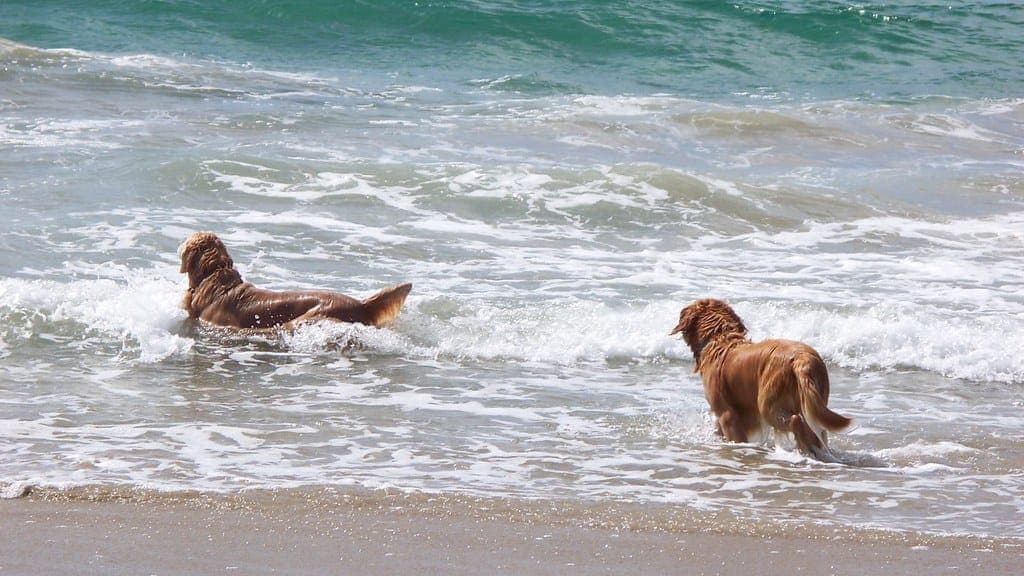
Dog beaches and water access
Dog beaches and lakeside off-leash areas are a joy for water-loving dogs, but they come with their own rules and risks:
- Seasonal and time limits. Many beaches allow dogs only in certain months, at certain hours, or in marked sections, and may close areas for nesting wildlife. Check the posted signs or the managing agency's website.
- Water safety. Watch for currents, waves and steep drop-offs. Not every dog is a strong swimmer, and a well-fitted dog life jacket helps new or weak swimmers.
- Drinking. Bring fresh water so your dog doesn't drink seawater, which can cause vomiting and, in larger amounts, serious illness.
- Algae and stagnant water. Keep dogs out of water with a scummy, discolored surface, since some algal blooms are toxic to dogs.
- Heat and sand. Hot sand burns paws, and there's often little shade.
Rinse your dog with fresh water afterwards, check ears and paws, and see your vet if she seems unwell after swimming. The guide to dog park health risks covers waterborne parasites such as giardia.
Dog park near me open now: checking hours
Many dog parks are open dawn to dusk, but hours vary by city and season. Parks may also close temporarily for turf rest, after heavy rain, or for maintenance. Online map listings, including open map data, often lack reliable hours, so check the local parks department website or the posted sign at the entrance before you set out.
Pro tip: If a park looks closed, muddy or under maintenance, respect it. Running dogs on waterlogged turf damages the surface and can lead to closures for everyone.
Dog park rules, permits and vaccine tags
Before your dog sets a paw inside, a park may expect paperwork as well as good manners. Entry requirements are set locally, so the same city can have different rules for different parks.
- Dog license. Many cities and counties require dogs to be licensed, and off-leash areas often ask that the license tag be worn on the collar.
- Rabies tag. Rabies vaccination is legally required for dogs in many places, and a current rabies tag is a common condition of using an off-leash area.
- Park permit or tag. Some municipalities issue a separate dog park permit, often renewed yearly, which may only be issued once you show a license and proof of vaccination.
- Membership or key fob. Some parks, especially those run by community associations or private operators, use gated entry with a membership card, code or fob.
- Proof of vaccination on request. Paid and indoor parks frequently ask you to upload or show records before the first visit.
Your city or county parks department website is the most reliable place to confirm what applies, along with the sign at the park entrance. Officers or staff may ask to see tags, so keep them on your dog's collar rather than at home. Which vaccines your vet may recommend beyond the legal minimum is covered in the guide to dog park health risks, and the behavior rules inside the gate are covered under etiquette below.
Free vs paid and membership dog parks
Most public dog parks run by cities and counties are free to use, paid for through local taxes, though some charge a modest annual permit fee. Paid options have grown alongside them, and each model has trade-offs.
| Model | How it usually works | Trade-offs |
|---|---|---|
| Free public park | Open access during posted hours | Unscreened dogs, variable maintenance, busy peak times |
| Permit-based public park | Annual permit or tag, sometimes tied to licensing | Small fee and paperwork, but some screening of who enters |
| Membership or community park | Fob, code or card entry for members or residents | Fewer, more familiar dogs; limited to members |
| Indoor or commercial park | Day pass or membership, records checked at entry | Staff on hand and weather-proof, but you pay each visit |
| Private rentable field | Booked by the hour for your dog alone or a small group | Exclusive use and quiet, but needs planning |
Paying doesn't automatically make a park safer. A free park with attentive regulars can be a better experience than a crowded commercial one. Judge each place on its design, the dogs who use it and how it's managed, using the checklist at the top of this page.
Best times to visit and avoid crowds
Crowds raise the risk of conflicts, overarousal and mobbing. For most parks:
- Busiest: weekday early mornings before work, weekday evenings after work, and weekend mid-mornings.
- Quieter: mid-morning or early afternoon on weekdays, and later in the evening during summer if the park is open.
- Avoid: extreme heat, especially midday in summer, and busy holiday periods.
Visiting at quieter times is especially helpful for a first dog park visit, when you want your dog to have a calm, positive experience.
How to check a dog park before bringing your dog
Visit without your dog first, ideally at the time you plan to go. Spend 10 to 15 minutes watching.
- Check the fencing and gates. Look for gaps, broken latches and an airlock entry.
- Watch the dogs. Are most of them loose and playful, or is there a lot of chasing one dog, body slamming or stiff posturing?
- Watch the people. Are owners supervising, calling their dogs away and picking up waste?
- Count the dogs. A small park with many large dogs can feel crowded fast.
- Look for hazards. Standing water, litter, gaps near roads, and lack of shade.
- Read the posted rules. Note vaccine requirements, age limits and any restrictions.
Being able to read the group helps here. The guide to dog park body language explains warning signs such as mobbing, bullying and stiffening, and how to tell when it's time to leave. If you're unsure whether dogs are wrestling happily, check how to tell whether dogs are playing or fighting.
What to bring to the dog park
- Leash and well-fitted harness or flat collar with ID tags
- Poop bags, plus spares
- Fresh water and a portable bowl
- High-value treats for recall, kept in a closed pouch
- A towel for mud or water
- Your phone for emergencies, kept in your pocket
- Basic first aid for minor scrapes
Leave behind prized toys or food your dog may guard, along with any shared toys that could cause tension.
Dog park etiquette in brief
Good manners keep parks open and safe. The essentials:
- Follow posted rules and keep vaccinations current.
- Unclip the leash in the transition area, not in the main park.
- Move away from the gate area quickly.
- Supervise your dog and stay off your phone.
- Pick up all waste.
- Call your dog away from rough play, mounting or chasing a dog who isn't enjoying it.
- Leave if your dog is stressed, overaroused or bullying.
For the full list, including the unwritten rules, see dog park etiquette.
Keeping your dog safe and healthy
Dog parks carry real risks, from scuffles and injuries to contagious disease. An observational study of US "bark parks" by Shyan and colleagues recorded relatively few aggressive encounters, and most did not escalate to injury. Even so, research on dogs' stress hormones by Ottenheimer Carrier and colleagues found cortisol rose after dog park visits. Off-leash play is exciting and arousing, so it pays to watch your dog closely.
Health
Make sure your dog is fully vaccinated, on a parasite prevention plan your vet recommends, and healthy before you go. Avoid shared water bowls where possible. The guide to dog park health risks covers diseases like kennel cough, giardia and parasites.
Vet check: Talk to your vet about which vaccines and parasite prevention suit your area, and keep sick dogs, dogs in heat and very young puppies at home.
Behavior and safety
Know your dog's limits. Watch for signs of stress, call your dog out for breaks, and leave early rather than late. If you're not sure whether your dog is a good candidate, read are dog parks safe for an honest look at the pros, cons and who should skip them.
Learning to read dog body language is the single best safety skill you can bring. The earlier you notice tension, the easier it is to step in.
Alternatives if a dog park isn't right for your dog
Not every dog enjoys dog parks, and that's perfectly fine. Fearful, reactive, older or very young dogs, and dogs who play rough or guard toys, may be happier with:
- Playdates with one or two known, compatible dogs
- Private rentable dog fields for safe off-leash running
- Long-line walks in quiet open spaces
- Sniff-focused walks in nature
- Dog sports and classes such as nosework, agility or tricks
- Enrichment at home, including puzzle feeders and scent games
Choosing an alternative isn't a failure. It's a choice that respects what your dog actually enjoys.
Putting it together
Use the finder above to see what's near you, then do your homework: check the fencing, gates, small dog area, amenities and hours, and scout the park without your dog first. Go at quieter times, bring the basics, follow etiquette and watch your dog closely. If your dog thrives, a good park can be a highlight of the week. If not, there are plenty of safe, fun alternatives.
Frequently asked questions
How do I find off-leash dog parks near me?
Use the finder on this page to search your area, then confirm details with your city or county parks department, which usually lists official off-leash areas, hours and rules. Local dog trainers, vets and community groups can also tell you which parks are well maintained and which get crowded or have frequent problems.
Is there a fenced dog park near me?
Many cities have fully fenced off-leash dog parks, but some off-leash areas are only partly fenced or unfenced. Check the park's listing, photos or the parks department website, and look for a double-gated entry when you arrive. If your dog's recall is not reliable, choose a fully fenced park or a private rentable dog field.
Are dog parks open now?
Many dog parks are open from dawn to dusk, but hours vary, and parks may close for turf maintenance, after heavy rain, or during events. Map listings often lack accurate hours, so check the parks department website or posted signs. Avoid visiting after dark unless the park is lit and officially open.
Do dog parks have a separate area for small dogs?
Many larger dog parks have a separate fenced area for small dogs, often with a weight limit around 25 to 30 pounds. Some parks also allow shy, senior or recovering dogs in that space. If a park lacks one, visit at quiet times or consider a private dog field so a small dog is not overwhelmed by bigger, faster dogs.
What is the difference between a dog park and a dog-friendly park?
A dog park is a designated area, usually fenced, where dogs may be off leash. A dog-friendly park is a regular public park where dogs are welcome but must usually stay on a leash. Leash rules, hours and permitted areas vary, so read the posted signs before letting your dog off leash anywhere.
How much do dog parks cost?
Most public dog parks run by cities and counties are free, although some require a paid annual permit or a current dog license to use them. Indoor and commercial dog parks usually charge a day pass or membership, and private fields are booked by the hour. Check your parks department website or the operator's page for current fees, since they vary widely by area.
Can I rent a private dog park?
Yes. In many areas you can book a fenced field or yard by the hour through booking platforms such as Sniffspot, or directly from trainers, farms and daycares. Private rentals suit reactive, shy, senior or recovering dogs and recall practice. Before booking, check the fence height, gate type, nearby roads or livestock, and whether there is a gap between bookings.
Sources & further reading
- Lee, H.-S., Shepley, M., & Huang, C.-S. (2009). Evaluation of off-leash dog parks in Texas and Florida: A study of use patterns, user satisfaction, and perception. Landscape and Urban Planning, 92(3-4), 314-324.
- Shyan, M. R., Fortune, K. A., & King, C. (2003). 'Bark parks': A study on interdog aggression in a limited-control environment. Journal of Applied Animal Welfare Science, 6(1), 25-32.
- Ottenheimer Carrier, L., Cyr, A., Anderson, R. E., & Walsh, C. J. (2013). Exploring the dog park: Relationships between social behaviours, personality and cortisol in companion dogs. Applied Animal Behaviour Science, 146(1-4), 96-106.
This guide is for education only and does not replace an in-person assessment. If your dog's behavior changes suddenly, or you are worried about bites or aggression, speak to your veterinarian or a qualified behavior professional. See our disclaimer.