Body parts
Dog Ear Positions & What They Mean: Forward, Back, Pinned and Airplane Ears
Ears are one of the fastest-changing signals a dog has. Learn what forward, soft-back, pinned and airplane ears are telling you.
Key takeaways
- Ears change position within a fraction of a second, which makes them one of the best real-time indicators of a dog's emotional state.
- Ears pricked forward signal attention or interest, and become a warning sign only when paired with a stiff body, hard stare and closed mouth.
- Ears drawn softly back with squinty eyes and a wiggly body are usually friendly or appeasing, while ears pinned flat to the skull signal fear or strong discomfort.
- Airplane ears, held out to the sides, often reflect uncertainty or mixed feelings.
- With floppy or cropped ears, watch the base of the ear and the forehead, where small movements still show.
Jump to a section
Dog ear positions are a fast, honest read of emotion. Ears pricked forward signal attention and interest, ears in their natural position mean relaxation, ears softly drawn back usually signal friendliness or appeasement, and ears pinned flat against the head point to fear, anxiety or strong discomfort. Airplane ears, out to the sides, often show uncertainty.
Ears move in fractions of a second, so they often tell you what your dog feels before the tail or body catches up. But like every signal in dog body language, they need context: ears back can be a happy greeting or a frightened plea for space. Here's how to tell which is which, including what it means when ears go back during petting and how to read dogs with floppy or cropped ears.
What do dog ears mean? The basics
Dogs have more than a dozen muscles controlling each ear, which lets them swivel, raise, lower and flatten their ears independently. That mobility serves two purposes: locating sounds and communicating emotion.
When reading ears, notice three things:
- Direction: forward, sideways or back.
- Tension: relaxed and soft, or tight and pressed.
- Movement: still and fixed, or flicking and swiveling.
Then combine them with the eyes and mouth. Ears are part of the face, and they almost never mean much alone.
Dog ear positions chart
| Ear position | Typical meaning | Confirm with |
|---|---|---|
| Natural, neutral carriage | Relaxed, comfortable | Soft eyes, loose open mouth |
| Pricked forward, mobile | Interested, attentive, curious | Head tilt, loose body |
| Pricked forward, fixed, with stiff body | Alert, focused, possible threat or about to react | Hard stare, closed mouth, weight forward |
| Softly back, relaxed | Friendly greeting, appeasement, contentment | Squinty eyes, wiggly body, low wag |
| Out to the sides (airplane ears) | Uncertain, conflicted, mildly worried | Lip licks, slow movement |
| Pinned flat to the skull | Fear, anxiety, pain or strong discomfort | Whale eye, tucked tail, crouched body |
| Swiveling or flicking rapidly | Processing sounds, unsure, monitoring | What's happening nearby |
| One ear forward, one back | Splitting attention, listening in two directions | Direction of sounds |
Dog ears forward meaning
Ears pricked forward show that your dog is paying attention to something in front of him: the treat in your hand, a squirrel, an unfamiliar sound. On a loose, curious dog with a gently wagging tail and soft mouth, forward ears simply mean interest.
The meaning changes when forward ears appear with a stiff, still body. If your dog stops moving, closes his mouth, fixes his eyes on another dog, and leans his weight forward, those forward ears are part of a high-arousal, possibly offensive display. Calmly interrupt and create distance before the moment escalates.
Research supports the link between forward-oriented ears and positive anticipation. In a study of dogs waiting for a food reward, Bremhorst and colleagues (2019) found that ears pulled forward and toward each other were more common when dogs expected a reward, while flattened ears and nose licking were more common when the reward was withheld and dogs were frustrated.
Dog ears back meaning
Ears drawn back are the most misunderstood ear signal, because the same direction can carry opposite meanings. The key is how far back they go and how tense they are.
Softly back: friendly and appeasing
Ears that fold back loosely, often with squinty eyes, a lowered head, a wiggly rear end and a low, sweeping tail, are a classic friendly greeting. Many dogs show this when their favorite person comes home. It's a polite, appeasing signal that says "I'm happy to see you and I mean no harm."
Back and tense: uncomfortable or worried
When ears go back and stay tight, with a closed mouth, lip licks, a turned head or whale eye, the dog is uncomfortable. You'll often see this when a stranger looms over a dog, at the vet, or when a child hugs a dog who doesn't enjoy it.
Dog ears pinned back
Ears pressed completely flat against the skull are a strong fear or distress signal. The dog is trying to make himself smaller and protect his ears, and he may be ready to flee or, if trapped, to defend himself.
Pinned ears commonly appear with a tucked tail, crouched posture, trembling, panting and other signs of stress. You'll see them during thunderstorms and fireworks, in shelters, or when a dog is restrained. If your dog's ears pin back at loud noises, our guide to dogs scared of fireworks and thunder explains how to help.
Safety note: A dog with pinned ears is frightened, and fear is one of the most common reasons dogs bite. Don't reach toward a dog showing pinned ears, a lip lift or a growl. Turn sideways, avoid eye contact and give her room to move away.
Airplane ears dog
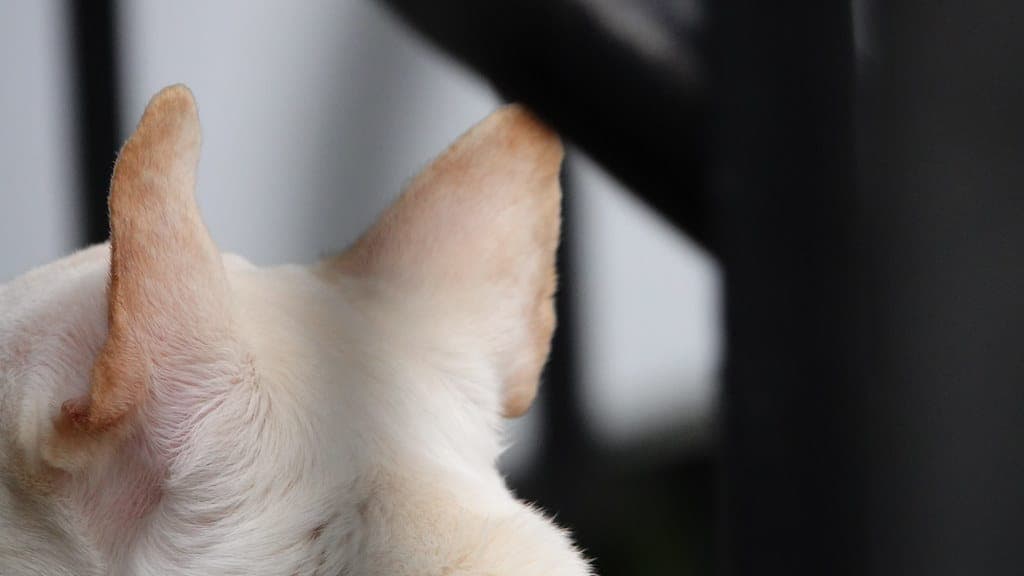
Airplane ears stick out to the sides, neither forward nor back, like the wings of a plane. They usually indicate a dog in two minds: curious but cautious, excited but slightly worried. You might see them as a dog approaches an unfamiliar person, encounters a new object, or is unsure what a training cue means.
Airplane ears are worth noticing because they often appear just before a dog decides whether to approach or retreat. Give the dog time and space to choose. If the ears move forward and the body loosens, he's gaining confidence; if they flatten and the weight shifts back, he's backing out.
Some dogs, particularly those with heavier or semi-erect ears, rest with their ears slightly to the side. As always, compare with your own dog's baseline.
Dog ears back when petting
It's common to see a dog's ears drift back while being stroked. Whether that's pleasure or discomfort depends on what else you see:
- Probably enjoying it: ears loosely back, eyes soft or half-closed, body leaning into your hand, mouth relaxed, tail low and loose, and your dog nudges you to continue when you stop.
- Probably tolerating it: ears pressed back, head turned away, lip licking or yawning, whale eye, freezing, or shifting weight away from your hand.
A simple way to find out is the pet-pet-pause test: pet for three seconds, then stop. If your dog leans back in or paws at you, carry on. If she stays still, moves away or shakes off, she's had enough. Many dogs prefer chest and shoulder scratches to pats on the top of the head. Our guide on how to greet a dog covers where most dogs like to be touched.
Ear signals between dogs
Dogs read each other's ears constantly, and watching ears during dog-dog interactions tells you a lot about how things are going.
During a polite greeting, both dogs usually have softened or slightly back ears, curved bodies and loose tails as they sniff. In healthy play, ears flop, flip and change position constantly, folding back during a chase and swinging forward during a pounce. That variety is a good sign: it means neither dog is locked into one emotional state.
Be more cautious when one dog holds his ears rigidly forward and still while the other dog's ears are pinned back. That pairing often means one dog is pushing and the other is uncomfortable. If the worried dog is trying to disengage, hiding behind you or turning away repeatedly, interrupt calmly and give both dogs a break. Our guide on whether dogs are playing or fighting shows what balanced play looks like.
Reading floppy, cropped and heavy ears
Ear shape strongly affects how visible these signals are.
- Prick ears (German Shepherds, Huskies, Corgis) make signals easy to read.
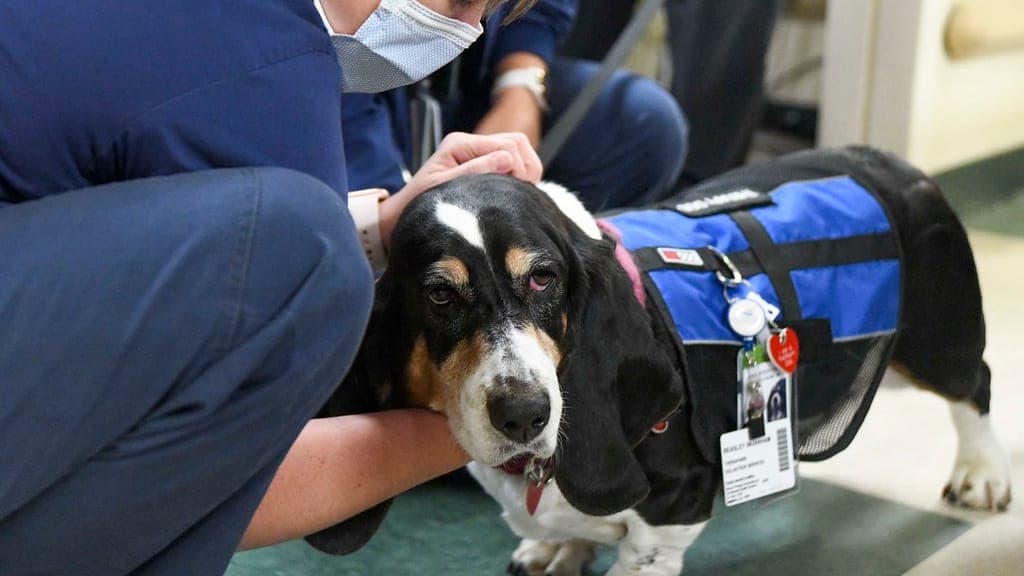
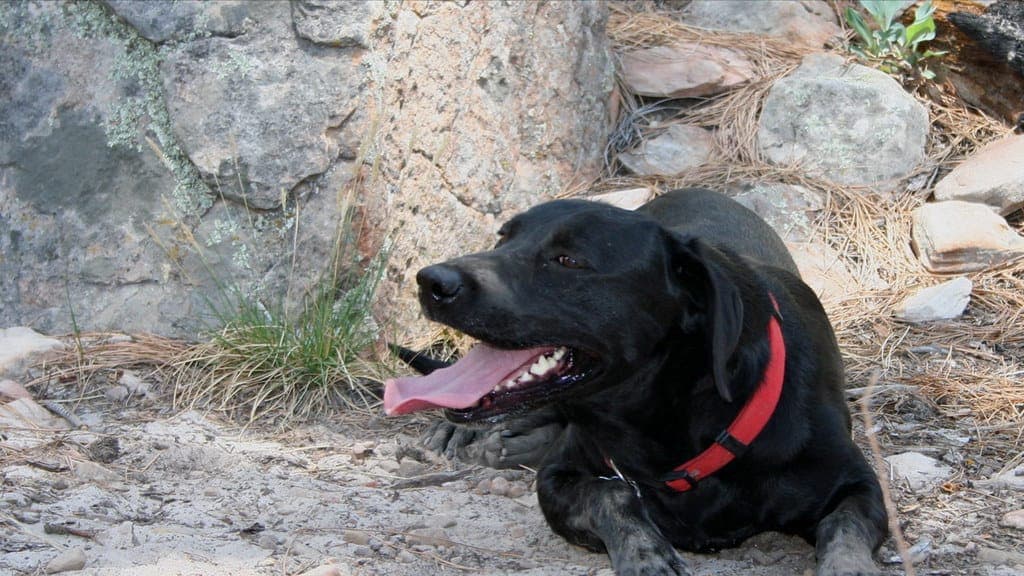
- Floppy ears (Labradors, Spaniels, Basset Hounds) move less dramatically. Watch the base of the ear, where it attaches to the head: it rises when the dog is alert and pulls back and down when he's worried.
- Semi-erect or rose ears (Collies, Greyhounds, Bulldogs) can fold, lift or swivel subtly.
- Cropped ears may look permanently alert, so rely more on the eyes, mouth and posture.
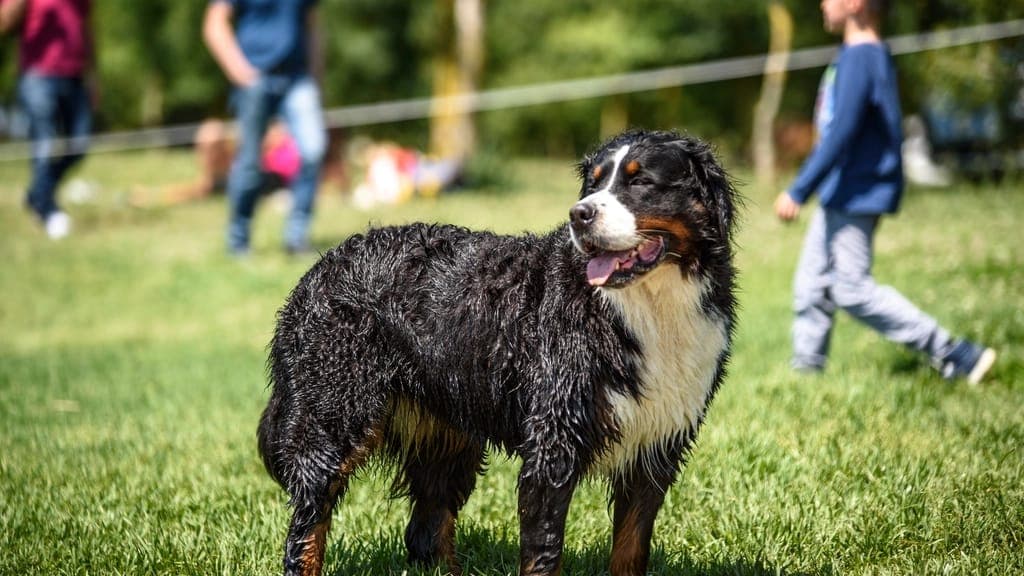
- Long-coated ears can hide movement entirely. Look at the forehead: tension often shows as wrinkles between the eyes.
Do ear positions always mean something?
No. Ears are hearing equipment first, so a lot of ear movement is simply your dog tracking sounds: one ear swiveling toward the fridge door, both ears rotating to follow a car passing outside. Ears also shift for purely mechanical reasons, such as wind, chewing, lying with the head on the floor, a collar or harness strap, or the moment after a shake-off.
An ear position carries emotional meaning when three things line up: it changes in response to a social event or a possible threat, it holds rather than flicking straight back, and the eyes, mouth or weight change with it. Ears that drop back once while your dog dozes are noise. Ears that flatten and stay flat as a stranger leans in, while the mouth closes, are a message.
Know your dog's normal ear carriage
Your dog's resting ear position is the zero point for every reading in this guide. To find it, take a few photos of her head from the front and the side in four situations: dozing, awake but bored, curious (crinkle a treat bag), and greeting you at the door. Compare them side by side.
You may find your dog's relaxed ears sit lower, wider or further back than you expected. Greyhounds and Whippets, for example, normally fold their rose ears back against the neck, and some mixed breeds carry one ear up and one down. Knowing this stops you from reading worry into a face that is simply at rest, and makes genuine changes stand out.
Ears and health
Changes in how your dog holds or uses his ears can point to medical problems. Constant head shaking, scratching, holding one ear lower than the other, a head tilt that won't go away, odor, redness or sensitivity when you touch the ear all need veterinary attention. Ear infections are painful and can make a normally tolerant dog grumpy about being handled.
Vet check: If your dog suddenly pins his ears and resents being touched around the head, or if his ear carriage changes along with other behavior changes, see your vet to rule out pain before treating it as a behavior issue. Our guide to sudden changes in dog behavior lists other warning signs.
What to do next
Start by learning your dog's neutral ear position, then watch how it changes when the doorbell rings, when you reach for the leash, and when a stranger approaches. Pair what you see with the tail: ears softly back plus a sweeping tail wag is a very different message from ears pinned plus a tucked tail.
The more consistently you respond to ear signals by giving space when they show worry, the more your dog learns that subtle communication works, and the less he'll need to escalate.
Frequently asked questions
What does it mean when a dog puts its ears back?
Ears back can mean several things depending on how far back they go and what the rest of the body does. Softly back ears with squinty eyes and a wiggly body are a friendly, appeasing greeting. Ears pinned flat with a tense mouth, whale eye or a lowered body mean fear, anxiety or discomfort. Read the eyes and mouth to tell the difference.
Why does my dog put his ears back when I pet him?
Many dogs relax their ears back when they're enjoying gentle petting from someone they trust, especially if the eyes soften and the body leans in. If the ears flatten while your dog licks his lips, turns his head away, freezes or moves off, he's uncomfortable. Pause petting for a few seconds and see whether he asks for more.
What do airplane ears mean on a dog?
Airplane ears are held out to the sides, partway between forward and back, like the wings of a plane. They usually indicate uncertainty, mixed feelings or mild worry, such as a dog meeting someone new or hearing an unfamiliar sound. In some relaxed dogs this is simply a resting position, so compare it with your dog's normal ear carriage.
Are pinned-back ears a sign of aggression?
Ears pinned flat are more often a sign of fear than of confident aggression. A frightened dog may still bite if she feels trapped, so pinned ears combined with a lip lift, growl, freezing or whale eye are a clear signal to back away calmly. Confident, offensive aggression is more often seen with ears forward.
Sources & further reading
- Bremhorst, A., Sutter, N. A., Würbel, H., Mills, D. S., & Riemer, S. (2019). Differences in facial expressions during positive anticipation and frustration in dogs awaiting a reward. Scientific Reports, 9, 19312.
- Handelman, B. (2008). Canine Behavior: A Photo Illustrated Handbook. Dogwise Publishing.
- Aloff, B. (2005). Canine Body Language: A Photographic Guide. Dogwise Publishing.
This guide is for education only and does not replace an in-person assessment. If your dog's behavior changes suddenly, or you are worried about bites or aggression, speak to your veterinarian or a qualified behavior professional. See our disclaimer.