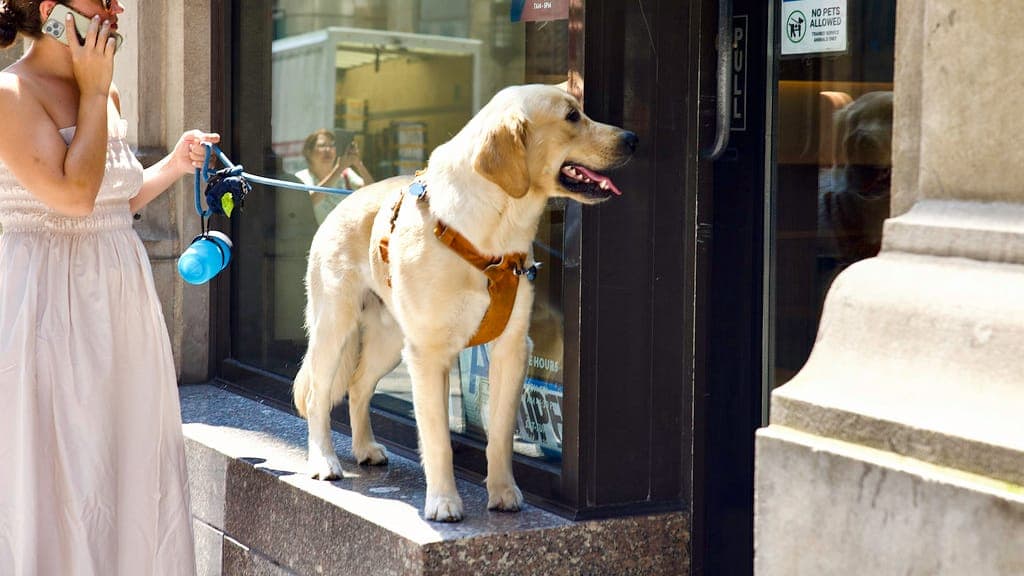
Reactivity & aggression
Dog Aggressive Toward Other Dogs? Causes, Safety & What to Do Next
Why some dogs become aggressive toward other dogs, how to manage fights in the same household, and how to break up a dog fight as safely as possible.
Key takeaways
- Dog-dog aggression is usually driven by fear, poor social learning, frustration, pain or competition over resources, not by a need to be 'alpha'.
- Stiffening, hard stares, standing over another dog and raised hackles often appear seconds before a fight, giving you a chance to intervene early.
- Never reach for collars or heads during a fight; use barriers, noise or a blanket, and treat every fight as a safety event.
- Fights between dogs in the same household need immediate separation, a vet check for both dogs, and a structured plan from a qualified professional.
- Management, distance work and counter-conditioning are the foundations of treatment, and some dogs will always do best with limited dog contact.
Jump to a section
- Dog-dog aggression, reactivity or rough play?
- Why dogs become aggressive toward other dogs
- Warning signs before a fight
- Dogs fighting in the same household
- How to break up a dog fight
- After a fight: what to do
- A humane plan for dog-dog aggression
- Living well with a dog who dislikes other dogs
- What to do next
If your dog is aggressive towards other dogs, she is usually trying to make them go away because she feels afraid, frustrated, sore or protective of something she values. Dog-dog aggression can range from growling and lunging to serious fights, and it is very common. The fix is not more forced contact, but safety, distance and a structured plan.
What makes this problem tricky is that it looks different in every home. One dog snarls only on leash, another is fine outside but fights with a housemate over the sofa. The cause shapes the plan, so below you will learn why dog-dog aggression happens, how to spot trouble early, how to break up a fight safely and what to do afterward. For the broader context, see our guide to dog behavior problems and humane solutions.
Dog-dog aggression, reactivity or rough play?
Before you plan, make sure you know what you are looking at.
- Rough play includes loose, bouncy movement, play bows, role reversals and frequent pauses. Both dogs keep coming back for more. Our guide to telling whether dogs are playing or fighting breaks this down.
- Reactivity describes barking and lunging, often on leash, that may be loud and dramatic but rarely leads to contact. See our reactive dog guide.
- Dog-dog aggression involves threats or attacks aimed at causing another dog to leave or stop, including fights with contact, injuries or repeated conflicts at home.
Many dogs fall into more than one category. A frustrated leash-reactive dog may play well with known friends but fight with unfamiliar dogs if forced to meet.
Why dogs become aggressive toward other dogs
There is rarely one cause. Common contributors include:
- Fear. The most common driver. Dogs who missed positive experiences with other dogs as puppies, or who were attacked, often see unfamiliar dogs as threats.
- Poor social skills. Some dogs misread or ignore other dogs' signals, which leads to conflict.
- Frustration. Leashes, fences and repeated blocked greetings build arousal that spills into aggression.
- Resource competition. Food, chews, toys, beds, doorways and people can all spark fights. Read more about resource guarding.
- Pain and illness. A sore dog is less tolerant of being bumped, sniffed or played with.
- Social maturity. Some conflicts start as dogs mature, roughly between one and three years of age.
- Genetics. Research by Duffy and colleagues (2008) found that the likelihood of aggression toward unfamiliar dogs varies by breed, though individual variation is large.
Myth: "My dogs fight because they are competing to be top dog." Older ideas about dominance hierarchies have been widely revised. Conflict is usually about specific resources, fear or stress, and treating it as a rank battle can lead to harmful methods. Read about the alpha dog myth.
Warning signs before a fight
Fights almost always have a run-up, even if it lasts only a second or two. Watch for:
- Sudden stillness or a stiff, upright posture
- A hard, fixed stare at the other dog
- One dog standing over the other, or placing her head or paws on the other dog's shoulders
- Raised hackles along the neck and back
- A closed mouth, lip lift or low growl
- Blocking a doorway, corridor or resource with the body
- The other dog turning away, lip licking or trying to leave
The moment you see these signals, calmly interrupt with a cheerful cue or by tossing treats in opposite directions, and create space.
Dogs fighting in the same household
Fights between dogs who live together are particularly distressing. Studies of household aggression, including Sherman and colleagues (1996) and Wrubel and colleagues (2011), found that fights often involve dogs of the same sex and commonly occur around food, toys, resting places, owner attention, excitement at the door or on walks.
If your dogs have started fighting:
- Separate immediately. Use gates, crates and closed doors so the dogs cannot reach each other while you plan. Rotate time in shared spaces.
- Book vet exams for both dogs. A new conflict often starts when one dog is in pain or unwell.
- Identify triggers. Write down every incident, including what happened just before.
- Remove flashpoints. Feed separately, pick up high-value chews and toys, and manage tight spaces like hallways and doorways.
- Lower general stress. Provide separate rest areas, sniffing walks and calm routines.
- Bring in a professional early. Household aggression is complex, and the plan should be tailored to both dogs.
Safety note: Fights between household dogs can escalate quickly and cause severe injuries. If fights draw blood, happen repeatedly or occur without an obvious trigger, keep the dogs fully separated until a qualified professional has assessed them.
How to break up a dog fight
Most dog fights are loud but short, and many end on their own within seconds. Human injuries often happen when people reach in. Keep your own safety as the top priority.
- Do not reach for collars or heads. A dog in a fight may bite whatever comes near, including you.
- Make a sudden, loud noise. A clap, a shout or banging a pot can interrupt some fights.
- Use a barrier. Slide a board, chair, baby gate, trash can lid or large cushion between the dogs.
- Smother the view. Throwing a heavy blanket or coat over the dogs can startle them apart.
- Use water if available. A spray from a hose can break concentration.
- Consider a two-person separation only as a last resort. If two adults are present and other options have failed, each can take hold of one dog's back legs or hips and walk backward in a curve, away from each other. This carries risk; never attempt it alone.
- Separate and secure. Once apart, put the dogs in separate rooms or crates, out of sight of each other.
- Check for injuries. Puncture wounds can be hidden under fur. Have both dogs seen by a vet.
After a fight: what to do
Give both dogs time to calm down, which can take hours or longer. Keep them apart until you have a plan, and do not punish either dog; punishment adds stress and can make future fights more likely.
If a person was bitten, seek medical attention. If an unfamiliar dog was involved, exchange details with the other owner and check local reporting rules.
A humane plan for dog-dog aggression
A good plan usually combines several parts, built to suit your dogs.
Management
Prevent further fights while you work. This might mean walking at quieter times, avoiding dog parks, using gates at home, and muzzle training with treats so your dog is comfortable wearing a basket muzzle.
Changing the emotion
Desensitization and counter-conditioning help your dog associate other dogs with good things. Start at a distance where your dog notices another dog but stays relaxed, then mark and reward. Move closer only gradually, over many sessions.
Teaching alternatives
Teach a cheerful U-turn, a hand target and a "go to mat" cue, so you can move your dog away from trouble smoothly.
Careful reintroductions
For household dogs, any reintroduction should be slow and structured, often on leash or through a barrier at first. Our guide to introducing two dogs safely explains the principles, but after a serious fight, follow your professional's plan.
Professional support
A veterinary behaviorist or certified behavior consultant can assess severity, coach your timing and work with your vet on whether medication could help. Our guide to choosing between a trainer and a behaviorist explains who to look for.
Living well with a dog who dislikes other dogs
Not every dog needs dog friends. Many dogs who are aggressive toward unfamiliar dogs live full, happy lives with a few carefully chosen companions, or none at all. Their social and physical needs can be met in other ways.
- Swap busy routes for quiet ones. Early-morning walks, rented private fields and quiet trails reduce surprise encounters.
- Use a long line in open spaces so your dog can sniff and explore while you keep control.
- Add enrichment at home, such as scent games, food puzzles, chews and short training sessions.
- Choose activities without close dog contact, such as scent work or trick training.
Pro tip: A yellow leash, vest or bandana that says "Give me space" can help, but never rely on other owners to notice it. Your own distance planning is what keeps your dog safe.
What to do next
Start with safety: put management in place today, and book vet checks for any dog involved. Then begin an incident log and watch closely for the subtle signals that come before conflict. Your dog does not need to love every dog she meets. The goal is a dog who feels safe, can pass other dogs calmly and lives peacefully with the dogs in her home, or, when that is not possible, a management plan that keeps everyone safe.
Frequently asked questions
Why is my dog aggressive toward other dogs but not people?
Dogs learn social skills species by species. A dog who had plenty of good experiences with people but few with other dogs during the socialization period may find dogs confusing or threatening. A frightening attack by another dog can also create lasting fear. Pain, frustration on leash and guarding of resources or a favorite person can all play a role too.
Can two dogs who fight live together again?
Sometimes, but it depends on how serious the fights were, what triggers them and whether those triggers can be managed. Many households succeed with strict management and behavior modification. When fights are frequent, cause injuries or happen without obvious triggers, some families need permanent separation within the home or a careful rehoming decision made with a veterinary behaviorist.
Should I let my dogs fight it out?
No. Letting dogs 'sort it out' can lead to serious injuries, and each fight tends to make the next one more likely and more intense. Dogs do not settle a stable hierarchy through repeated fighting. Interrupt tension early, separate the dogs safely, and seek professional help to address the causes.
Will my dog's aggression toward other dogs get better with more socialization?
Not if socialization means putting your dog in close contact with lots of dogs. For a dog who already struggles, that is often overwhelming and can make aggression worse. What helps is controlled exposure at a comfortable distance, paired with good things, so your dog learns other dogs are safe. Any closer contact should be planned with a professional.
Sources & further reading
- Sherman, C. K., Reisner, I. R., Taliaferro, L. A., & Houpt, K. A. (1996). Characteristics, treatment, and outcome of 99 cases of aggression between dogs. Applied Animal Behaviour Science, 47(1-2), 91-108.
- Wrubel, K. M., Moon-Fanelli, A. A., Maranda, L. S., & Dodman, N. H. (2011). Interdog household aggression: 38 cases (2006-2007). Journal of the American Veterinary Medical Association, 238(6), 731-740.
- Duffy, D. L., Hsu, Y., & Serpell, J. A. (2008). Breed differences in canine aggression. Applied Animal Behaviour Science, 114(3-4), 441-460.
- American Veterinary Society of Animal Behavior. (2008). Position Statement on the Use of Dominance Theory in Behavior Modification of Animals. AVSAB.
This guide is for education only and does not replace an in-person assessment. If your dog's behavior changes suddenly, or you are worried about bites or aggression, speak to your veterinarian or a qualified behavior professional. See our disclaimer.