Visiting the park
Dog Park Etiquette: The Rules (Written and Unwritten) Every Owner Should Know
From the gate to the water bowl, here are the dog park rules and unwritten manners that keep visits safe and friendly for every dog.
Key takeaways
- Good dog park etiquette starts before you arrive: only bring a dog who is healthy, vaccinated, social and responsive to recall.
- Unclip the leash in the double-gated entry, then move away from the gate quickly so arriving dogs aren't mobbed.
- Supervise your dog constantly, pick up all waste, and call your dog away from rough play, mounting or chasing an unwilling dog.
- Ask before giving treats to other dogs, and leave prized toys at home if your dog might guard them.
- Leave early if your dog is stressed, overaroused or bullying others; a short, positive visit beats a long, tense one.
Jump to a section
Dog park etiquette means following the posted rules, supervising your dog every minute, picking up after her, keeping the gate area clear, and stepping in early when play gets too rough. It also means only bringing a dog who is healthy, vaccinated and genuinely enjoys other dogs.
The posted sign covers the basics, but the unwritten rules are what really keep a park friendly. They are learned through experience, often the hard way. Knowing them in advance helps you fit in, avoid conflict with other owners, and make sure your dog's visit is a good one. If you are still looking for a place to go, start with the dog parks near me finder and guide.
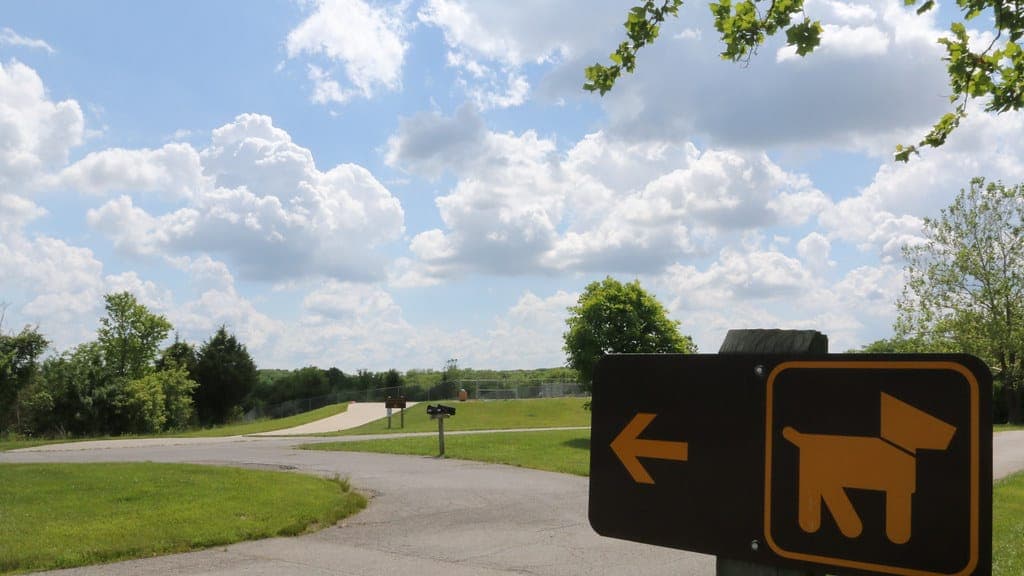
Dog park rules you'll usually see posted
Rules vary by city and park. Entry paperwork such as licenses, rabies tags and park permits is covered in the dog parks near me guide; the sign at the gate is mostly about how dogs and people behave once inside.
Common posted dog park rules
Wording differs, yet the same core rules turn up on sign after sign:
- Only vaccinated, licensed dogs, with tags worn while in the park.
- No puppies under about four months, since they aren't fully protected yet.
- No females in heat, which can cause fights and unwanted attention, and no dogs who are sick.
- Leash on in the transition area. Dogs are clipped and unclipped inside the double gate, never in the main play space.
- Pick up waste immediately and use the bins provided.
- One adult per two or three dogs at most, so every dog can be watched and recalled.
- Owners stay inside the park and in sight of their dogs, with a leash in hand.
- No food, and in some parks no toys, because both can spark guarding and squabbles.
- Children must be supervised, and some parks set a minimum age or keep kids out of the main area.
- Aggressive dogs must leave, and owners are responsible for any injury their dog causes.
- Respect posted hours and closures, including turf-rest days.
Why the rules matter
Most of these rules trace back to two goals: preventing conflict between unfamiliar dogs and limiting the spread of disease. Parks that get complaints about waste, injuries or noise risk new restrictions or closure, so following the sign protects access for everyone. The reasoning behind vaccine and parasite requirements is explained in the guide to dog park health risks.
Before you go: is your dog ready?
Good etiquette starts at home. A dog park is the right choice when your dog:
- Is fully vaccinated, healthy and on parasite prevention recommended by your vet
- Enjoys meeting unfamiliar dogs and recovers quickly from small bumps
- Comes back when called, even when distracted
- Doesn't guard toys, food, water or you
- Isn't reactive on leash or fearful in busy places
If your dog lunges or barks at other dogs on leash, the dog park is not the place to work on it. A structured plan for leash reactivity with distance and rewards is safer and more effective. If you're unsure, the guide on whether the dog park is safe for your dog can help you decide.
For a first trip, follow a gradual, step-by-step first dog park visit plan rather than walking straight into a crowded park.
Arriving: gate etiquette
The gate is the highest-risk spot in any dog park. Dogs inside often rush over to greet newcomers, and a leashed dog surrounded by loose dogs can feel trapped.
- Pause outside. Watch the group for a minute before entering. If a crowd is gathered at the gate, wait or walk your dog away until it disperses.
- Enter the first gate and close it. Never open both gates at once.
- Unclip the leash in the transition pen. Being leashed among loose dogs restricts your dog's body language and her ability to move away.
- Open the inner gate and move away quickly. Walk into open space so your dog has room and others don't pile up.
- Leave the same way. Leash up in the transition pen, not in the main area.
Pro tip: If your dog is already in the park and a new dog arrives, call her away from the gate. A friendly crowd of five dogs rushing a newcomer can easily overwhelm even a social dog.
Unwritten dog park rules
These are the manners experienced owners expect, even though they rarely appear on a sign.
Watch your dog, not your phone
Supervision means watching your dog's body language and interactions the whole time. Most problems build up over seconds or minutes, and the owners who catch them early are the ones paying attention.
Pick up, and help others notice
Pick up immediately. If you notice another owner missed a mess, a friendly "I think your dog just went over there" usually goes down well.
Interrupt rough play early
Play that is getting too intense, one dog being chased by a group, or a dog trying to get away are signs to call your dog out. Learn how to tell whether dogs are playing or fighting so you can step in before tempers flare.
Manage mounting
Mounting is common at dog parks and is often linked to excitement or social stress rather than sex. It can still annoy or upset other dogs. Calmly call or redirect your dog. The guide to why dogs hump explains what's going on.
Be thoughtful about toys and treats
Toys and treats can spark competition, especially among strangers. Leave prized toys at home if your dog might guard them, and check out the guide to resource guarding if you're not sure. Ask before giving another dog a treat, and keep your treat pouch closed.
Never discipline someone else's dog
If another dog behaves poorly, collect your dog and move away, or politely ask the owner to step in. Yelling at, grabbing or punishing someone else's dog can escalate quickly and is not your role.
Respect "no"
If another owner says their dog doesn't want to play, or asks you to call your dog off, do it without debate. The same applies to dogs: when a dog turns away, sniffs the ground or hides behind its owner, it is asking for space.
Leave when it isn't working
Leave when your dog is stressed, overaroused, bullying others, or being bullied, or when the mix of dogs feels wrong. Coming back later is always an option.
Dog park do's and don'ts
| Do | Don't |
|---|---|
| Read and follow the posted rules | Bring a sick, unvaccinated or in-season dog |
| Unclip in the transition pen and move away from the gate | Linger at the gate or enter with a leashed dog |
| Watch your dog the entire time | Scroll your phone or chat with your back to the dogs |
| Call your dog away from rough play or mobbing | Let your dog chase a dog who is trying to escape |
| Pick up all waste | Assume someone else will clean up |
| Ask before giving treats or petting other dogs | Hand out food to a crowd of dogs |
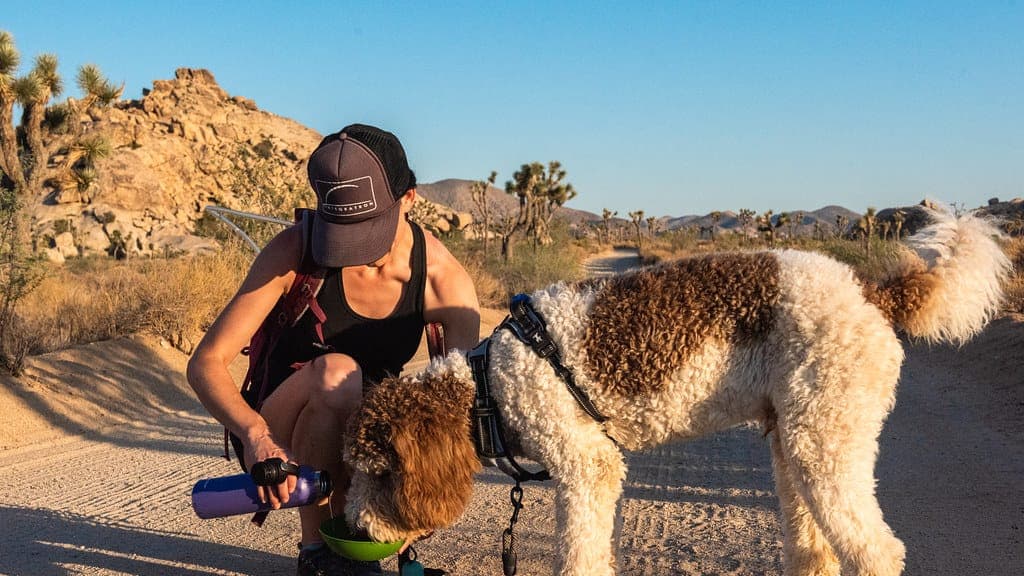
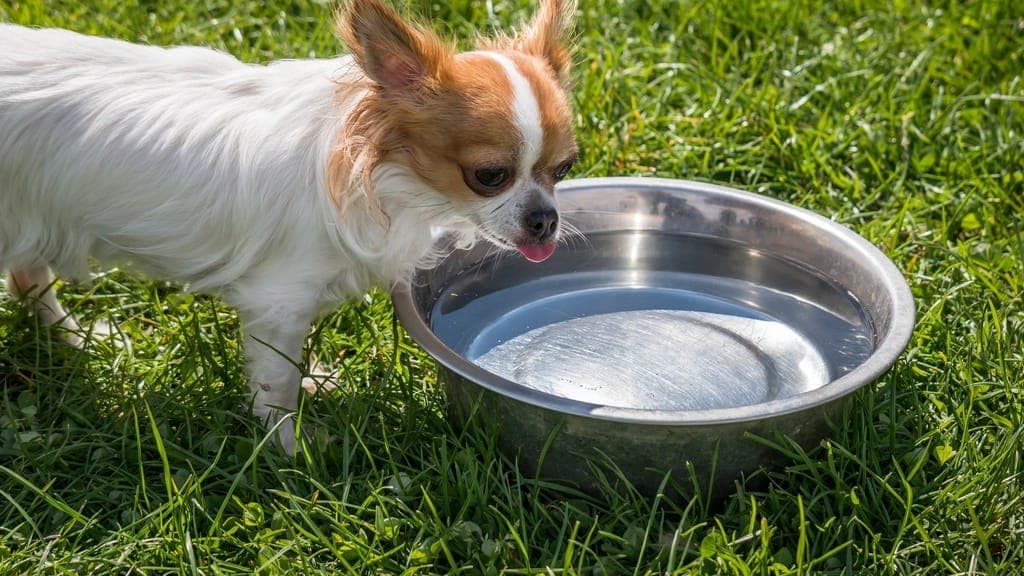
| Bring water and a bowl for your dog | Rely on stagnant communal water |
| Leave early if your dog seems stressed | Use the park to "socialize" a fearful or reactive dog |
| Use positive interruptions and rewards | Use shouting, spraying or physical punishment |
| Keep small dogs in the small dog area when available | Let large dogs into the small dog area |
Children at the dog park
Many parks restrict children or require close supervision. Running, shrieking kids can trigger chasing, and children are easily knocked over by playing dogs. If kids come along, keep them by your side, outside the main play area if possible, and teach them not to approach or pet unfamiliar dogs.
Handling conflict with other owners
Even with good etiquette, disagreements happen. Keep it calm.
- Focus on dogs, not blame: "My dog's not enjoying this, I'm going to call him away."
- Separate the dogs first and talk afterwards.
- If dogs scuffle, check for injuries and swap contact details if there's any wound.
- Report serious or repeated problems to the parks department rather than confronting strangers.
Safety note: If a fight breaks out, don't grab collars or reach near mouths. Use a loud noise or slide a barrier between the dogs, then leash and separate them. See a vet for any bite wound, even one that looks minor.
Reading the room
Etiquette is easier when you can read the dogs. Before and during each visit, scan for stiff bodies, hard stares, mobbing, frantic chasing, and dogs hiding by benches or owners. The guide to dog park body language breaks down which signals mean "keep watching" and which mean "time to leave." Researchers like Marc Bekoff have shown that dogs use signals such as the play bow to keep rough-looking play friendly, so the absence of those signals, alongside rising tension, is worth noticing.
Printable dog park etiquette checklist
Print this page or screenshot the list below, and run through it before each visit until it becomes habit.
- My dog is healthy today, not in heat, and her vaccinations, tags and parasite prevention are current
- I packed a leash, waste bags, fresh water, a bowl and treats in a closed pouch
- I read the posted rules and hours for this park
- I'm bringing no more dogs than I can watch and recall at once
- I watched the group from outside and waited if dogs were crowding the gate
- I closed the outer gate before opening the inner one
- I unclipped in the transition pen and walked away from the entrance
- My phone is in my pocket and my eyes are on my dog
- I'm calling my dog out for short breaks and rewarding her for coming
- I picked up every mess my dog made
- I'll interrupt rough play, mounting or chasing and leave early if it isn't going well
- I leashed up in the transition pen on the way out
What to do next
Before your next visit, read the posted rules at your local park, pack the essentials, and plan a short trip at a quieter time. Practice your recall at home and on walks so you can call your dog out of any situation. Small acts of courtesy, combined with close supervision, make the park better for everyone, including your dog.
Frequently asked questions
What are the most common dog park rules?
Most dog parks require current vaccinations and licensing, owner supervision at all times, picking up waste, and leashes until inside the off-leash area. Many also limit the number of dogs per person, ban dogs in heat and puppies under about four months, restrict food, and require aggressive dogs to be removed. Always read the posted sign, since rules vary by park.
Should I bring toys to the dog park?
Only bring toys you are happy to share or lose, and only if your dog doesn't guard them. Balls and frisbees can trigger competition and scuffles in groups, especially among dogs who are strangers. If your dog loves fetch, choose quiet times or a private field, and pack the toy away if other dogs start crowding around.
Can I give treats to other people's dogs at the dog park?
Ask the owner first. Some dogs have allergies, medical diets or resource-guarding issues, and handing out treats can draw a crowd of dogs around you, which can spark squabbles. Keep your treats in a closed pouch and use them discreetly to reward your own dog's recall.
What should I do if another dog is bullying my dog at the dog park?
Calmly call or walk over to collect your dog, then move to a quieter area or leave. You can politely ask the other owner to call their dog, but avoid arguing or disciplining someone else's dog. If the problem keeps happening, note the time and dog and tell the park management or parks department.
How long should you stay at the dog park?
For most dogs, 20 to 45 minutes is plenty, and shorter is better for puppies, new visitors and dogs who get overexcited. Leave while your dog is still having fun rather than waiting until she is exhausted or cranky. Tired, overaroused dogs are more likely to get into conflicts.
Sources & further reading
- Lee, H.-S., Shepley, M., & Huang, C.-S. (2009). Evaluation of off-leash dog parks in Texas and Florida: A study of use patterns, user satisfaction, and perception. Landscape and Urban Planning, 92(3-4), 314-324.
- Shyan, M. R., Fortune, K. A., & King, C. (2003). 'Bark parks': A study on interdog aggression in a limited-control environment. Journal of Applied Animal Welfare Science, 6(1), 25-32.
- Bekoff, M. (1995). Play signals as punctuation: The structure of social play in canids. Behaviour, 132(5-6), 419-429.
This guide is for education only and does not replace an in-person assessment. If your dog's behavior changes suddenly, or you are worried about bites or aggression, speak to your veterinarian or a qualified behavior professional. See our disclaimer.