Affection & attachment
Why Does My Dog Follow Me Everywhere? Velcro Dogs Explained
Love, habit, breed or anxiety? Learn why your dog shadows you from room to room and how to tell healthy attachment from a dog who can't cope alone.
Key takeaways
- Dogs follow their people because they are social animals that form genuine attachment bonds, and because you are the source of food, walks and fun.
- Velcro dog behavior is more common in some breeds, in young or newly adopted dogs, and in dogs who have been rewarded for staying close.
- Following you to the bathroom is normal; panic, whining or scratching when the door closes is a sign to look more closely.
- A dog who suddenly becomes clingy may be unwell, in pain, losing sight or hearing, or reacting to a change at home, so a vet check is wise.
- Healthy independence is built with gradual training, enrichment and a safe resting spot, never by ignoring or punishing a worried dog.
Jump to a section
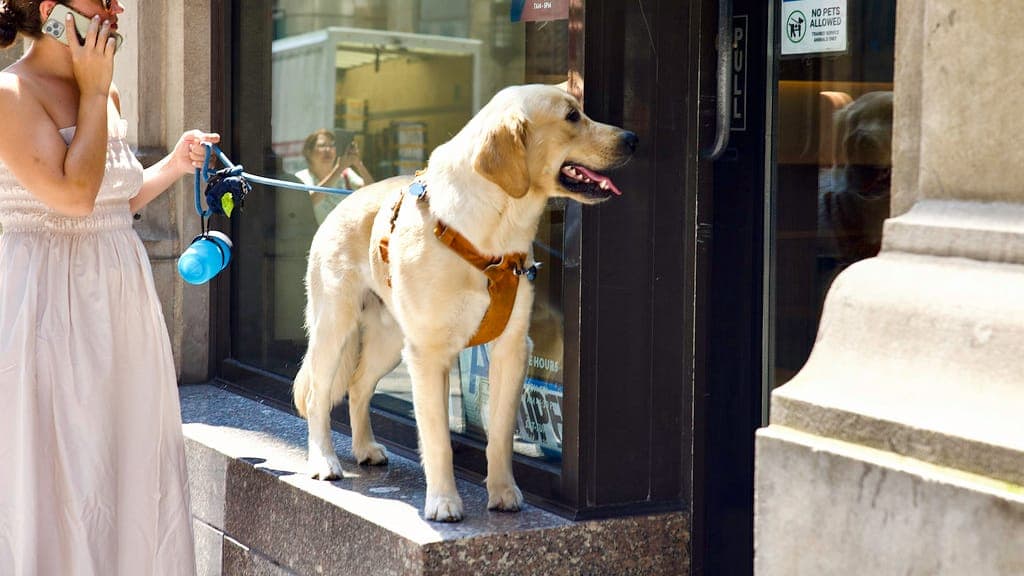
Your dog follows you everywhere because dogs are social animals that form real attachment bonds with their people, and because you are where all the good things in life happen: food, walks, play, comfort and attention. For most dogs, shadowing you is normal and a sign of a secure relationship.
Still, following has different flavors. A relaxed dog trailing you to the kitchen in hope of a snack is not the same as a dog who trembles and scratches at the bathroom door. To understand which one you have, look at your dog's body language, how they cope when you're out of reach, and whether the behavior is new. That kind of context-first thinking is at the heart of our guide to why dogs do what they do.
Why dogs follow their people
Dogs evolved alongside humans and are exceptionally tuned in to us. In a landmark 1998 study, researchers adapted the Strange Situation Test, originally used to study infant attachment, and found that adult dogs showed clear attachment behavior toward their owners: they explored more when the owner was present, sought contact on reunion, and behaved differently with a stranger.
Later work found that an owner's presence can act as a "safe haven," buffering a dog's stress response when something unsettling happens. In other words, staying near you is a strategy for feeling safe. It's the same instinct that makes many dogs lean against your legs when they're uncertain.
Does following mean my dog sees me as the "pack leader"?
You may hear that a dog who follows you is acknowledging you as the alpha, or that a dog who walks ahead is trying to lead. Both ideas come from outdated dominance theory. Researchers now explain dog-human relationships through attachment, learning and communication rather than rank. Your dog follows you because being near you feels safe and rewarding, not because of a hierarchy, and there's no need to "correct" it to maintain your status.
You're where the good stuff happens
Learning is the other half of the story. Every time your dog follows you to the kitchen and something tasty drops, or follows you to the door and gets a walk, following is reinforced. Dogs are expert pattern spotters, and many learn that your movements predict their favorite events.
This is why dogs often follow the person who feeds them, or become extra attentive at the times of day when walks usually happen. Your dog may also stare at you for the same reason: watching closely pays off.
Velcro dogs: breed, age and personality
"Velcro dog" is an affectionate name for a dog who seems glued to their person. It isn't a diagnosis, but several factors make velcro behavior more likely:
- Breed and purpose. Many herding, gundog and companion breeds were selected to work closely with people and pay close attention to them.
- Age. Puppies naturally follow their caregivers, and senior dogs may become clingier as their senses and cognition change.
- History. Newly adopted and rescue dogs often attach quickly to one person while they adjust. Allow time for rescue dog decompression before expecting independence.
- Temperament. Some individuals are simply more social or more cautious, and staying close helps them feel secure.
- Reinforcement. If following has been rewarded with attention or food, it will happen more.
None of these are problems in themselves. Velcro dogs are often affectionate, attentive companions; it's one of many signs your dog loves you.
Why does my dog follow me to the bathroom?
Following you to the bathroom is one of the most common questions owners ask, and the answer is usually simple: your dog doesn't understand why a closed door should separate the group. To a dog, you have just walked into a small room and disappeared, and curiosity and attachment both say "go too."
Some dogs also learn that the bathroom is a place where you sit still and are easy to reach for petting. Others are simply in the habit of shadowing you.
It's worth paying attention to how your dog reacts if the door is shut:
- Waits calmly or wanders off: normal, secure behavior.
- Lies by the door, then greets you casually: normal, mild attachment.
- Whines, scratches, pants or barks until you return: possible separation-related distress worth working on.
Dog suddenly clingy? Possible causes
When a previously independent dog suddenly starts following you everywhere, take note. Dogs often seek closeness when they feel unwell or unsafe.
Vet check: Sudden clinginess can be an early sign of pain, illness, vision or hearing loss, or cognitive decline in older dogs. If it's new and unexplained, or appears alongside changes in appetite, sleep, mobility or toileting, book a veterinary exam.
Common causes of sudden clinginess:
- Pain or illness. Dogs who don't feel well often stay close to their people.
- Sensory decline. A dog losing sight or hearing may follow you to stay oriented.
- Aging. Clinginess and night-time restlessness are common senior dog behavior changes, including in dogs with canine cognitive dysfunction.
- Changes at home. A move, renovation, new baby, new pet, a family member leaving or a schedule change can unsettle dogs.
- Frightening events. Fireworks, storms or a scary encounter can leave a dog seeking reassurance for days.
- Your own state. Some dogs stay closer when their owner is ill, pregnant or stressed, likely because they notice changes in routine and behavior.
If clinginess is part of a broader shift in personality, our guide to sudden behavior changes in dogs explains what to look for next.
Is my dog too attached to me?
The real question isn't how much your dog follows you, but how well they cope when they can't. Use this table to assess where your dog sits.
| Healthy attachment | Possible over-attachment or anxiety |
|---|---|
| Follows you but can settle in another room | Can't settle unless touching or seeing you |
| Greets you happily, then calms down within minutes | Frantic, prolonged greetings after short absences |
| Copes when you leave the house | Howls, barks, destroys or soils when alone |
| Relaxed body when separated by a door | Pants, paces, whines or scratches at doors |
| Eats and plays normally when you're out | Won't eat or play until you return |
| Enjoys other people too | Distressed when anyone but you handles them |
If your dog fits the right-hand column, they may be experiencing separation anxiety, which is a genuine welfare concern rather than a training failure. Look for other signs of stress in dogs, such as lip licking, yawning, pinned ears and a tucked tail, when you prepare to leave.
Myth: "Letting your dog follow you or sleep on the bed causes separation anxiety." An older study of owner behaviors found no link between affectionate "spoiling" activities and behavior problems. Comfort doesn't create anxiety; inability to cope with being alone is the issue to address.
How to build independence gently
You don't need to stop your dog following you. If you'd like a little more independence, build it gradually and keep it positive.
- Create a cozy settle spot. Put a comfortable bed or mat in each main room and reward your dog for lying on it.
- Teach a relaxed "stay on your bed." Start with seconds, at a short distance, and build duration slowly.
- Use baby gates. Gates let your dog see you while practicing being in a separate space.
- Practice tiny separations. Step out of the room for a few seconds and come back before your dog worries. Increase very gradually.
- Give long-lasting enrichment. A stuffed food toy, lick mat or chew gives your dog something absorbing to do while you move around.
- Keep departures and arrivals low-key. Calm comings and goings make your movements less of an event.
- Meet your dog's needs. Plenty of exercise, sniffing walks and play help dogs rest.
Never punish or shut away a dog who is following you out of worry. That increases anxiety and usually makes clinginess worse.
When to get help
Contact your veterinarian if clinginess is sudden or comes with other symptoms. If your dog shows clear distress when left alone, or the problem is getting worse despite your efforts, a qualified professional can help. A veterinary behaviorist can assess whether medication might support a training plan, and a certified behavior consultant (CDBC or CAAB) or certified trainer can coach you through gradual separation training. If you're unsure who to call, start with our overview of a trainer vs. a behaviorist.
What to do next
For most dogs, following you everywhere is simply what bonded, social dogs do. Enjoy your shadow, but check two things: does your dog cope when you're out of reach, and is the behavior new? If your dog settles well and the habit is long-standing, there's nothing to fix. If clinginess is sudden or your dog can't cope alone, start with a vet visit and a gentle independence plan.
Frequently asked questions
Is it bad if my dog follows me everywhere?
Usually not. Following is normal social behavior and often reflects a secure bond. It becomes a concern when your dog cannot settle unless they're touching you, panics when separated by a door, or shows destruction, howling or house soiling when left alone. Those signs can point to separation-related distress, which responds well to a gradual, positive training plan.
What is a velcro dog?
A velcro dog is an informal name for a dog who stays glued to their person, following them from room to room and lying as close as possible. It isn't a diagnosis. Some breeds, puppies, seniors and newly adopted dogs are more likely to behave this way, and it is often a mix of attachment, habit and reinforcement.
Why does my dog follow me and not my partner?
Dogs often attach most strongly to the person who provides the most predictable good things, such as meals, walks, play and calm attention, or who spends the most time at home. It can also reflect personality fit: a dog may gravitate to the calmer or more playful person. Your partner can build the bond by taking over some daily routines.
Why is my dog suddenly following me everywhere?
Sudden clinginess often has a cause. Common ones include illness or pain, vision or hearing loss, cognitive changes in older dogs, a recent move, a new baby or pet, a change in your schedule, or a frightening event like fireworks. If the change is unexplained or comes with other symptoms, start with a veterinary check.
Will my dog get separation anxiety if I let him follow me?
Not necessarily. Research has not found that affectionate, so-called spoiling behaviors by owners cause separation problems. What matters more is whether your dog can cope when you're out of reach. Practicing short, calm separations and teaching a relaxed settle on a bed help your dog stay confident on their own, even if they enjoy following you at home.
Sources & further reading
- Topál, J., Miklósi, Á., Csányi, V., & Dóka, A. (1998). Attachment behavior in dogs (Canis familiaris): A new application of Ainsworth's (1969) Strange Situation Test. Journal of Comparative Psychology, 112(3), 219-229.
- Gácsi, M., Maros, K., Sernkvist, S., Faragó, T., & Miklósi, Á. (2013). Human analogue safe haven effect of the owner: Behavioural and heart rate response to stressful social stimuli in dogs. PLoS ONE, 8(3), e58475.
- Konok, V., Dóka, A., & Miklósi, Á. (2011). The behavior of the domestic dog (Canis familiaris) during separation from and reunion with the owner: A questionnaire and an experimental study. Applied Animal Behaviour Science, 135(4), 300-308.
- Voith, V. L., Wright, J. C., & Danneman, P. J. (1992). Is there a relationship between canine behavior problems and spoiling activities, anthropomorphism, and obedience training? Applied Animal Behaviour Science, 34(3), 263-272.
- Bradshaw, J. (2011). Dog Sense: How the New Science of Dog Behavior Can Make You a Better Friend to Your Pet. Basic Books.
This guide is for education only and does not replace an in-person assessment. If your dog's behavior changes suddenly, or you are worried about bites or aggression, speak to your veterinarian or a qualified behavior professional. See our disclaimer.