Dog-dog play
Are My Dogs Playing or Fighting? How to Tell the Difference
Growls, neck bites and wrestling can be perfectly healthy play. Learn the signals that separate a good game from a fight brewing.
Key takeaways
- Healthy dog play is loose, bouncy and exaggerated, with frequent pauses and both dogs choosing to come back for more.
- Growling, neck biting and pinning can all be normal in play; what matters is whether the movements stay soft and both dogs stay willing.
- Stiffening, freezing, hard stares, silence, and one dog repeatedly trying to escape are the signals that play is turning into conflict.
- A simple consent test, gently separating the dogs for a moment, tells you whether the 'underdog' actually wants to keep playing.
- Interrupt rising arousal early with a cheerful recall and a short break rather than waiting until a scuffle breaks out.
Jump to a section
- What healthy dog play looks like
- Dog play vs aggression: a side-by-side comparison
- Why dogs play bite necks
- Rough dog play: when is it too much?
- Is it fair if one dog is always on top?
- How to tell if puppies are playing or fighting
- The consent test: ask the dogs
- How to interrupt play the right way
- When it really is a fight
- Choosing good play partners
- Putting it together
Your dogs are probably playing if their bodies look loose and bouncy, they take turns chasing and wrestling, they pause often, and both keep coming back for more. They may be fighting, or heading toward a fight, if movements turn stiff and fast, the noise changes, play stops pausing, or one dog is trying hard to get away.
The tricky part is that good dog play is loud, toothy and physical. Two dogs can snarl, grab necks and tumble over each other while having the time of their lives, and two dogs can look quiet and still be one second from a scuffle. Telling the difference means reading the whole dog in context rather than reacting to a single sound or bite, which is a core skill in any dog socialization plan.
What healthy dog play looks like
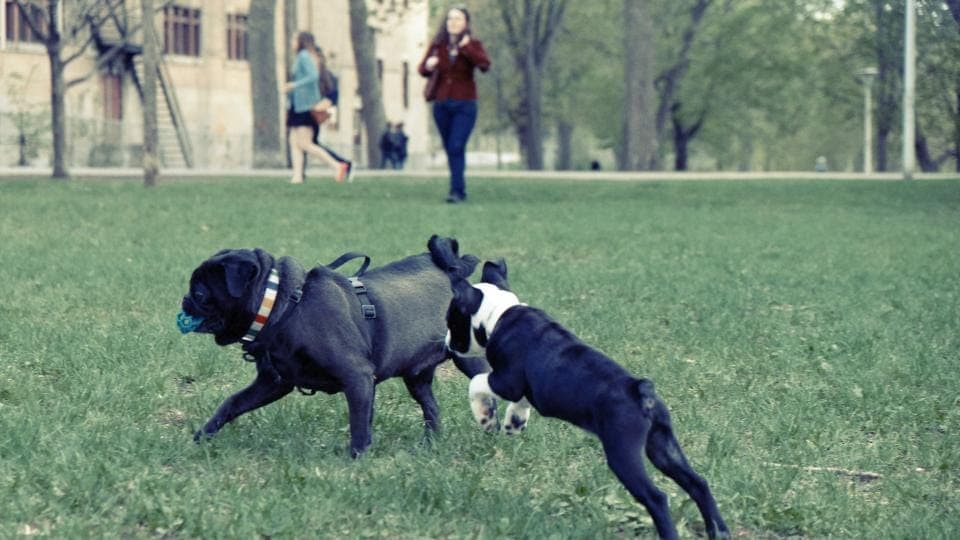
Play borrows moves from hunting, fighting and mating, then changes them so they are obviously "not serious." Researchers describe play as exaggerated, repetitive and inefficient. A dog chasing for real runs in a straight, efficient line; a dog chasing in play bounces, zigzags and lets the other dog get away.
Healthy dog play signs to look for
- Loose, curvy bodies. Wiggly spines, bouncy gaits, and movements that look a bit clumsy or over-the-top.
- Play signals. The play bow, front legs down and rear end up, is the classic invitation. Marc Bekoff's research showed bows often appear just before or after moves that could be misread as aggressive, acting like punctuation that says "this is still a game."
- The play face. A relaxed, open mouth, often with the lips pulled back loosely, and soft eyes rather than a fixed stare.
- Self-handicapping. A big dog lying down to wrestle a small one, or a fast dog letting a slower friend catch up.
- Role reversals. Chaser becomes chased, the dog on top ends up on the bottom.
- Pauses. Short breaks to sniff, shake off, scratch or lie down before starting again. These natural breathers keep arousal in check.
- Mutual re-engagement. After a pause, both dogs choose to come back.
Alexandra Horowitz's work on dyadic play found that dogs pay close attention to whether their partner is watching before they send play signals. In other words, good players are constantly checking in with each other, and that attentiveness is part of what you are looking for.
Dog play vs aggression: a side-by-side comparison
No single behavior proves play or fighting. Look for clusters of signals and how they change over a few seconds.
| Signal | Usually play | Possible conflict |
|---|---|---|
| Body | Loose, wiggly, bouncy | Stiff, still, weight leaning forward |
| Mouth | Open, relaxed, play face | Closed and tight, or lips lifted to show front teeth |
| Eyes | Soft, squinty, looking away often | Hard, fixed stare; whale eye in the target dog |
| Bites | Inhibited, mouthy, no yelps of pain | Hard holds, shaking, punctures, repeated yelps |
| Sounds | Rhythmic, higher-pitched, "noisy but silly" | Lower, continuous growl, or sudden silence |
| Movement | Exaggerated, inefficient, lots of pauses | Fast, direct, no breaks |
| Roles | Players swap roles at least some of the time | One dog always the target, never gets a turn |
| After a break | Both return to play | One dog leaves, hides or avoids the other |
Myth: "Raised hackles mean my dog is about to attack." Raised hackles, or piloerection, are a sign of arousal, not a verdict. Many dogs raise their hackles during perfectly friendly, excited play. Read the rest of the body before deciding what the hackles mean.
Why dogs play bite necks
Neck biting is one of the most common questions owners ask, and it is usually normal. When dogs wrestle, the neck, scruff, cheeks and legs are the natural targets. Dogs with loose neck skin are well protected there, and most dogs learn bite inhibition as puppies, so the mouth stays soft.
Signs that neck biting is still play:
- The "bitten" dog stays loose, keeps wagging in a broad, relaxed way, and bites back or re-engages.
- Holds are brief and released quickly.
- There is no shaking, no sustained pressure and no real yelp.
Signs it has tipped over:
- A hold lasts more than a second or two, or the biter shakes its head.
- The other dog freezes, screams, or struggles to get away.
- Your dog targets the throat or legs with increasing intensity while the other dog has stopped playing back.
Rough dog play: when is it too much?
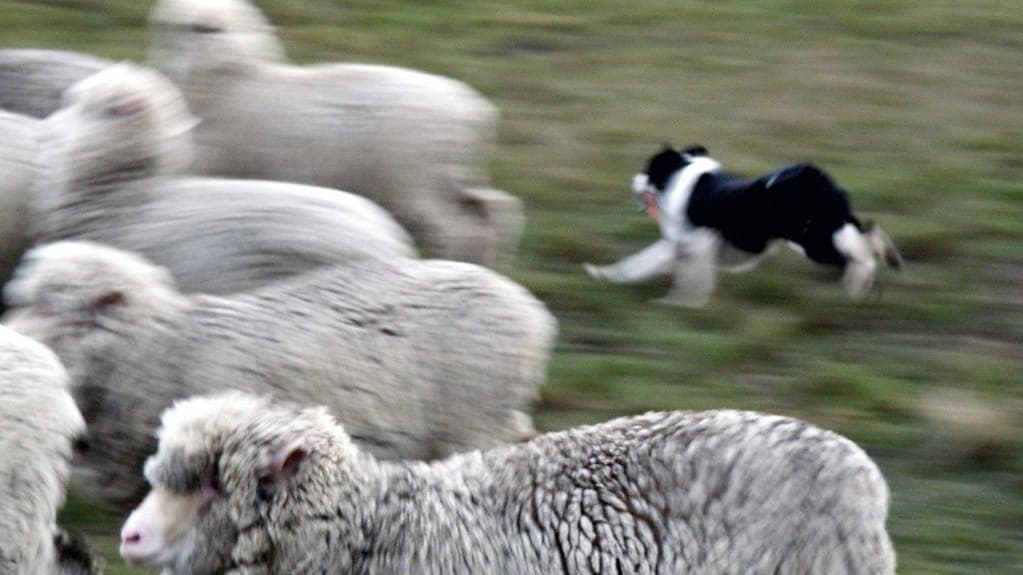
Some dogs simply play rough. Boxers often "box" with their front paws, bully breeds love full-body wrestling, herding breeds chase and nip at heels, and sighthounds may prefer high-speed chase over contact. Rough play is fine when both dogs like the same style. Problems start when styles are mismatched, or when excitement builds faster than the dogs can regulate it.
Warning signs that arousal is climbing
- The pace speeds up and the pauses disappear.
- Bodies become stiffer and movements more direct.
- Growls drop in pitch and become constant.
- One dog keeps a fixed, hard focus on the other.
- More dogs join in and start chasing one dog, a pattern often called mobbing.
- Humping, frantic barking or body slamming increases.
This is a form of trigger stacking: each exciting moment adds to the last until a small bump, a stolen toy or a collision triggers a real snap. Interrupting early, before that tipping point, is far easier than breaking up a scuffle. The same patterns show up in group settings, so if your dog visits off-leash areas, read up on dog park body language too.
Is it fair if one dog is always on top?
Owners are often told that healthy play must be a 50/50 split. Research on littermates by Ward, Bauer and Smuts found that play roles are often uneven, yet those partners still played happily and often. So you do not need perfect turn-taking.
What you do need is willingness. The dog who spends more time on the bottom should still be choosing to play. If she walks away and is followed, pinned or chased relentlessly, it is no longer a game for her, even if the other dog is having fun.
How to tell if puppies are playing or fighting
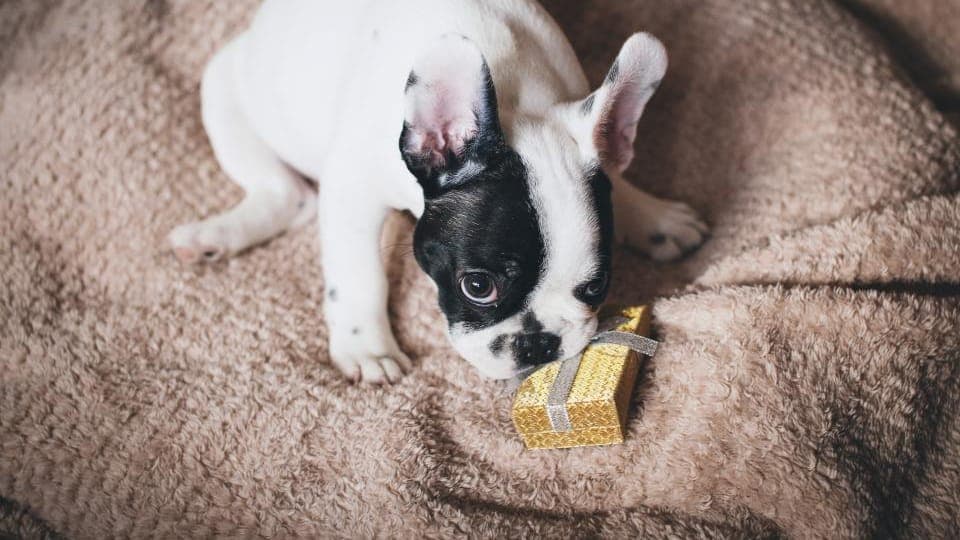
Puppy play looks wilder than adult play. Young puppies have limited coordination, short attention spans and a bite inhibition that is still a work in progress, so their games are full of squeals, flailing paws and sudden collisions. Genuine fights between young puppies are uncommon. What you see more often is play that turns ragged because one or both puppies are overtired or overexcited.
Puppy and puppy
- Usually fine: squeaky play growls, chewing on each other's ears and legs, rolling over and popping back up, and frequent swaps between chaser and chased.
- Time for a break: play that gets faster and more frantic after several minutes, a puppy who squeals and keeps trying to leave, or one puppy who always ends up flattened. Short sessions with naps in between prevent most of this.
- Look closer: stiffening, freezing or growling over a chew, food bowl or your lap. That is early guarding, not play, and is easier to address now than later.
Puppy and adult dog
Well-adjusted adult dogs often tell a pushy puppy to back off with a growl, a lip lift, a freeze or an air snap that makes no contact. A brief, proportionate warning that ends as soon as the puppy moves away is normal canine communication and teaches useful manners. Do not punish the adult for it.
Step in if the adult pins the puppy and holds on, keeps going after the puppy has yielded, or makes hard contact, or if the puppy screams, hides and avoids that dog afterward. Despite the popular idea of a "puppy license," adult dogs are under no obligation to tolerate endless pestering, so give the older dog an easy way to escape, such as a gated area or a raised bed.
Our guide to puppy body language covers how to read your puppy's own signals during play with people, handling and rest.
The consent test: ask the dogs
When you are not sure, let the dogs tell you. This simple check works for most pairs.
- Calmly separate the dogs. Gently hold the more pushy or "winning" dog by the harness, or call him away with a treat. Avoid grabbing collars if arousal is high.
- Wait a few seconds. Keep the held dog calm and watch only the other dog.
- Read the free dog's choice. If she comes straight back, bows, barks or nudges to restart, she wants to keep playing.
- Respect a "no." If she shakes off, sniffs the ground, moves away, hides behind you or stays put, the game is over for now. Give both dogs a longer break.
- Repeat as needed. For new pairs or rowdy players, run a quick check every minute or so until you trust the pattern.
Those "sniff the ground" and "turn away" moments are often calming signals, the polite ways dogs ask for a time-out, as described by Turid Rugaas.
Pro tip: Practice a happy recall away from play during calm sessions first. A dog who has been rewarded many times for leaving a game is much easier to call out of a heated one.
How to interrupt play the right way
You do not need to stop play forever. You need to manage arousal.
- Call, don't chase. Use a cheerful recall and reward generously. Running into the middle of two dogs adds energy.
- Give a short break. Ask for a simple behavior, let both dogs catch their breath, then release them back to play if body language is loose.
- Change the game. Scatter treats on the ground to encourage sniffing, which naturally lowers arousal.
- Avoid punishment. Scolding, spraying or physical corrections can make dogs associate each other with unpleasant experiences and increase tension. Calm interruptions and rewards work better and are safer.
- End on a good note. Stop before both dogs are exhausted and cranky. Tired dogs make worse decisions.
Pay attention to the growling too. Play growls are normal communication. Punishing them removes a warning signal without changing how your dog feels.
When it really is a fight
Real dog fights are often fast and chaotic, and they can sound terrifying even when injuries are minor. Signs of a genuine fight include stiff, silent stand-offs, sudden full-body lunges, hard bites with head shaking, and dogs that will not disengage when you call.
Safety note: Never put your hands between fighting dogs or grab collars near their mouths. Try a loud, sudden noise, then slide a barrier such as a board, chair, bin lid or blanket between them. Once they are apart, keep them separated and check for wounds, which can hide under fur.
Vet check: Even small punctures can become infected. Have any bite wound examined by your vet, and remember that a dog in pain is more likely to snap during play, so sudden grumpiness in a once-playful dog deserves a health check.
If fights keep happening, especially between dogs who live together, read the guide on dogs aggressive toward other dogs and contact a qualified professional such as a veterinary behaviorist or certified behavior consultant (CDBC or CAAB).
Choosing good play partners
Good play starts with good matches. Consider:
- Size and strength. Big dogs can injure small dogs accidentally, even in friendly play.
- Play style. A wrestler and a chaser may frustrate each other.
- Age and energy. Adolescent dogs often overwhelm seniors; puppies need patient, tolerant adults.
- Social skills. Dogs who respect "no" make the best partners for young or shy dogs.
If you are bringing a new dog into the household, plan careful, gradual introductions between two dogs before letting them play freely. Puppies benefit from carefully selected play partners during the socialization window, as covered in the puppy socialization guide.
Putting it together
Next time your dogs wrestle, pause and watch for ten seconds before deciding anything. Look for loose bodies, play bows, pauses and mutual re-engagement, and be ready to step in when bodies stiffen, pauses vanish or one dog starts trying to leave. Use the consent test whenever you are unsure, interrupt early with a cheerful recall, and choose play partners whose size and style match your dog's.
Most importantly, trust the quieter dog's choices. If one dog is not having fun, it is not play, no matter how happy the other one looks.
Frequently asked questions
Is it normal for dogs to bite each other's necks when playing?
Yes. Neck and scruff biting is one of the most common play behaviors, especially in wrestling-style play. In healthy play the bites are inhibited, meaning the mouth is soft and no one yelps in real pain, and the dog being 'bitten' stays loose and keeps re-engaging. Hard, sustained holds, shaking, or a dog trying to get away are reasons to interrupt.
How do I know if my dogs' play is too rough?
Play is too rough when one dog is no longer enjoying it. Watch for a dog that tucks its tail, hides behind you or furniture, keeps trying to leave, or yelps while the other keeps going. Rising speed, stiffer bodies, louder and lower growls, and fewer pauses also signal that arousal is climbing past the point of fun.
Should I let my dogs growl while playing?
Play growls are normal and often sound dramatic. They tend to be higher-pitched, rhythmic and paired with loose, wiggly bodies and play bows. Pay attention if the growl drops lower, becomes continuous, or comes with a stiff body, a closed mouth or a hard stare. Never punish growling; interrupt calmly and give both dogs a break instead.
Why does my dog always pin the other dog when they play?
Some dogs simply prefer the 'top' role, and research shows play roles are often uneven between partners. Pinning is fine if it is brief, the pinned dog wiggles free easily and comes back for more. If the pinned dog freezes, struggles or avoids your dog afterwards, step in, separate them for a breather, and consider a better-matched play partner.
How do I safely break up a dog fight?
Do not reach for collars or put your hands near heads, because redirected bites are common. Try a loud, sudden noise first, then slide a barrier such as a board, chair, trash can lid or thick blanket between the dogs. Once separated, keep them apart, check for wounds, and contact your vet. Recurring fights call for a qualified behavior professional.
How can you tell if dogs don't like each other, even if they sometimes play?
Look at what happens outside play. Dogs who dislike each other often avoid shared spaces, freeze or stiffen when the other approaches, stare or block doorways, and use calming signals such as turning away or lip licking around each other. Their games tend to be one-sided, end in squabbles, or flare up around food, toys and resting spots. Frequent tension is a cue to separate, manage and get professional advice.
How often should I pause my dogs' play?
Dogs who play well tend to pause on their own often, with a shake off, a sniff or a brief lie-down. If your dogs stop pausing, or arousal keeps climbing, interrupt them yourself. Call one dog away for a few seconds and watch whether the other chooses to restart. With new or rowdy pairs, a quick check every minute or so is a sensible habit.
Sources & further reading
- Bekoff, M. (1995). Play signals as punctuation: The structure of social play in canids. Behaviour, 132(5-6), 419-429.
- Horowitz, A. (2009). Attention to attention in domestic dog (Canis familiaris) dyadic play. Animal Cognition, 12(1), 107-118.
- Ward, C., Bauer, E. B., & Smuts, B. B. (2008). Partner preferences and asymmetries in social play among domestic dog, Canis lupus familiaris, littermates. Animal Behaviour, 76(4), 1187-1199.
- Bradshaw, J. W. S., Pullen, A. J., & Rooney, N. J. (2015). Why do adult dogs 'play'? Behavioural Processes, 110, 82-87.
- Rugaas, T. (2006). On Talking Terms With Dogs: Calming Signals (2nd ed.). Dogwise Publishing.
This guide is for education only and does not replace an in-person assessment. If your dog's behavior changes suddenly, or you are worried about bites or aggression, speak to your veterinarian or a qualified behavior professional. See our disclaimer.