Signals & emotions
Why Does My Dog Yawn, Lick Her Lips & Shake Off?
Yawns, lip licks and full-body shakes can mean tired, hungry or wet, or quietly stressed. Learn to tell the difference from the context around them.
Key takeaways
- Dogs yawn when tired, but they also yawn when stressed, conflicted or excited, so the situation around the yawn is what reveals its meaning.
- A quick lip or nose lick with no food around is one of the most common signs of mild stress or appeasement in dogs.
- A full-body shake-off after petting, a hug or a tense greeting often works like a reset button that releases tension.
- Yawning, lip licking and shaking off are classic displacement behaviors: normal actions that appear out of context when a dog feels conflicted.
- Frequent lip licking, licking surfaces or shaking the head can point to nausea, dental pain or ear problems and deserve a vet check.
Jump to a section
- Why does my dog yawn? Tired yawns vs stress yawns
- Dog yawning when petted
- Dog yawning a lot: stress or something else?
- Yawning between dogs: defusing tension
- Dog licking lips: what it means
- Dog shaking off after petting
- Displacement behaviors in dogs: the bigger picture
- How to tell what a yawn, lick or shake means
- What to do when you see these signals
- Putting it together
Your dog may yawn because she is tired, but dogs also yawn when they feel stressed, conflicted or keyed up, such as at the vet, during a tense greeting or while being hugged. Lip licking and shaking off work the same way: normal body functions that double as signs of mild stress. The context tells you which one you are seeing.
That is why a single yawn means very little, while a yawn plus a lip lick plus a head turn while a stranger leans over your dog means a great deal. These small signals are some of the earliest and most reliable clues in dog body language, and learning them helps you spot discomfort long before it turns into growling or avoidance.
Why does my dog yawn? Tired yawns vs stress yawns
Dogs yawn for several reasons, and only some of them have to do with emotion:
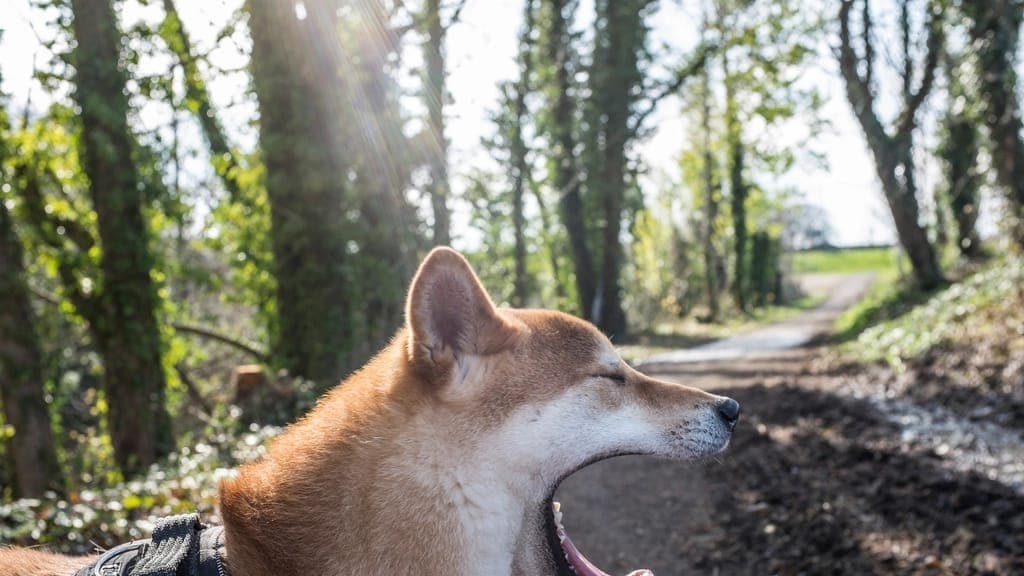
- Tiredness and waking up. A slow, stretchy yawn at bedtime or after a nap is exactly what it looks like.
- Stress or conflict. A yawn in the middle of an uncomfortable moment, such as the vet table, a crowded elevator or a scolding, is a classic stress signal. Turid Rugaas listed yawning among her calming signals.
- Excitement or anticipation. Many dogs yawn, sometimes with a little squeak, while waiting for a walk, a meal or a game. This is arousal rather than distress.
- Contagion. Studies have found that dogs can "catch" yawns from people, and are more likely to catch them from familiar people than from strangers.
Stress yawns tend to be shorter and more frequent, often appear in clusters, and come with other signals such as a tense mouth, flattened ears or turning away. Tired yawns are slow and usually followed by settling down.
Physical reasons dogs yawn
Plenty of yawns are pure physiology. A yawn stretches the jaw, face and throat and seems to help the body switch gears, which is why so many dogs yawn and stretch the moment they stand up from a nap, or yawn as they turn and settle into bed. Researchers have also proposed that yawning helps regulate brain temperature or boosts alertness, ideas tested mainly in humans and other animals rather than in dogs.
A few medical situations can also bring on yawning or yawn-like jaw movements, including nausea, mouth or jaw pain, and drowsiness from illness. A dog who yawns far more than usual while also seeming flat, off her food or reluctant to chew should see a vet.
Dog yawning when petted
A dog yawning when petted is one of the most common things owners notice and misread. Many people assume she is relaxed and sleepy. Sometimes that is true, but often a yawn during petting means your dog is not enjoying the particular kind of touch she is getting.
Common culprits are patting on the top of the head, leaning over her, hugging, holding her face, or petting by someone she does not know well. Watch what else she does: if she turns her head, licks her lips, leans away or freezes, she is asking you to stop.
Try this quick consent test:
- Pet your dog for three to five seconds on her chest or the side of her neck.
- Stop and take your hand away.
- Watch her. If she leans in, nudges your hand or stays close, she wants more.
- If she moves away, shakes off, yawns or looks elsewhere, respect it and give her a break.
Our guide on how to greet a dog covers where most dogs prefer to be touched and how to let them choose.
Dog yawning a lot: stress or something else?
If your dog is yawning a lot, start by asking where and when. Yawning a lot in the evening, after exercise, or when settling into bed is normal. Yawning a lot in the car, the waiting room, a training class or around visitors suggests those situations are stressful for her.
Research supports this link. In a study by Beerda and colleagues (1998), dogs exposed to unpleasant stimuli showed a range of behavioral changes alongside rises in the stress hormone cortisol, and mouth-related behaviors such as tongue flicking and snout licking were among them. Owners, meanwhile, tend to recognize obvious signs like trembling and whining more readily than subtle ones like yawning and licking (Mariti and colleagues, 2012).
If you see frequent stress yawns, look at the bigger picture of your dog's day. Our guide to signs of stress in dogs explains how small stressors add up, a process known as trigger stacking. Dogs who yawn, pace and lick their lips as you get ready to leave the house may be showing early signs described in our guide to separation anxiety.
Yawning between dogs: defusing tension
Dogs yawn at each other as well as at us. Turid Rugaas described the yawn as one of the signals dogs use to calm a tense meeting, and you can see it most clearly when two dogs are unsure of each other. Typical moments include:
- A dog yawning and looking away as another dog approaches straight on, especially on leash
- A yawn from an older dog being pestered by a puppy, often just before she walks off or lies down
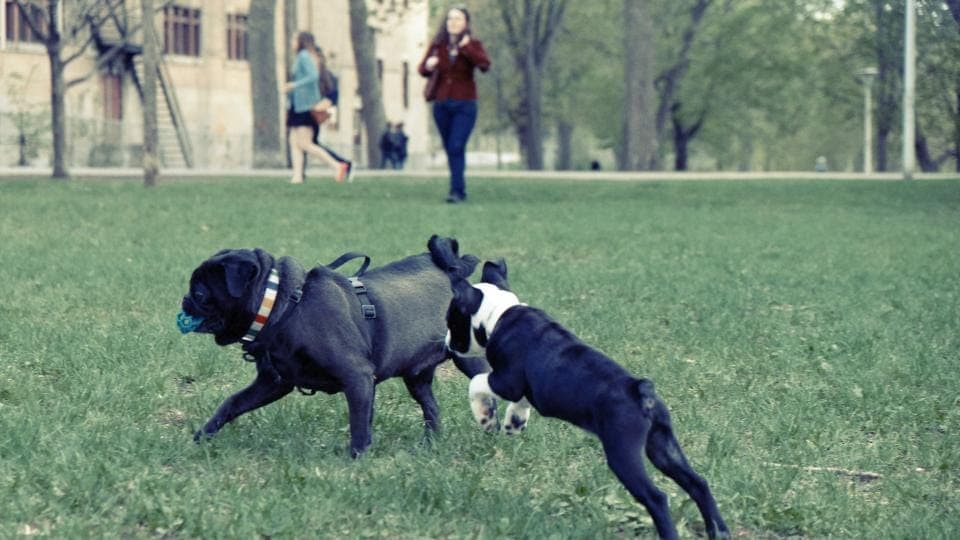
- A yawn after a play bout gets too rough, followed by a pause or a shake-off from both dogs
- Several dogs yawning while waiting their turn at a busy park gate or in a training class
Whether the yawn is aimed at the other dog or simply reflects the yawner's own unease is still debated, because intent is hard to measure. For you, the practical meaning is the same: there is tension in this interaction. Watch the reply. If the other dog softens, curves away or slows down, the dogs have sorted it out themselves. If the approaching dog keeps coming, or stiffens and stares, step in and add space. Our guide to introducing two dogs shows how to set up first meetings so these signals have room to work.
Dog licking lips: what it means
Lip licking, sometimes called a tongue flick, is a quick swipe of the tongue across the lips or nose. Its meaning depends entirely on context.
Normal reasons: food is nearby or has just been eaten, your dog is anticipating a treat, she has just drunk water, or something tasty is on her muzzle.
Stress or appeasement: a quick, often tiny lick when there is no food around. It frequently appears when a dog is hugged, stared at, photographed, scolded, approached head-on or handled. Research on dog-human interactions has found that lip licking becomes more frequent when people behave in a threatening way.
Health reasons: repeated lip licking, smacking, swallowing, drooling, or licking floors and furniture can be a sign of nausea or gastrointestinal discomfort, as can frantic grass eating. One veterinary study of dogs that excessively licked surfaces found that most of them had an underlying gastrointestinal disorder, and in many of those dogs the licking eased once the condition was treated.
Lip licking is a separate behavior from licking you; if your dog licks your face or hands, see why dogs lick people. For how the mouth, lips and commissure change with emotion more broadly, read our guide to dog facial expressions.
Vet check: If your dog licks her lips constantly, licks the floor or carpet, gulps, drools more than usual, or shakes her head and scratches her ears, book a vet exam. Nausea, dental pain and ear infections all produce behaviors that look like stress signals. A sudden increase in any of them is worth reading about in our guide to sudden behavior changes.
Dog shaking off after petting
The shake-off is the full-body shake dogs do when wet, but dogs also shake off when completely dry. Watch for it right after a hug, a vet exam, an intense greeting with another dog, a stretch of rough play or a moment of handling.
A dry shake-off looks like a reset button. Your dog has just been through something mildly tense, and the shake seems to release that tension so she can move on. Dogs often shake off and then walk away, sniff, or go back to what they were doing before.
A shake-off after petting does not mean your dog dislikes you or petting in general. It often means that particular interaction was a bit much, perhaps too long, too rough, or too restraining. Shorter, gentler petting on her chest or shoulders, with pauses to check she wants more, usually solves it.
Pro tip: Shake-offs during dog-dog play are a good sign. Two dogs who pause, shake off and then re-engage are regulating their own arousal. Play that never includes these breaks is more likely to boil over.
Displacement behaviors in dogs: the bigger picture
Yawning, lip licking and shaking off are all examples of displacement behaviors. In ethology, a displacement behavior is a normal action that appears out of context when an animal is torn between two motivations, such as wanting to approach and wanting to avoid. The behavior seems to release some of that internal conflict.
Other common displacement behaviors in dogs include:
- Sudden scratching when not itchy
- Sniffing the ground in a tense moment
- Grooming or licking a paw
- Stretching or "play bowing" out of context
- Sneezing during play or excitement
Many of these overlap with the calming signals described by Turid Rugaas. Whether you call them calming signals, appeasement signals or displacement behaviors, the practical message is the same: your dog is feeling some conflict, and you may be able to help by easing the pressure. Our behavior glossary defines these terms if you want to go deeper.
How to tell what a yawn, lick or shake means
Use the surrounding context to decide what you are seeing.
| Signal | Probably normal when... | Probably stress when... | Possibly health-related when... |
|---|---|---|---|
| Yawn | Bedtime, after exercise, slow and stretchy | During handling, tense greetings, vet visits; frequent and quick | Accompanied by lethargy or other illness signs |
| Lip lick | Food nearby, after drinking, anticipating a treat | No food around; during hugs, staring, scolding | Constant, with gulping, drooling or licking surfaces |
| Shake-off | Wet coat, after waking | Dry coat; right after a hug, exam, or intense greeting | Frequent head shaking, scratching ears, tilting head |
What to do when you see these signals
- Pause. Stop whatever you or others are doing to your dog for a moment.
- Look at the whole dog. Check ears, eyes, tail, mouth and posture for other stress signals.
- Reduce the pressure. Step back, turn sideways, stop petting, or move her away from the trigger.
- Let her choose. Allow her to re-engage or leave on her own terms.
- Note the pattern. Write down when the signals appear. Repeated triggers can be addressed gradually with desensitization and counter-conditioning.
- Rule out health issues. If licking, shaking or yawning is frequent or new, see your vet.
Never scold a dog for yawning, lip licking or shaking off. These signals are honest information, and suppressing them only removes your early-warning system.
Putting it together
A yawn, a lip lick or a shake-off on its own rarely means much. The same signals in a cluster, during a tense moment, are your dog quietly telling you she is uncomfortable. Respond early, by pausing, giving space and letting her choose, and you will rarely need to deal with louder signals later.
This week, notice when your dog yawns, licks her lips or shakes off, and what happened just before. That simple habit will teach you more about her comfort zones than any single article can.
Frequently asked questions
Why does my dog yawn when I pet her?
A yawn during petting often means your dog is a little uncomfortable with the way she is being touched, especially if it comes with a head turn, lip lick or leaning away. Try a consent test: stop petting for a few seconds and see whether she moves closer for more or moves away. If she leaves, she was asking for a break.
Is a dog yawning a lot a sign of stress?
It can be. Repeated yawning in situations like the vet clinic, a busy park or a car ride is a common stress signal. Yawning a lot at bedtime or after a big walk is more likely tiredness. Look for other signs such as panting, a low tail, pacing or lip licking to tell them apart.
What does it mean when a dog licks her lips with no food around?
A quick flick of the tongue over the lips or nose when there is no food is usually a sign of mild stress, uncertainty or appeasement. It often appears when a dog is hugged, stared at, scolded or approached head-on. Persistent licking or smacking can also signal nausea, so mention it to your vet if it is frequent.
Why does my dog shake off after I hug him?
Many dogs tolerate hugs rather than enjoy them. A full-body shake right after a hug, rough handling or an intense greeting is often a way of releasing tension and resetting. It is not a reason to panic, but it is a useful hint that your dog might prefer a gentler form of affection, like a chest scratch at his side.
Do dogs catch yawns from people?
Research suggests many do. A 2008 study found that dogs yawned more after watching a person yawn, and later work found dogs were more likely to catch yawns from their owners than from strangers. Scientists still debate whether this reflects empathy, social bonding or something simpler, but contagious yawning is a real and measurable effect.
Why does my dog yawn during training?
A yawn during training often means your dog feels some pressure or confusion, for example when a cue is unclear, a session runs long, or you lean over her or repeat yourself with rising frustration. It can also be anticipation while waiting for a reward. Try shortening sessions, making the task easier, rewarding more often and giving her a sniff break. If yawns fade as she succeeds, stress was likely the cause.
Can a dog yawn from excitement rather than anxiety?
Yes. Many dogs yawn, sometimes with a squeak or a whine, while waiting for a walk, a meal or a ball to be thrown. These anticipation yawns come with forward ears, bright eyes, bouncing or fixed attention on the reward. Anxious yawns tend to come with a closed mouth, ears back, lip licks or turning away. The body around the yawn tells you which emotion is driving it.
Sources & further reading
- Rugaas, T. (2006). On Talking Terms With Dogs: Calming Signals (2nd ed.). Dogwise Publishing.
- Joly-Mascheroni, R. M., Senju, A., & Shepherd, A. J. (2008). Dogs catch human yawns. Biology Letters, 4(5), 446-448.
- Romero, T., Konno, A., & Hasegawa, T. (2013). Familiarity bias and physiological responses in contagious yawning by dogs support link to empathy. PLoS ONE, 8(8), e71365.
- Beerda, B., Schilder, M. B. H., van Hooff, J. A. R. A. M., de Vries, H. W., & Mol, J. A. (1998). Behavioural, saliva cortisol and heart rate responses to different types of stimuli in dogs. Applied Animal Behaviour Science, 58(3-4), 365-381.
- Firnkes, A., Bartels, A., Bidoli, E., & Erhard, M. (2017). Appeasement signals used by dogs during dog-human communication. Journal of Veterinary Behavior, 19, 35-44.
- Mariti, C., Gazzano, A., Moore, J. L., Baragli, P., Chelli, L., & Sighieri, C. (2012). Perception of dogs' stress by their owners. Journal of Veterinary Behavior, 7(4), 213-219.
- Becuwe-Bonnet, V., Belanger, M. C., Frank, D., Parent, J., & Helie, P. (2012). Gastrointestinal disorders in dogs with excessive licking of surfaces. Journal of Veterinary Behavior, 7(4), 194-204.
This guide is for education only and does not replace an in-person assessment. If your dog's behavior changes suddenly, or you are worried about bites or aggression, speak to your veterinarian or a qualified behavior professional. See our disclaimer.