Emotions & mind
Signs Your Dog Loves You: 10 Science-Backed Clues
Dogs can't say it, but research on attachment, gaze and brain activity shows how they do. Here are 10 signs your dog loves you and how to deepen the bond.
Key takeaways
- Science can't measure love directly, but dogs show clear, measurable attachment to their owners that resembles the bond between children and caregivers.
- Common signs include seeking you out, enthusiastic greetings, soft mutual gazing, leaning and sleeping close, and looking to you for safety.
- Dogs show love in dog ways, so hugs and kisses may not mean to them what they mean to us; a relaxed body around you matters more.
- Strong attachment is healthy, but distress whenever you're absent can signal separation anxiety rather than extra love.
- You can deepen your bond through predictable routines, play, positive reinforcement training, respect for your dog's body language and time spent sniffing and exploring together.
Jump to a section
The clearest signs your dog loves you are behavioral: your dog seeks you out, greets you warmly after time apart, relaxes in your company, makes soft eye contact, leans or sleeps close to you, and looks to you for safety when something feels uncertain. Research on canine attachment shows these behaviors reflect a genuine bond, not just a link to the food bowl.
Love is a human word, and science can't measure it directly. What researchers can measure is attachment, preference and stress relief, and dogs score high on all three. Knowing the signs also helps you spot when something is off, because a few behaviors that look like affection can actually signal stress. For the bigger picture of why dogs act as they do, see our guide to dog behavior explained.
Does my dog love me? What science can tell us
In 1998, researchers adapted the Strange Situation Test, originally developed to study the bond between infants and caregivers, for dogs and their owners. The dogs explored and played more confidently when their owner was present, showed more contact-seeking on the owner's return, and behaved differently with a stranger. The pattern matched what psychologists call attachment.
Since then, several lines of research have added to the picture:
- Gaze and hormones. A 2015 study in Science found that mutual gazing between dogs and owners was associated with increased oxytocin in both, a hormone involved in social bonding.
- Brain responses to your scent. An fMRI study found that the caudate nucleus, a brain region linked to reward and positive expectation, responded more strongly to the scent of a familiar human than to the scent of strangers or dogs.
- Praise versus food. A follow-up imaging study found that many dogs' reward responses to their owner's praise were as strong as, or stronger than, their responses to food.
- Safe haven. An owner's presence can buffer a dog's stress response when something unsettling happens.
None of this proves dogs feel love exactly as people do. But it does show that the bond is real, measurable and about more than meals.
10 signs your dog loves you
Look for a pattern of these signs rather than a single behavior. Each dog expresses attachment differently, depending on breed, personality and history.
1. They seek you out
Your dog chooses to be in the same room, settles near your feet or trots after you when you get up. Shadowing is classic attachment behavior; read more about why your dog follows you everywhere and when it tips into anxiety.
2. They greet you enthusiastically
Wiggly bodies, loose wagging tails, soft vocalizing and bringing a toy to the door are all part of a warm reunion. A Swedish study found that dogs greeted their owners more intensely after being alone for two hours than after 30 minutes, suggesting they notice and respond to longer separations.
3. They make soft eye contact
A relaxed gaze with soft eyes and slow blinks, in a calm moment, is a social and bonding behavior. Learn to tell it apart from a hard stare in our guide to why your dog stares at you.
4. They lean on you or press against you
Leaning is a way for dogs to get full-body contact and comfort. A relaxed dog who presses into your legs is seeking closeness; see why dogs lean on people for the other things leaning can mean.
5. They're relaxed around you
This is the most important sign of all. Loose muscles, a soft mouth, ears in their natural position, a tail at neutral height and easy movement show that your dog feels safe. Our guide to happy dog body language shows exactly what to look for.
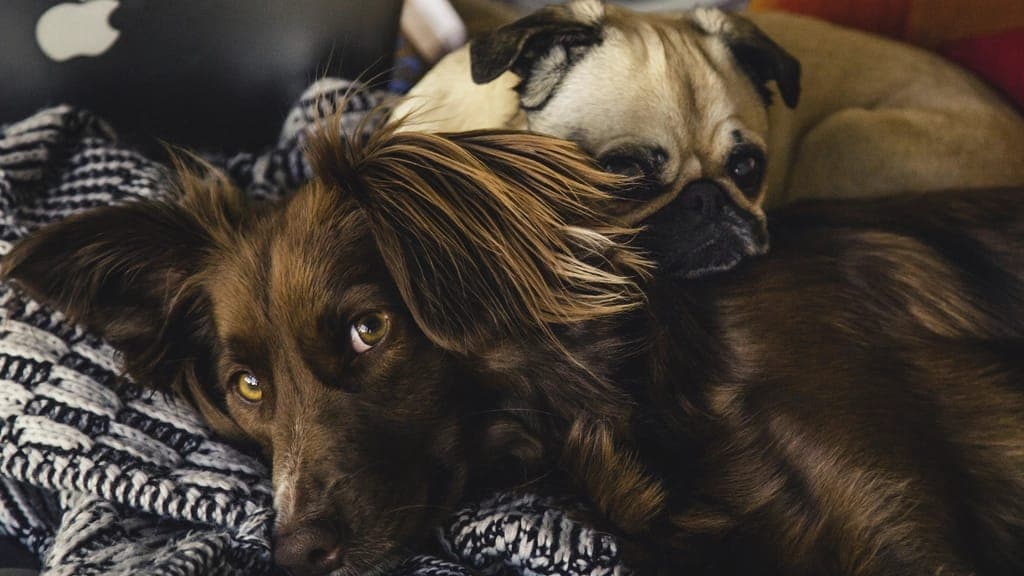
6. They sleep close to you
Sleeping is when an animal is most vulnerable, so choosing to sleep near you, or touching you, is a sign of trust. Find out what different dog sleeping positions can reveal, including why some dogs sleep with their back pressed against you.
7. They lick you gently
Slow, soft licks in a relaxed moment are an affiliative behavior that begins in puppyhood. Licking has other meanings too, from appeasement to nausea; see why your dog licks you.
8. They bring you toys and invite play
Play is a social activity. A dog who drops a toy in your lap, play bows or nudges you toward a game wants to interact with you specifically.
9. They look to you when they're unsure
When something new happens, such as a strange noise, an unfamiliar object or a new person, many dogs glance at their owner before deciding how to react. Using you as a reference point shows they trust your judgment and see you as safety.
10. They respond to your emotions
Dogs are very sensitive to changes in their people. In one study, dogs approached a person who was pretending to cry more often than one who was humming or talking, often nuzzling or licking them. Your dog noticing when you're upset is part of how closely they track you.
How dogs show love differently from people
Dogs don't express affection the way primates do. Hugging, for example, involves wrapping limbs around another body, which in dog language can feel restraining. Many dogs tolerate hugs from people they trust, but plenty show subtle discomfort: turning the head away, lip licking, yawning, stiffening or showing the whites of their eyes.
Dogs generally prefer:
- Side-by-side contact such as leaning, resting a chin on you or lying against your legs
- Gentle stroking on the chest, shoulders or side, rather than patting on the head
- Shared activity such as walks, sniffing and play
- Proximity without being held
Belly-up rolls can be an invitation for a rub, but not always; some dogs roll over to avoid conflict. Our guide to why dogs show their belly explains how to tell the difference.
Pro tip: Try a three-second consent test. Pet your dog for three seconds, then stop. If they lean in, nudge you or paw for more, carry on. If they move away or shake off, they've had enough for now.
Dog attachment signs vs. anxiety
Strong attachment is healthy. But some behaviors that look like extra devotion are really signs that a dog is struggling to cope without you. Use this checklist to assess your dog.
| Healthy attachment | May signal separation-related distress |
|---|---|
| Follows you, but can settle alone in another room | Cannot settle unless near you |
| Greets you warmly, then relaxes | Frantic greetings after even brief absences |
| Eats, rests or plays while you're out | Won't eat or rest until you return |
| Calm when you prepare to leave | Pacing, panting, whining when you pick up keys |
| Home is undisturbed when you return | Destruction, howling, accidents near exits |
If your dog fits the right-hand column, they may have separation anxiety, a common and treatable problem that needs a gradual, positive plan rather than simply being left alone to "get over it."
Signs that look like love but may mean something else
A few behaviors are easily misread as affection:
- A wagging tail doesn't always mean happiness. Speed, height and stiffness matter; a high, stiff, fast wag can signal arousal or tension. See our guide to tail wagging meaning.
- Licking during a hug can be appeasement, a polite request to let go.
- A "smile" with the lips pulled back and a tense face can be a stress grimace.
- Sudden clinginess can be a sign of illness or pain rather than extra affection.
Vet check: If your normally independent dog suddenly becomes very clingy, or an affectionate dog becomes withdrawn, talk to your vet. Changes in social behavior are often early signs of pain, illness or age-related changes.
How to bond with your dog
Bonds are built through predictable, positive experiences. These steps work for new puppies, rescue dogs and long-time companions alike.
- Keep a predictable routine. Regular meals, walks and rest periods help dogs feel safe.
- Let your dog choose contact. Invite, don't force. Dogs trust people who respect their "no."
- Train with positive reinforcement. Short, reward-based training sessions build communication and confidence. Avoid punishment, which damages trust.
- Play together every day. Tug, fetch, find-it games and gentle chase build social connection.
- Go on sniffing walks. Let your dog explore at their own pace. Sniffing is enriching and calming.
- Hand-feed some meals. Use part of their daily food in training or scatter games so you become associated with good things.
- Learn their body language. Responding to your dog's signals, such as giving space when they turn away, shows them you're listening.
- Be their safe haven. Comfort your dog when they're scared; it doesn't reinforce fear.
- Spend quiet time together. Simply relaxing side by side is bonding.
Myth: "You need to be the pack leader for your dog to respect and love you." Modern behavioral science has moved away from dominance-based ideas. Dogs bond most strongly with people who are predictable, kind and responsive.
What to do next
Your dog probably tells you they love you many times a day, through greetings, glances, leans and the simple choice to rest near you. Look for the pattern, and pay most attention to how relaxed your dog is in your company. To deepen the bond, focus on predictable routines, play, reward-based training and respect for your dog's body language. If attachment ever seems to tip into distress when you're apart, act early and gently.
Frequently asked questions
How do I know if my dog loves me?
Look for a cluster of behaviors rather than one sign. Dogs who are strongly bonded to their people seek them out, greet them warmly after time apart, relax in their presence, make soft eye contact, lean or sleep close, and look to them for safety when something is uncertain. If your dog's body is usually loose and comfortable around you, that is a strong indicator of trust and attachment.
Do dogs really love their owners or just the food?
Food matters, but research suggests the bond goes further. Attachment studies show dogs treat owners as a secure base and safe haven, and brain imaging found the reward area of dogs' brains responded more strongly to the scent of a familiar human than to unfamiliar people or dogs. In another imaging study, many dogs responded to owner praise as much as or more than to food.
How do dogs show love to humans?
Dogs show love through closeness and communication: following you, leaning against you, sleeping near you, gentle licking, bringing toys, soft gazing and enthusiastic greetings. They also show it by relaxing around you and checking in with you when unsure. Many dogs prefer side-by-side contact and play to hugs, which can feel restraining to them.
Does my dog love me if he doesn't cuddle?
Yes, very likely. Some dogs, including many independent breeds and dogs with sensitive bodies or past experiences, are less physically affectionate. They may show attachment by staying in the same room, checking in on walks, greeting you, playing or relaxing near you. Respecting your dog's preference for space is itself a way to build trust and closeness.
How can I bond with a new dog?
Start with predictability and choice. Keep routines consistent, let your dog approach you, hand-feed some meals or use food in training games, take slow sniffing walks, and play gently. Avoid forcing contact or overwhelming them with visitors. Newly adopted dogs often need weeks to months to settle, so measure progress in small signs like relaxed sleep and voluntary approaches.
Sources & further reading
- Topál, J., Miklósi, Á., Csányi, V., & Dóka, A. (1998). Attachment behavior in dogs (Canis familiaris): A new application of Ainsworth's (1969) Strange Situation Test. Journal of Comparative Psychology, 112(3), 219-229.
- Nagasawa, M., Mitsui, S., En, S., Ohtani, N., Ohta, M., Sakuma, Y., Onaka, T., Mogi, K., & Kikusui, T. (2015). Oxytocin-gaze positive loop and the coevolution of human-dog bonds. Science, 348(6232), 333-336.
- Berns, G. S., Brooks, A. M., & Spivak, M. (2015). Scent of the familiar: An fMRI study of canine brain responses to familiar and unfamiliar human and dog odors. Behavioural Processes, 110, 37-46.
- Cook, P. F., Prichard, A., Spivak, M., & Berns, G. S. (2016). Awake canine fMRI predicts dogs' preference for praise vs food. Social Cognitive and Affective Neuroscience, 11(12), 1853-1862.
- Rehn, T., & Keeling, L. J. (2011). The effect of time left alone at home on dog welfare. Applied Animal Behaviour Science, 129(2-4), 129-135.
- Gácsi, M., Maros, K., Sernkvist, S., Faragó, T., & Miklósi, Á. (2013). Human analogue safe haven effect of the owner: Behavioural and heart rate response to stressful social stimuli in dogs. PLoS ONE, 8(3), e58475.
- Custance, D., & Mayer, J. (2012). Empathic-like responding by domestic dogs (Canis familiaris) to distress in humans: An exploratory study. Animal Cognition, 15(5), 851-859.
This guide is for education only and does not replace an in-person assessment. If your dog's behavior changes suddenly, or you are worried about bites or aggression, speak to your veterinarian or a qualified behavior professional. See our disclaimer.