Quirky behaviors
Why Do Dogs Hump? The Real Reasons Behind Mounting (It's Not Usually About Sex)
Humping is mostly about excitement, play or stress, not sex or dominance. Here's what mounting really means and how to redirect it kindly.
Key takeaways
- Dogs hump for many reasons, including play, excitement, stress, attention and sometimes sexual motivation, and both males and females do it.
- Humping is not a reliable sign of dominance; it usually reflects high arousal or a dog who doesn't know what else to do.
- Puppies commonly mount during play long before sexual maturity, and it is a normal part of development.
- A sudden increase in humping, licking of the genitals or rubbing on furniture can point to itching, a urinary problem or another medical issue that needs a vet.
- The kindest fix is calm interruption plus redirection to an incompatible behavior, more outlets for energy and fewer overexciting situations, never punishment.
Jump to a section
Dogs hump mostly because they are excited, playing, stressed or seeking attention, not because they are trying to be "the boss." Mounting is a normal canine behavior seen in males and females, intact and neutered dogs, and even very young puppies. Sexual motivation plays a role for some intact dogs, but it is only one reason among many.
That's why the same behavior can mean very different things depending on who is doing it, where, and what happened just before. A puppy mounting a plush toy, an adult dog humping a new playmate at the park and a senior dog suddenly rubbing against cushions are three separate stories. Reading the whole dog in context, as with any part of dog behavior, is what tells you whether to ignore it, redirect it or call your vet.
The main reasons dogs hump
Mounting is what behaviorists call a "multi-function" behavior. The motor pattern looks the same every time, but the motivation behind it changes. Most dogs hump for one or more of these reasons.
Excitement and overarousal
This is the most common driver. When a dog's arousal climbs past what he can comfortably handle, the energy has to go somewhere. Some dogs bark, some get the zoomies, and some mount. You'll often see it when guests arrive, during an intense game of fetch or the moment a leash comes out.
Play
Mounting is part of normal canine play repertoires, alongside chasing, wrestling and play bows. Research on dog play describes it as a way to practice movements, test social relationships and build bonds. In balanced play, dogs take turns and the mounting is brief.
Stress and displacement
When a dog feels conflicted, uncertain or anxious, he may perform a behavior that seems out of place. These are called displacement behaviors, and humping is one of them. A dog who mounts a visitor's leg while also yawning, lip licking or avoiding eye contact may be showing signs of stress, not affection.
Attention-seeking
If humping your leg once earned laughter, shouting, pushing or a game of "keep away," your dog learned that it's a reliable way to get you involved. Any attention, even negative attention, can reinforce it.
Sexual motivation
Intact males may mount females in heat, and hormones can raise the frequency of mounting in general. Intact females sometimes mount more around their heat cycle as well. But neutered and spayed dogs hump too, which shows that hormones explain only part of the picture.
Medical causes
Itching, irritation or discomfort around the genitals or hindquarters can trigger humping, rubbing or licking. Urinary tract infections, skin allergies, vaginitis, prostate problems and urinary incontinence are among the possibilities a vet will consider.
Vet check: If humping appears suddenly, increases sharply, or comes with frequent licking of the genitals, scooting, straining to urinate, discharge or a persistent erection, book a vet visit. Any sudden change in your dog's behavior deserves a medical look first.
Is humping a sign of dominance?
For decades, mounting was explained as a dog asserting rank. Current behavior science doesn't support that interpretation. Studies of dog play and social behavior find that mounting is performed by dogs of all temperaments and social roles, and it more often lines up with arousal and social uncertainty than with any stable "hierarchy."
The dominance label matters because it shapes what owners do next. People who believe their dog is "trying to be alpha" are more likely to use physical corrections, which raise stress and can trigger defensive aggression. The alpha dog myth has been retired by veterinary behavior organizations for good reason.
Myth: "If you let your dog hump, he'll think he outranks you." Mounting doesn't change how your dog views you. It's a habit or an emotional overflow, and it responds best to calm redirection.
Female dog humping
Owners are often surprised to see a female dog mounting, but it's entirely normal. Females hump for the same reasons males do: play, excitement, stress and attention.
A few patterns are worth knowing:
- Around a heat cycle: Intact females may mount more often in the days before and during estrus.
- After spaying: Many spayed females keep mounting, because the habit is not hormone-dependent.
- During play: Some females are enthusiastic "mounters" in play and will try it with dogs of either sex.
- New or sudden onset: If a female who never humped starts rubbing on bedding or licking her vulva frequently, ask your vet to check for a urinary tract infection or vaginitis.
Puppy humping
Puppies may start mounting littermates, toys and human arms within the first weeks of life, long before puberty. This is part of normal development. Young dogs are trying out motor patterns, learning how other dogs respond and discharging bursts of energy.
What to do with a humping puppy:
- Stay calm and avoid laughing, shouting or pushing, which can turn it into a game.
- Interrupt gently with a cheerful sound or by calmly standing up and turning away.
- Redirect to an appropriate outlet: a tug toy, a sniff game or a simple cue like sit.
- Reward the calmer choice with a treat or a short play session.
- Watch for patterns, like over-tiredness or overstimulation, and build in naps.
If your puppy is also nipping a lot during these moments, the guidance on puppy biting uses the same arousal-management principles.
Dog humping other dogs at the dog park
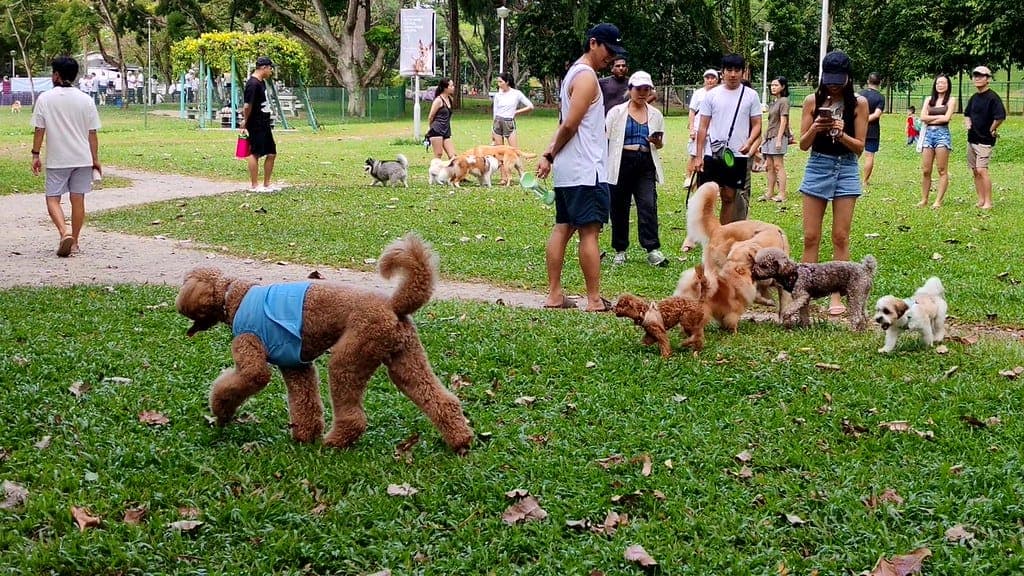
Mounting at the park is one of the most common causes of friction between dogs and between owners. Some dogs tolerate it, many don't. A dog being mounted may freeze, turn his head away, snap or try to escape, and a quick scuffle can follow.
Here's how to read and manage it:
| What you see | What it likely means | What to do |
|---|---|---|
| Brief mount during loose, bouncy play, partner keeps playing | Play overflow; both dogs are fine | Monitor; interrupt if it repeats |
| Repeated mounting, partner tries to move away | Over-arousal; the other dog is uncomfortable | Call your dog away, give a short break |
| Mounting a new arrival at the gate | Social uncertainty and excitement | Leash up briefly, let your dog decompress |
| Partner freezes, stiffens or shows whale eye | The other dog is stressed and may defend himself | Interrupt immediately and separate calmly |
| Mounting plus raised hackles, stiff posture | Tension, not play | Leave and reassess before the next visit |
Good dog park etiquette means interrupting your dog's mounting even if the other dog seems to tolerate it. Tolerating isn't the same as enjoying, and repeated mounting is a well-known trigger for fights. If you're unsure whether a scene is still fun, the cues in playing or fighting will help you decide.
Pro tip: Practice a "check-in" recall at home and in quiet areas first. A dog who will reliably come to you for a treat in the middle of play is far easier to manage when mounting starts.
How to stop dog humping
You don't need to eliminate every instance of mounting, especially brief play mounting between consenting dogs. But if it's frequent, bothers other dogs or targets people, these steps help.
1. Rule out medical causes
Start with a vet visit if the behavior is new, increasing, or paired with licking, scooting, urinary changes or skin problems.
2. Identify the trigger
Keep a short log for a week. Note when humping happens, who or what it's directed at and what happened just before. Patterns usually emerge quickly: guests arriving, end-of-day overtiredness, or play that tips into overarousal.
3. Manage the situation
Prevention stops the habit from strengthening. Use baby gates, a leash or a closed door when guests arrive. Remove the favorite humping pillow. End play sessions before they peak.
4. Interrupt calmly and redirect
As soon as your dog shows pre-mounting signs, such as fixed attention, clasping, or a stiff stance at another dog's side, calmly call him away or use a neutral interrupter. Then give him something else to do: sit, a hand target, go to his mat or a toss of treats on the floor to sniff out.
5. Teach an incompatible behavior
A dog can't hump while lying on a mat or sitting at your side. Practice these cues when your dog is calm so they're fluent when excitement rises. Reward generously.
6. Meet your dog's needs
More physical exercise helps some dogs, but mental work often helps more: sniff walks, food puzzles, short training games and chew time. A tired brain is less likely to boil over.
7. Avoid punishment
Yelling, spraying or physical corrections may stop a single episode but raise overall stress, which can increase humping and damage your relationship. The AVSAB recommends reward-based methods for all behavior change.
When humping needs professional help
Most humping is manageable at home. Contact your vet first, and then a certified behavior consultant or veterinary behaviorist, if:
- your dog becomes stiff, growls or snaps when you try to interrupt the mounting;
- mounting is directed at children or vulnerable people;
- the behavior seems compulsive, happening for long periods or in many contexts;
- your dog seems anxious overall, or mounting began after a big life change.
Putting it together
Humping is a normal behavior with many possible motivations, and the most common ones are excitement, play and stress. Start by asking what your dog is feeling in that moment and what happened just before. Rule out a medical cause if anything has changed, manage the triggers, and give your dog a better, rewarded alternative.
If mounting at the park is your main challenge, sharpen your eye for the early warning signs between dogs. Then explore the wider dog behavior guide to understand how arousal, stress and play connect across your dog's day.
Frequently asked questions
Why does my female dog hump?
Female dogs hump for the same reasons males do: play, excitement, stress relief, attention and, less often, hormonal changes around a heat cycle. Spayed females mount too. If humping appears suddenly or comes with licking, scooting or frequent urination, ask your vet to rule out a urinary tract infection, vaginitis or skin irritation.
Is it normal for puppies to hump?
Yes. Puppies often start mounting littermates, toys and even people within the first weeks of life, long before puberty. It is usually play and motor practice mixed with excitement. Calmly redirect your puppy to a toy or a sit, avoid making a big fuss, and the behavior typically fades as he learns better ways to burn off energy.
Does neutering stop a dog from humping?
Neutering often reduces sexually motivated mounting in male dogs, but it does not reliably stop humping driven by play, excitement, anxiety or attention. Many neutered males and spayed females keep mounting because the behavior is learned or arousal-based. Talk to your vet about timing and pros and cons rather than treating surgery as a behavior fix on its own.
Is humping a sign of dominance?
Usually not. Modern behavior science has moved away from dominance explanations for mounting. Dogs of every social status hump, and it most often reflects overexcitement, social uncertainty or play. Treating it as a power grab can lead owners to use harsh corrections that increase stress and make the behavior worse.
Why does my dog hump me when I come home?
Homecomings are a peak arousal moment. Some dogs channel that rush of excitement into mounting, especially if it has earned laughter, eye contact or pushing in the past. Keep greetings low-key, toss a few treats on the floor as you walk in, and reward four paws on the ground so your dog has a better outlet ready.
Sources & further reading
- Hart, B. L., & Eckstein, R. A. (1997). The role of gonadal hormones in the occurrence of objectionable behaviours in dogs and cats. Applied Animal Behaviour Science, 52(3-4), 331-344.
- Sommerville, R., O'Connor, E. A., & Asher, L. (2017). Why do dogs play? Function and welfare implications of play in the domestic dog. Applied Animal Behaviour Science, 197, 1-8.
- Landsberg, G., Hunthausen, W., & Ackerman, L. (2013). Behavior Problems of the Dog and Cat (3rd ed.). Saunders Elsevier.
- American Veterinary Society of Animal Behavior. (2021). Position Statement on Humane Dog Training.
This guide is for education only and does not replace an in-person assessment. If your dog's behavior changes suddenly, or you are worried about bites or aggression, speak to your veterinarian or a qualified behavior professional. See our disclaimer.