Everyday problems
How to Stop a Dog From Jumping on People
Why dogs jump up to greet people, and a humane step-by-step plan to teach polite greetings at home, with guests and on walks.
Key takeaways
- Most dogs jump up to greet people because they want to get close to faces, and the habit is reinforced every time it earns attention.
- The most effective fix is to make a polite greeting, such as four paws on the floor or a sit, the behavior that reliably earns attention.
- Management, such as leashes, gates and calm arrivals, prevents practice while your dog is learning.
- Kneeing, stepping on paws or pushing a dog down can cause pain and fear, and often makes jumping more frantic.
- Guests need a simple script so everyone rewards the same behavior.
Jump to a section
To stop a dog from jumping on people, make sure jumping never earns attention and that a polite alternative, like a sit or four paws on the floor, always does. Combine that with management, such as a leash, gate or treats scattered on the floor as people arrive, so your dog does not keep practicing the habit while learning.
Jumping is one of the most common complaints owners have, and one of the most fixable. It is rarely about bad manners or "dominance". It is a friendly greeting aimed at the wrong height, kept alive by the attention it earns. Like most dog behavior problems, it improves fastest when you understand the reason behind it and change what the dog gets out of it.
Why do dogs jump on people?
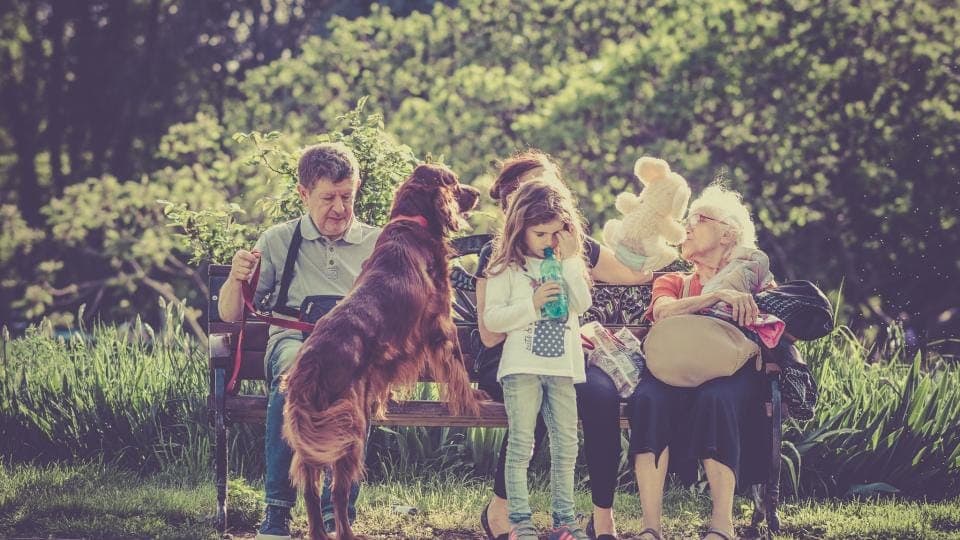
Dogs greet each other face to face. Puppies lick and nuzzle around the mouths of adult dogs, and many dogs keep a strong urge to get close to the faces of people they like. Our faces are a long way up, so jumping is the obvious solution from a dog's point of view.
Then the behavior gets rewarded. When a dog jumps, people look at them, talk to them, touch them and often laugh. Even pushing a dog away or saying "off!" counts as attention to many dogs. Over hundreds of repetitions, jumping becomes the default way to say hello.
Other factors can feed into it:
- High arousal. Dogs who are already excited, such as on arrival home or at the start of a walk, find it harder to keep four paws down.
- Lack of practice at alternatives. If your dog has never been taught what to do instead, jumping fills the gap.
- Nervousness or appeasement. Some dogs jump with a low, wiggling body, flattened ears and lip licking, as a way to defuse tension with a person they are unsure about. Our guide to calming signals explains this kind of appeasement behavior.
Myth: "My dog jumps on me because he thinks he is the boss." Jumping is a greeting and attention-seeking behavior, not a status grab. Our article on the alpha dog myth explains why dominance labels mislead owners and lead to harmful training.
What not to do
Several popular tricks can cause injury, fear or confusion, and many simply do not work.
- Kneeing the chest can hurt the dog and, for small or young dogs, risks injury.
- Stepping on back paws is painful and may make your dog wary of people's feet.
- Pushing the dog down often looks like rough play and can make jumping more frantic.
- Shouting or scolding adds arousal and is still attention.
- Squirt bottles or startle devices create fear of people approaching, which can lead to other problems.
These methods all aim to make jumping unpleasant, and research on training methods links aversive approaches with more stress and, in some cases, more problem behavior. You get better, longer-lasting results by teaching what to do.
Step-by-step plan to stop jumping
Work through these steps in order. The key is consistency: if one family member still rewards jumping, your dog will keep trying it.
- Choose the polite greeting. Decide what you want instead: four paws on the floor, a sit, or going to a mat. Pick one and teach everyone the same rule.
- Teach it when calm. In short sessions with no visitors, reward your dog for sitting or standing calmly in front of you. Build a strong, quick response.
- Make attention depend on paws on the floor. When you come home, greet your dog only while their paws are down. If they jump, calmly stand up straight, fold your arms, turn away and wait a moment. As soon as all four paws land, turn back and greet them quietly.
- Lower your greeting. Crouch down sideways to say hello, so your dog can reach your face without jumping. This is especially useful for puppies.
- Add treats to the floor. As you arrive, scatter a few treats on the floor. Your dog's nose goes down, their paws stay down, and the first moments of excitement pass.
- Practice with helpers. Recruit a friend to approach, greet and walk away repeatedly. Each approach is a training repetition, and repeated greetings become less exciting.
- Gradually raise the challenge. Progress to more exciting people, the front door, the street and new places, only when your dog is reliable at the current level.
Pro tip: Reward calm before your dog has a chance to jump. Catching the moment just before jumping, when your dog is standing still and looking up at you, teaches far faster than waiting for mistakes.
Dog jumps on guests: a front-door routine
The doorway is the hardest place to stay calm: the doorbell rings, people arrive with bags and new smells, and everyone is talking at once. Prepare for it.
- Before guests arrive, take your dog for a sniff walk or play a short game to burn off excess energy.
- Put your dog behind a baby gate or on a leash before opening the door.
- Give guests a simple script: no eye contact, talking or touching while the dog is jumping; greet briefly and calmly when paws are down.
- Scatter a handful of treats on the floor as guests step inside.
- Once guests are seated and your dog is calmer, let your dog say hello on leash, rewarding a sit or four on the floor.
- Offer your dog a stuffed food toy or chew on their bed so they have something to do while people chat.
- If your dog cannot settle, give them a break in a quiet room with a chew. That is not a punishment; it is a rest.
Teaching visitors, especially children, how to meet your dog calmly helps too. Our guide on how to greet a dog has tips you can share with guests.
Safety note: Jumping is risky around babies, toddlers, frail older adults and anyone unsteady on their feet. Use gates and leashes until your dog is reliable, and supervise every interaction. Our guide to dogs and kids covers safe household setups.
Puppy jumping up
Puppy jumping up is easiest to fix before it becomes a habit. Every greeting your puppy experiences is a lesson, so set the rule from day one: attention happens when paws are on the floor.
- Crouch to your puppy's level to greet, keeping it calm and brief.
- Reward sits generously, many times a day, until sitting becomes your puppy's go-to way to ask for things.
- Ask visitors to follow the same rule, and use a puppy pen or leash if they forget.
- Keep greetings low-key during the socialization period; puppies learn that people are pleasant without needing high excitement.
Our guide to puppy socialization explains how to give your puppy positive experiences with many different people, which helps produce calmer greetings later. If jumping comes with grabbing clothes or nipping, see our guide to puppy biting too.
Jumping on walks and in public
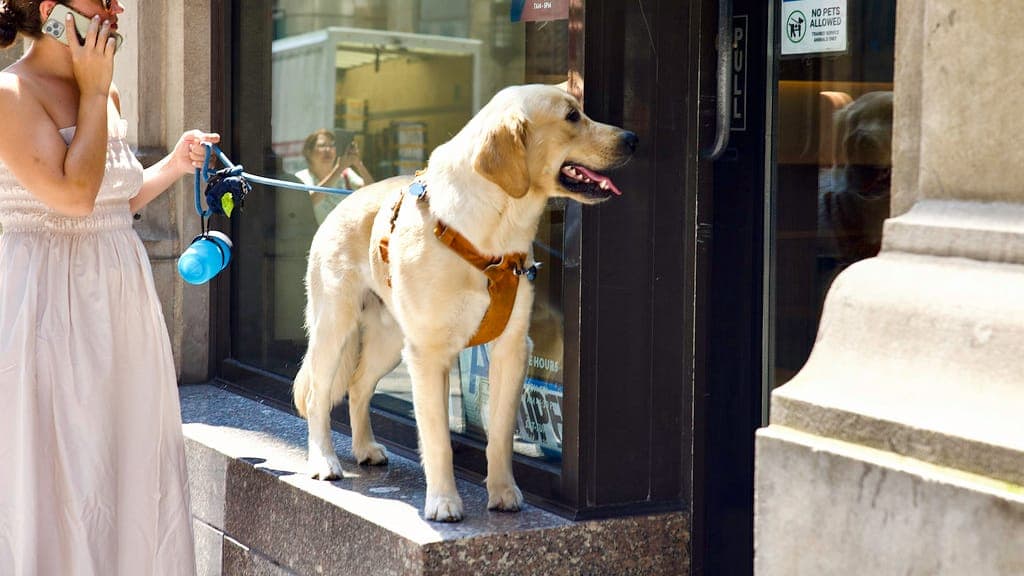
Jumping on strangers in the street or at the park is the same behavior in a more exciting setting. Keep your dog on a leash short enough to prevent contact, and ask people to wait until your dog is sitting before saying hello. If your dog cannot manage it yet, it is perfectly fine to say "he's in training" and walk on.
If your dog lunges and barks at people rather than trying to greet them, with a stiff body and hard stare, that is a different problem. Read our reactive dog guide and consider professional support.
Reading the jump: excited, anxious or overwhelmed?
Not every jump means the same thing. Look at the whole body. A loose, wiggly body, soft eyes, an open mouth and a sweeping tail point to friendly excitement. Pinned-back ears, a low or tucked tail, lip licking and repeated jumping at a person's face may point to nervous appeasement. A stiff, high body, hard stare and jumping combined with mouthing or grabbing may indicate frustration or overarousal.
Friendly jumpers do well with the plan above. Nervous or overwhelmed jumpers need calmer greetings, more space and more time, and a professional may help if you are unsure.
What to do next
Pick one greeting rule, teach it to everyone in your household, and start practicing today with short, calm sessions. Set up a front-door routine before your next visitor arrives, and make treats on the floor your new habit for homecomings.
With consistent practice, most dogs learn that keeping four paws down is the fastest way to get the attention they want. If jumping is driven by anxiety, comes with nipping you cannot manage, or you are not seeing progress, a certified trainer who uses positive reinforcement can help.
Frequently asked questions
Why do dogs jump on people?
Dogs jump up mainly to greet. Puppies lick and nuzzle the faces of adult dogs, and our faces are far above them, so jumping gets them closer. Jumping is also rewarded with touch, eye contact and talking, even when that attention is a scolding. Excitement, overarousal and sometimes nervousness or appeasement can add to it. It is a social behavior, not a bid for dominance.
How do I stop my dog jumping on guests?
Prepare before the doorbell rings. Keep your dog on a leash or behind a gate as guests arrive, and ask guests to ignore jumping and greet only when all four paws are on the floor. Scatter a few treats on the floor as people come in so your dog's nose goes down. Once your dog is calmer, let them say hello briefly, rewarding a sit or four on the floor.
How do I stop my puppy jumping up?
Start right away by greeting your puppy only when their paws are on the floor, crouching down to their level so they do not need to jump. Reward sits and calm standing generously, and keep greetings low-key. Ask everyone in the household and visitors to follow the same rule. Puppies learn quickly when jumping never pays and polite behavior always does.
Is it OK to knee a dog that jumps up?
No. Kneeing a dog in the chest, stepping on back paws or pushing them down can cause injury and pain, and may make your dog nervous of people approaching or bending over. Many dogs also treat pushing as rough play and jump harder. Teaching an alternative behavior and removing attention for jumping is safer, kinder and more effective.
How long does it take to stop a dog from jumping?
Many dogs show clear improvement within one to three weeks if everyone is consistent. Jumping that has been rewarded for years, or that happens mainly with exciting visitors, can take longer. Expect setbacks at highly arousing moments, such as a favorite person arriving after a long absence, and set your dog up with management on those occasions while you keep practicing.
Sources & further reading
- Donaldson, J. (1996). The Culture Clash. James & Kenneth Publishers.
- Pryor, K. (1999). Don't Shoot the Dog! The New Art of Teaching and Training (Revised ed.). Bantam Books.
- Hiby, E. F., Rooney, N. J., & Bradshaw, J. W. S. (2004). Dog training methods: Their use, effectiveness and interaction with behaviour and welfare. Animal Welfare, 13(1), 63-69.
- American Veterinary Society of Animal Behavior. (2021). Position statement on humane dog training. AVSAB.
This guide is for education only and does not replace an in-person assessment. If your dog's behavior changes suddenly, or you are worried about bites or aggression, speak to your veterinarian or a qualified behavior professional. See our disclaimer.