People & dogs
How to Greet a Dog Safely: Approach, Petting and the Consent Test
Most dog bites start with a friendly hello gone wrong. Learn how to approach, pet and read a dog so every greeting stays safe and pleasant.
Key takeaways
- Always ask the owner before greeting a dog, then let the dog decide whether to approach you.
- Approach slowly and slightly sideways, avoid staring, and never reach over a dog's head.
- Most dogs prefer gentle strokes on the chest, shoulders and side of the neck rather than pats on the top of the head.
- Use the consent test: pet for a few seconds, pause, and only continue if the dog leans in or nudges for more.
- Lip licking, yawning, turning away, freezing or whale eye mean the dog wants space, so stop and step back.
Jump to a section
To greet a dog safely, ask the owner first, then stand or crouch sideways and let the dog come to you. Avoid staring or reaching over their head. If the dog approaches with a loose, wiggly body, offer a brief stroke on the chest or shoulder, then pause to check they want more. If they hang back, let them be.
Most people greet dogs the way we greet people: walking straight up, making eye contact and reaching out. To many dogs, that looks pushy or even threatening. Learning a dog-friendly greeting, and reading the dog's answer, protects you from bites and helps dogs feel safe around people. It is one of the simplest ways anyone can support good dog socialization.
Step one: ask before you greet
Before anything else, ask the owner, "May I say hello to your dog?" Then accept the answer gracefully. The dog may be nervous, in training, recovering from surgery, or simply not a fan of strangers. A "no" is a responsible owner advocating for their dog.
Then ask the dog. Even if the owner says yes, the dog gets the final vote. Stand still and see whether the dog chooses to come over. A dog who stays behind their owner's legs, turns away or sniffs the ground is politely declining.
Safety note: Never approach a dog who is tied up outside a shop, behind a fence, in a car, eating, sleeping or chewing something. These dogs cannot easily move away, and many bites happen in exactly these situations.
How to approach a dog
When the owner and the dog have both said yes, follow these steps:
- Slow down. Walk calmly, never rush toward the dog.
- Approach in a curve. Dogs approach each other politely in an arc rather than head-on. Do the same.
- Turn slightly sideways. Standing side-on is less confrontational than facing a dog square-on.
- Crouch, don't lean. If you want to get lower, crouch at a distance with your body angled away rather than bending over the dog.
- Keep hands low and relaxed. There is no need to thrust your hand at the dog's nose. Dogs can smell you just fine.
- Soften your eyes. Glance at the dog, then look slightly away. Avoid a fixed stare.
- Let the dog come to you. Wait for the dog to close the gap and sniff you. Sniffing is how dogs gather information, much as they do in canine greetings with each other.
- Talk quietly. A calm, friendly voice helps; high-pitched squealing can over-excite or worry some dogs.
Read the dog: yes, maybe or no?
The dog's body language tells you whether to continue. Look at the whole dog, not just the tail; a wagging tail can mean excitement or tension, not only friendliness.
| Signal | What it usually means | What to do |
|---|---|---|
| Loose, wiggly body, soft eyes, relaxed open mouth | "Yes, I'd like to say hi" | Offer a brief chest or shoulder stroke |
| Approaches, sniffs, then moves away | "Nice to meet you, that's enough" | Let them go; don't follow |
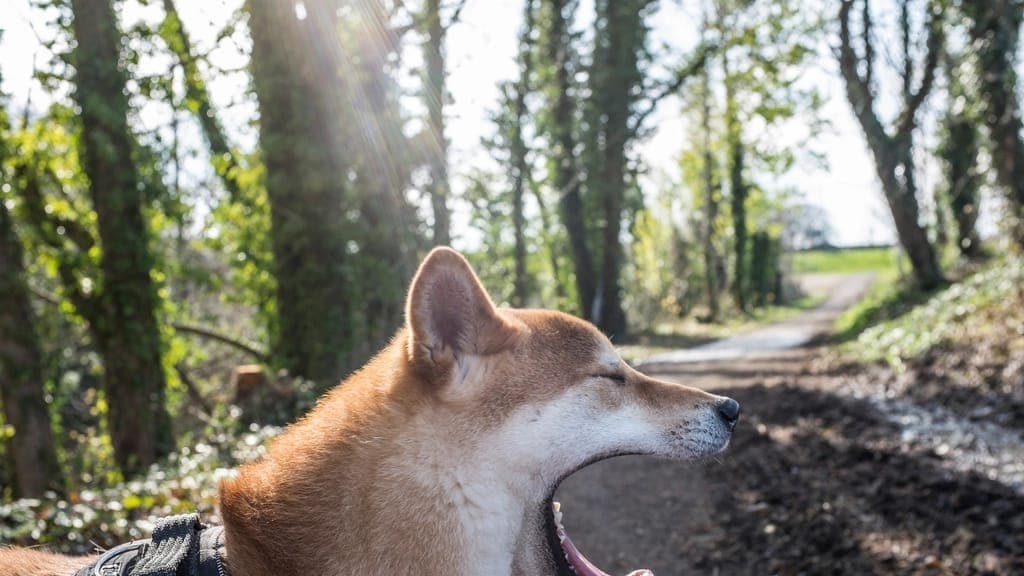
| Lip licking, yawning, looking away, sniffing the ground | "I'm a bit uncomfortable" | Stop, give space, stand side-on |
| Ears back, tail low, weight shifted back, hiding behind owner | "I'm worried" | Don't approach; admire from a distance |
| Freezing, hard stare, whale eye, closed mouth | "Back off now" | Slowly move away without staring |
| Growling, lip lifting, snapping | "I will defend myself" | Calmly step back and give lots of space |
Subtle signals such as yawning and lip licking are some of the earliest signs of discomfort, and they are easy to miss. So is whale eye, where the whites of the eye show as the dog keeps their head still but watches you sideways. If a dog escalates to stiffening, growling or lifting a lip, you are seeing the later stages of the warning sequence described in our guide to aggressive dog body language.
Myth: "A wagging tail means a friendly dog." Tail wags signal arousal and readiness to interact, which can be friendly, nervous or tense. A high, stiff, fast-flicking tail on a still body is not an invitation.
How to pet a dog: where dogs like to be touched
Once a dog has invited contact, keep it short and gentle. Long, slow strokes in the direction of the fur are usually more pleasant than quick pats.
| Usually welcome | Often disliked by unfamiliar people |
|---|---|
| Chest | Top of the head |
| Shoulders | Muzzle and face |
| Side of the neck | Paws |
| Under the chin | Tail |
| Base of the tail (many dogs) | Belly, unless clearly invited |
| Along the back, with a relaxed dog | Hugs and being held around the body |
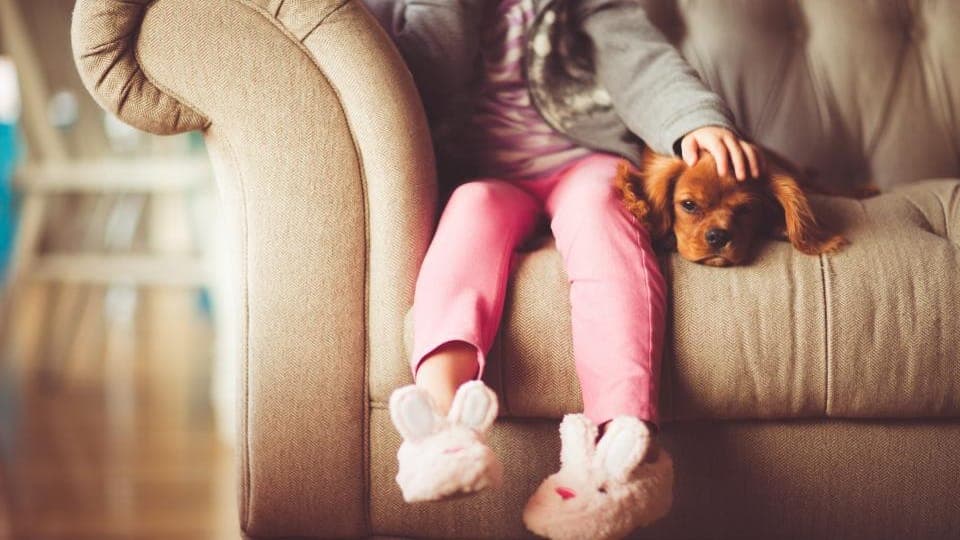
Patting the top of a dog's head is the classic human greeting, but it means reaching over the dog's face, which many dogs find intimidating. Start instead with the chest or shoulder, where your hand approaches from below and to the side.
Even trusted people can overstay their welcome. Research by Kuhne and colleagues, which tracked dogs' behavior and heart-rate variability while they were petted, found that dogs tended to show more appeasement signals, such as lip licking and looking away, with an unfamiliar person than with their owner. In other words, a dog standing still for a stranger's petting is not necessarily enjoying it.
The dog consent test
The consent test is a simple way to let the dog tell you whether they want more. It works with any dog, including your own.
- Pet for three to five seconds, on the chest or shoulder.
- Stop and take your hand away.
- Watch the dog's response.
- Leans in, nudges your hand, paws at you or moves closer: "Yes, please continue."
- Stays still, looks away, licks lips or shakes off: "No thanks, that's enough."
- Moves away: "I'm done." Let them go.
- Repeat the pause regularly if petting continues.
Pro tip: Teach the consent test to children and visitors. It is easy to remember as "pet, pause, ask," and it makes every interaction a conversation rather than something done to the dog.
Greeting different kinds of dogs
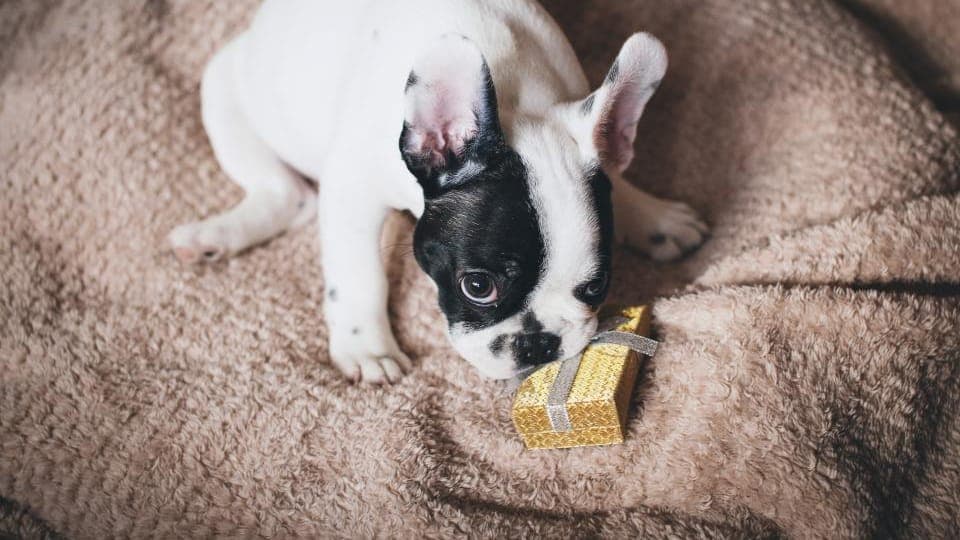
Puppies. Puppies are learning what people are like, so every greeting counts. Keep it calm, avoid picking them up, and let them retreat whenever they wish. Our guide to puppy socialization explains why gentle, choice-based greetings in the early weeks shape lifelong confidence.
Shy or rescue dogs. Many need more time and space. Sit down, ignore the dog and toss a treat away from you if the owner allows. Let the dog approach on their own schedule, and keep contact very brief. Our guide on socializing an adult or rescue dog offers owners a full plan.
Bouncy, jumpy dogs. Stay calm and still, turn slightly away and wait for four paws on the floor before giving attention. Owners can find positive strategies in our guide to stopping a dog jumping on people.
Dogs on leash. Leashed dogs cannot move away as easily, so greet them only with permission and keep it brief.
Service and assistance dogs. Do not greet, pet, call or make eye contact with a working service dog. Distracting them can put their handler at risk.
Common greeting mistakes to avoid
- Hugging or kissing a dog's face. Most dogs tolerate this at best, and face-level contact puts people in the line of a snap.
- Reaching over the head or back. Looming over a dog is a common trigger for defensive behavior.
- Staring. A direct, prolonged stare can feel like a challenge to an unfamiliar dog.
- Cornering. Approaching a dog under a table, in a crate or in a doorway removes their escape route.
- Ignoring warnings. Pushing on after a growl teaches a dog that their polite signals do not work.
Teaching children how to greet a dog
Children are bitten more often than adults, and most bites to children involve a dog they know. Kids should learn to always ask an adult and the owner first, to stand still "like a tree" if a dog comes over uninvited, and never to hug, chase or climb on dogs.
Our guide to dogs and kids bite prevention covers how to supervise, set up safe spaces at home, and recognize when a dog is uncomfortable around a child.
What if a dog seems threatening?
If an unfamiliar dog approaches you in a stiff, tense way, growls or barks, stay calm:
- Stop moving and stand still, side-on to the dog.
- Keep your hands close to your body and avoid staring.
- Do not run, scream or wave your arms, which can trigger chasing.
- Once the dog loses interest, back away slowly.
- If a dog knocks you down, curl into a ball and protect your face and neck with your arms.
If you are bitten, wash the wound, seek medical care and report it according to local rules.
What to do next
Next time you meet a dog, try the full sequence: ask the owner, stand sideways, let the dog approach, pet the chest briefly, then pause and ask. Notice how much more relaxed many dogs become when they have a say.
If you share a home with a dog, use the consent test with them too. You may discover which touches they truly love, and that small act of listening builds trust on both ends of the leash.
Frequently asked questions
What is the right way to greet a dog?
Ask the owner first, then stand or crouch sideways a short distance away and let the dog come to you. Keep your hands low and relaxed, avoid staring, and speak softly. If the dog approaches with a loose body and sniffs you, offer a brief stroke on the chest or shoulder. If the dog stays back, simply admire them from where you are.
Should you let a dog sniff your hand?
You do not need to push your hand toward a dog's face. Dogs can smell you perfectly well from a distance. A better approach is to keep your hand low and relaxed by your side and let the dog choose to come closer and sniff. Thrusting a hand at a nervous dog's nose can feel like a threat.
What is the dog consent test?
The consent test is a simple way to ask a dog whether they want to keep being petted. Pet the dog for about three to five seconds, then stop and remove your hand. If the dog leans in, nudges you or moves closer, they are saying yes. If they move away, shake off, look away or stay still, they are saying no thanks.
Where do dogs like to be petted?
Most dogs prefer slow strokes on the chest, shoulders, side of the neck and under the chin, and many enjoy scratches at the base of the tail. Many dogs dislike being patted on the top of the head, hugged, or touched on the paws, muzzle, tail or belly by people they do not know well. Every dog is individual, so watch their response.
Is it okay to look a dog in the eyes?
A brief, soft glance is fine, but a direct, prolonged stare can feel threatening to an unfamiliar dog, especially a nervous one. When meeting a new dog, keep your gaze soft and look slightly to the side. Dogs who know and trust you are usually comfortable with gentle eye contact.
Sources & further reading
- Rugaas, T. (2006). On Talking Terms With Dogs: Calming Signals (2nd ed.). Dogwise Publishing.
- Kuhne, F., Hößler, J. C., & Struwe, R. (2014). Emotions in dogs being petted by a familiar or unfamiliar person: Validating behavioural indicators of emotional states using heart rate variability. Applied Animal Behaviour Science, 161.
- Horwitz, D. F., & Mills, D. S. (Eds.). (2009). BSAVA Manual of Canine and Feline Behavioural Medicine (2nd ed.). British Small Animal Veterinary Association.
- Bradshaw, J. (2011). Dog Sense: How the New Science of Dog Behavior Can Make You a Better Friend to Your Pet. Basic Books.
This guide is for education only and does not replace an in-person assessment. If your dog's behavior changes suddenly, or you are worried about bites or aggression, speak to your veterinarian or a qualified behavior professional. See our disclaimer.