Everyday problems
Dog Chewing Everything? Why It Happens & How to Fix It
From teething puppies to bored adults, find out why your dog is chewing everything and how to redirect it without punishment.
Key takeaways
- Chewing is a normal, healthy dog behavior; destructive chewing happens when that need is aimed at the wrong items or driven by stress, boredom or anxiety.
- Puppies chew most during teething and again in adolescence, so management and suitable chew items are essential through roughly the first year.
- Preventing access, providing appealing alternatives and rewarding good choices works far better than scolding after the fact.
- Chewing that happens only when your dog is alone may be a sign of separation anxiety rather than a training problem.
- Swallowed fragments can cause dangerous blockages, so supervise chewing and contact a vet immediately if your dog vomits, strains or stops eating.
Jump to a section
If your dog is chewing everything, it is usually because chewing meets a real need, such as teething relief, boredom relief, stress release or simple exploration, and the most accessible items are your belongings. The fix is to manage access, provide better chew options, meet your dog's physical and mental needs, and rule out anxiety or medical causes.
Chewing itself is not the problem. Dogs explore the world with their mouths, and chewing is calming and satisfying for most of them. Destructive chewing is a mismatch between that normal need and the objects available. Understanding which reason applies to your dog decides which fix will work, and it is one of the most common dog behavior problems owners face.
Why do dogs chew everything?
Most destructive chewing falls into one or more of these categories. Many dogs have more than one reason at the same time.
| Cause | Who it affects most | Clues | Main fix |
|---|---|---|---|
| Teething | Puppies roughly 3-7 months | Chewing cool or hard items, sore gums, occasional lost baby teeth | Varied chews, frozen items, close management |
| Adolescent exploration | Dogs roughly 6-18 months | Testing everything, sudden 'forgetting' of house rules | Management, enrichment, training |
| Boredom or under-stimulation | Young, energetic and working breeds | Chewing when left with nothing to do, even when you are home | More exercise, sniffing, puzzles, training |
| Stress or anxiety | Any age, especially after changes | Chewing alongside pacing, panting or restlessness | Address the stressor, predictable routine |
| Separation anxiety | Any age | Damage only when alone, focused on doors and windows | Separation anxiety plan |
| Food-seeking | Any age | Chewing bins, lunch bags, items that smell of food | Secure food smells, feed via puzzles |
| Medical | Any age, especially sudden adult onset | Licking surfaces, eating non-food items, drooling | Vet examination |
Vet check: Persistent eating of non-food items (pica), sudden chewing in an adult dog, or chewing alongside drooling, vomiting, weight loss or bad breath can point to dental pain, nausea, digestive disease or nutritional problems. See your vet before treating it as a training issue.
The puppy chewing phase: what to expect
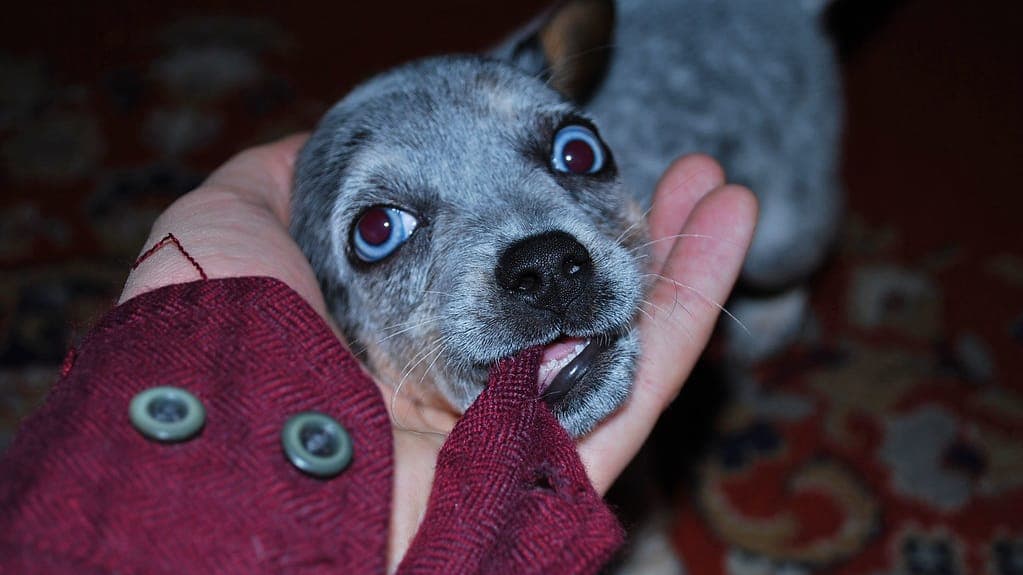
The puppy chewing phase has two peaks. The first is teething, when adult teeth push through, typically between about three and seven months of age. Gums are sore, and chewing on cool, firm items brings relief. The second is adolescence, when many dogs between roughly six months and their second birthday go through a period of intense exploration, testing every table leg and shoe.
Puppy chewing often overlaps with mouthing people, which is covered in our guide to puppy biting and nipping. The approach is similar: redirect, manage and meet needs.
For teething puppies:
- Offer a range of textures, such as rubber, rope and soft fleece, so your puppy can find what feels good.
- Freeze a damp, knotted washcloth or a stuffed rubber toy for soothing cold relief, and supervise use.
- Rotate toys every few days so they stay novel and interesting.
- Use a puppy pen or a puppy-proofed room whenever you cannot watch closely.
Pro tip: Puppies chew most when they are overtired, not only when bored. If chewing becomes frantic in the evening, a nap in a quiet crate or pen often works better than more play.
How to stop a dog chewing furniture: step by step
Use this sequence for furniture, shoes, cables, rugs or any other target. Steps one to three do most of the work.
- Remove or block access. Pick up shoes, hide cables in covers, and use baby gates, closed doors or a pen to keep your dog away from chewable furniture when you cannot supervise.
- Place better options at the scene. Dogs often chew in favorite spots. Put two or three appealing chews right where the damage happens, such as by the sofa leg.
- Meet daily needs. Add sniff walks, short training sessions and food puzzles. A dog with nothing to do will find something to do.
- Interrupt calmly and trade. If you catch your dog chewing something off-limits, make a cheerful sound, offer a chew or a treat, and praise them when they switch. Calm trades also help prevent resource guarding, which can develop when dogs learn that people snatch things away.
- Reward good choices. Whenever your dog chooses their own chew, especially near a former target, quietly praise or drop a treat.
- Use deterrents only as an extra. Bitter sprays help some dogs on some surfaces, but many dogs ignore them. They never replace management and alternatives.
- Gradually extend freedom. Once your dog has gone several weeks without damage in one room, add another room or slightly longer unsupervised periods.
Destructive dog behavior when left alone
If the damage happens only when your dog is alone, especially around doors, windows, door frames or crates, the cause may be panic rather than boredom. Dogs with separation-related problems may also bark, howl, pace, drool or toilet indoors. Adding more chew toys will not fix panic; your dog needs a gradual separation training plan, covered in our guide to dog separation anxiety.
A simple test is to video your dog for the first 20 to 30 minutes after you leave. A bored dog usually potters, settles and chews something at random. An anxious dog often paces, vocalizes, scratches at exits and looks distressed from the start.
Destructive behavior can also accompany other stress-related habits, such as digging into beds and sofas. Our article on why dogs dig explains the overlap. For a fuller list of stress cues to watch for on that video, see signs of stress in dogs.
Why scolding after the fact does not work
Many owners come home to a chewed cushion and a dog with flattened ears and a low tail, and conclude the dog "knows" they did wrong. Research on the so-called guilty look suggests that this expression is mostly a response to the owner's tone and body language, not evidence that the dog understands what they did hours ago. Our guide to whether dogs feel guilty explores this in detail.
Scolding at that point only teaches your dog that your homecoming can be unpredictable and scary. That can add stress and, ironically, increase stress-related chewing. Clean up without comment and adjust your management for next time.
Myth: "Rub his nose in it so he learns." Dogs do not connect punishment with an earlier act. This approach damages trust, increases anxiety and does nothing to reduce chewing.
Choosing safe chews
Not every chew is safe for every dog. Some general principles help, but ask your vet for advice suited to your dog's size, age and dental health.
- Size: large enough that it cannot be swallowed whole or lodged in the throat.
- Hardness: avoid items so hard they could fracture teeth, such as cooked bones, antlers for strong chewers, or hard nylon for aggressive chewers.
- Durability: replace toys that are cracking, shredding or small enough to swallow.
- Supervision: watch your dog with any new chew until you know how they use it.
- Calories: count edible chews as part of daily food intake to prevent weight gain.
Safety note: Swallowed pieces of toys, socks, stones or fabric can cause intestinal blockages. Contact a vet urgently if your dog vomits repeatedly, strains to pass stool, has a painful belly, seems lethargic or stops eating after chewing something.
Chewing in rescue and newly adopted dogs
Newly adopted dogs often chew more in the first weeks as they cope with a new environment, new routines and missing familiar people or places. Expect it, manage it carefully and keep life predictable. Our guide to rescue dog decompression explains how to give a new dog the quiet adjustment time they need, which also reduces stress chewing.
What to do next
Start tonight by puppy-proofing or dog-proofing the rooms your dog uses and placing a few appealing chews in the spots where damage happens. Over the next week, add daily enrichment and practice calm trades, and video your dog when alone if chewing happens in your absence.
If chewing is linked to panic, appears suddenly in an adult dog, or involves eating non-food items, speak to your vet first. If progress stalls despite good management, a certified behavior consultant can help you tailor a plan to your dog.
Frequently asked questions
Why is my dog chewing everything all of a sudden?
A sudden increase in chewing can be caused by teething or adolescence in young dogs, boredom after a change in routine, stress from a house move or new pet, separation anxiety, or a medical problem such as dental pain, nausea or digestive upset. If an adult dog starts chewing unusual items or licking and chewing surfaces compulsively, book a vet check to rule out health causes first.
How long does the puppy chewing phase last?
Most puppies chew intensely while their adult teeth come through, roughly between three and seven months of age. Many then have a second chewing phase during adolescence, often between about six months and a year or more, as the jaw settles and curiosity peaks. With good management and plenty of appropriate chews, the destructive stage usually eases well before two years.
How do I stop my dog chewing furniture?
Block access to the furniture when you cannot supervise, using baby gates, a pen or closed doors. Offer a selection of appealing chews right where your dog likes to chew. If you catch your dog chewing furniture, calmly trade it for a chew toy and praise them for taking it. Increase daily exercise and enrichment, and use bitter sprays only as a short-term extra, never the main fix.
Should I punish my dog for chewing?
No. Dogs connect consequences to what is happening right now, not to damage done hours earlier, so scolding after the fact just causes fear and confusion. Even catching your dog in the act and shouting teaches them to chew when you are not watching. Interrupt calmly, trade for an appropriate item, and focus on prevention and rewarding the right choices instead.
What are safe chew items for dogs?
Good options include durable rubber toys that can be stuffed with food, chews sized so they cannot be swallowed whole, and edible chews your vet approves. Avoid cooked bones, which can splinter, and items so hard they could crack teeth. Supervise new chews, remove small pieces, and replace toys once they start breaking apart. Your vet can advise on chews for your dog's size and dental health.
Sources & further reading
- Landsberg, G., Hunthausen, W., & Ackerman, L. (2013). Behavior Problems of the Dog and Cat (3rd ed.). Saunders Elsevier.
- Overall, K. L. (2013). Manual of Clinical Behavioral Medicine for Dogs and Cats. Elsevier Mosby.
- Horowitz, A. (2009). Disambiguating the 'guilty look': Salient prompts to a familiar dog behaviour. Behavioural Processes, 81(3), 447-452.
- American Veterinary Society of Animal Behavior. (2021). Position statement on humane dog training. AVSAB.
This guide is for education only and does not replace an in-person assessment. If your dog's behavior changes suddenly, or you are worried about bites or aggression, speak to your veterinarian or a qualified behavior professional. See our disclaimer.