Emotions & mind
Do Dogs Feel Guilty? What Science Says About the 'Guilty Look'
That hangdog expression after a chewed shoe looks like guilt, but research suggests it's something else entirely. Here's what your dog is really telling you.
Key takeaways
- There is no good evidence that dogs feel guilt in the human sense; the 'guilty look' appears to be a response to the owner's behavior in the moment.
- In a well-known 2009 study, dogs looked most 'guilty' when owners scolded them, whether or not they had actually disobeyed.
- The 'guilty look' is made up of appeasement and calming signals, such as a lowered head, ears back, lip licking and looking away, that dogs use to defuse tension.
- Dogs can learn that certain situations, like you plus a mess on the floor, predict trouble, which can look like they 'know' they did wrong.
- Scolding after the fact doesn't teach a dog what to do; prevention, management and rewarding good choices work far better.
Jump to a section
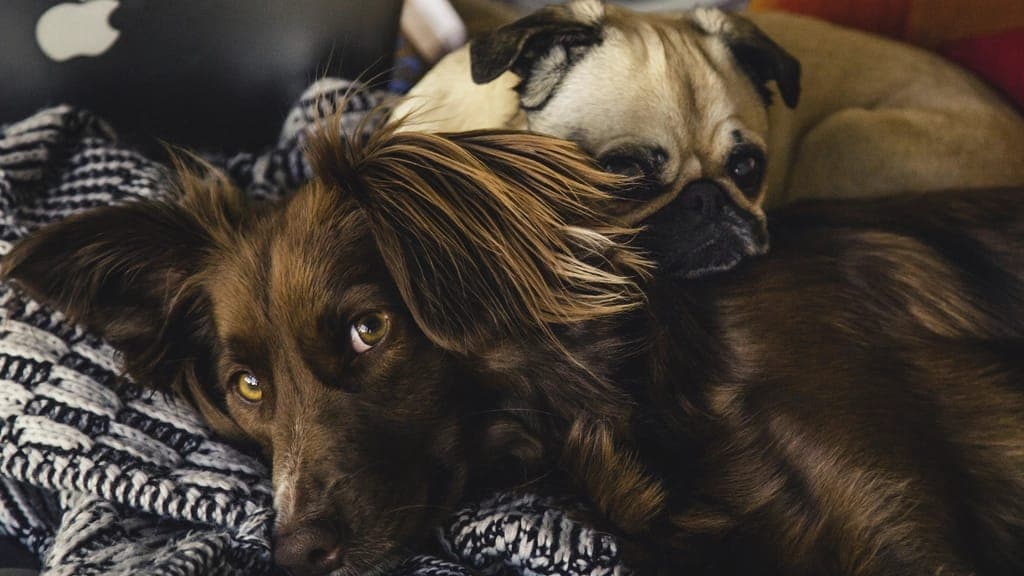
Dogs probably don't feel guilty the way people do. Research on the famous "guilty look" shows it is a reaction to the owner's behavior in the moment, such as a scolding tone or tense posture, rather than evidence that the dog is reflecting on a past misdeed. What looks like remorse is mostly appeasement: your dog is trying to calm you down.
That doesn't mean the look is fake or that your dog doesn't feel anything. He is genuinely uneasy. Understanding what he feels, and why, changes how you should respond, and it's a good example of how much of dog behavior is about reading the relationship between dog and person, not just the dog.
What the "guilty look" looks like
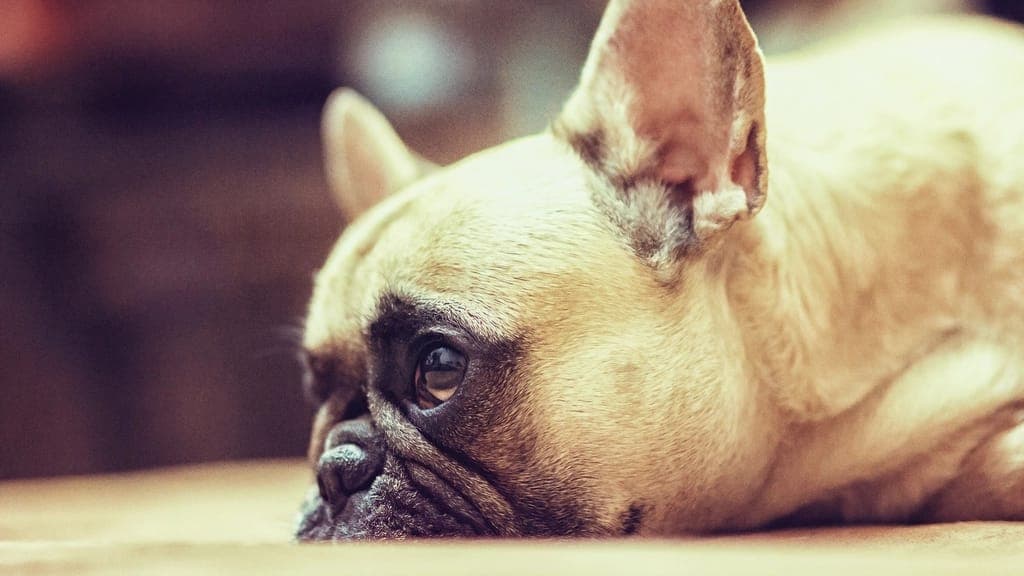
Most owners recognize it instantly. Your dog greets you with:
- head lowered and body held low;
- ears flattened or pulled back;
- eyes turned away, or looking up from under the brow with the whites showing;
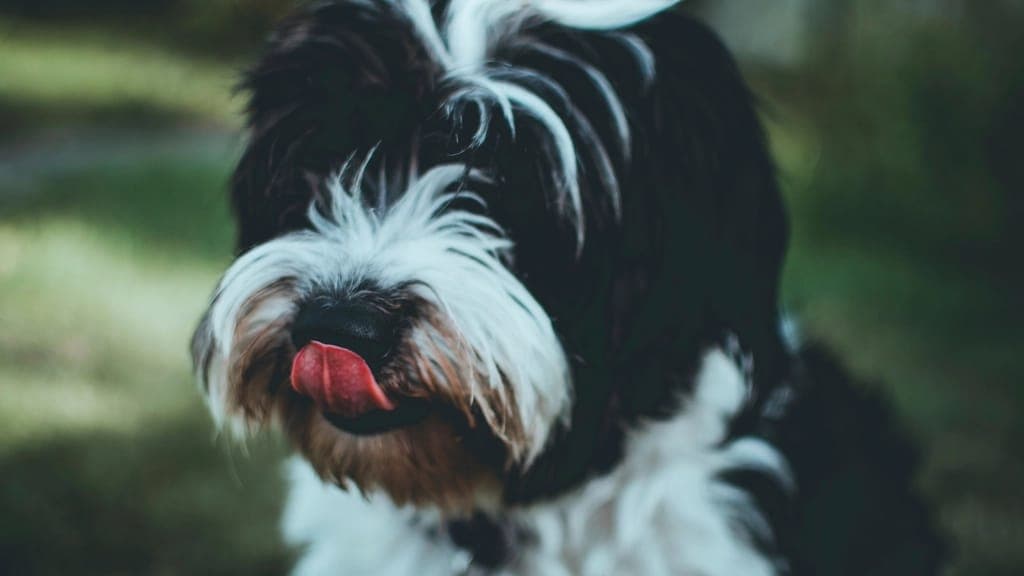
- lip licking or tongue flicks;
- a low, slow or tucked tail;
- slinking away, rolling onto his back or lifting a paw.
Every one of these is a recognized appeasement or calming signal. Norwegian trainer Turid Rugaas described many of them as ways dogs try to avoid conflict and reduce tension. The same signals appear when dogs meet a stranger who looms over them, or when they're corrected in a training class. You can learn more about each one in our guide to calming signals.
The sideways glance with visible whites, often called whale eye, is a stress signal covered in detail in dog eye signals. The low-to-the-ground posture and rolling over overlap with the behaviors explained in why dogs show their belly.
The science: what studies found about the guilty look
Horowitz (2009): it's about the owner
The most cited study, by cognitive scientist Alexandra Horowitz, set up a simple test. Owners told their dog not to eat a treat, then left the room. While they were away, the researcher either let the dog eat the treat or removed it. Owners were then told, sometimes truthfully and sometimes not, whether their dog had eaten it.
The key finding: dogs showed the most "guilty" behaviors when their owners scolded them, regardless of whether the dog had actually eaten the treat. Dogs who had obeyed but were scolded looked even more guilty than dogs who had disobeyed and were scolded. The look tracked the owner's reaction, not the dog's action.
Hecht and colleagues (2012): owners can't tell
A team in Budapest asked whether owners could tell, from their dog's greeting alone, if the dog had broken a rule. They couldn't do so reliably. Dogs that had transgressed didn't show more guilt-associated behaviors than dogs that hadn't, unless the owner scolded them.
Ostojić and colleagues (2015): evidence doesn't change the look
Researchers at Cambridge then tested whether dogs' behavior changed based on whether they'd misbehaved and whether evidence of the misdeed was present. Again, owners couldn't reliably use their dog's greeting to judge whether the dog had done something wrong.
Myth: "My dog knows exactly what he did. Look at his face." The face is real, but the research shows it's driven by what you're doing now, not by your dog's memory of what he did earlier.
Do dogs know when they did something wrong?
Not in the moral sense. Guilt requires knowing a rule, remembering breaking it and judging yourself against it. There's no good evidence that dogs do this.
What dogs are excellent at is associative learning. If a few times in the past you've walked in, seen garbage on the floor and become angry, your dog may learn that "owner + garbage on the floor = trouble." He'll then look worried whenever that combination appears, even if your other dog was the culprit.
Dogs also read human emotion with remarkable sensitivity. A sharp breath, a stiff stance or a hard stare tells your dog you're upset before you say a word. That's why your dog can look "guilty" even before you've noticed the chewed slipper.
Does timing matter?
Yes, a lot. Dogs connect consequences with what they're doing at the moment the consequence arrives. Scolding a dog for something he did ten minutes ago teaches him that your arrival, or your approach, can be scary. It doesn't teach him to leave the bin alone.
Dog emotions science: what dogs do feel
Dismissing guilt doesn't mean dogs are emotionless. Dogs share the brain regions and neurochemistry, including the limbic system, oxytocin and dopamine pathways, that underpin basic emotions in mammals.
| Emotion | Evidence in dogs | How confident we are |
|---|---|---|
| Fear and anxiety | Clear physiological and behavioral responses | Very high |
| Joy and pleasure | Play behavior, reward responses in brain imaging | Very high |
| Attachment and affection | Secure-base behavior, oxytocin responses with owners | High |
| Frustration | Behavior when expected rewards are withheld | High |
| Jealousy (simple form) | More pushing and snapping when owners attend to a fake dog | Moderate |
| Guilt, shame, pride | No convincing experimental evidence | Low |
Why guilt is a harder question than fear
Basic emotions like fear can be measured through heart rate, stress hormones and predictable behavior. Guilt is different. It's a self-conscious emotion that depends on knowing a social rule, remembering your own past action and evaluating yourself against it. Researchers can't ask a dog what he's thinking, so they rely on carefully controlled experiments like the ones above. So far, every well-designed test has found that the owner's behavior explains the guilty look better than the dog's own actions do.
That doesn't prove dogs can never feel anything resembling guilt. It means there's no good evidence for it, and treating the look as a confession leads owners in the wrong direction.
Dogs also evolved features that make them especially good at tugging our heartstrings. A 2019 study found that dogs, unlike wolves, have a well-developed muscle that raises the inner eyebrow, producing "puppy dog eyes." That expression likely contributes to how guilty or sorrowful dogs appear to us. The anatomy behind it is part of what makes dog facial expressions so readable to humans.
Pro tip: If you want to know what your dog is feeling, watch the whole body over several seconds instead of focusing on the face. A loose, wiggly body says something very different from a frozen, lowered one, even if the eyes look similar.
Why the guilty look matters for your relationship
Believing a dog "knows he's guilty" encourages owners to scold, and scolding has real downsides:
- It raises fear. Your dog learns that your homecoming or approach is unpredictable.
- It can suppress warning signals. A dog who learns that appeasement doesn't stop the scolding may skip those signals next time.
- It can make problems hidden. Dogs scolded for indoor accidents often learn to eliminate out of sight, rather than outside.
- It misses the real cause. Chewing, house soiling or garbage raiding often have roots in boredom, anxiety or an unmet need.
If the "crime" is something like destroyed furniture or accidents when you're out, it may be worth reading about separation anxiety and destructive chewing, because the guilty look is often hiding an anxious dog rather than a naughty one.
What to do instead of scolding
When you find a mess and your dog looks "guilty," follow these steps:
- Take a breath and soften your body. Your dog is already anxious; adding tension makes it worse.
- Calmly move your dog to another room or give him something to sniff while you clean up.
- Clean thoroughly, using an enzyme cleaner for urine so the scent doesn't invite a repeat.
- Ask what need was behind it. Was he bored, alone too long, anxious, hungry or uncomfortable?
- Change the setup. Put the bin in a cupboard, use baby gates, provide chews and food puzzles, and shorten time alone.
- Reward the good stuff. Catch your dog lying calmly or chewing his own toys and reinforce it.
Vet check: If house soiling, chewing or other "naughty" behavior appears suddenly in a previously reliable dog, a medical cause such as a urinary infection, gastrointestinal upset or pain may be involved. Book a vet visit before treating it as a training problem.
Putting it together
The "guilty look" is real, but it's not guilt. It's your dog using a set of appeasement signals to defuse a tense situation, prompted by your words, posture and expression. Dogs feel plenty, including fear, joy and deep attachment, but there's little evidence they judge themselves for past actions.
The best response is to stay calm, fix the environment and teach what you'd like your dog to do instead. That protects the trust that underpins every one of the signs your dog loves you. If your dog seems persistently low or withdrawn rather than briefly worried, our guide to dog depression can help you work out what's going on.
Frequently asked questions
Do dogs know when they did something wrong?
Dogs learn quickly which situations predict an unhappy owner, so they may look worried when you walk in and there's a mess on the floor. But research suggests they aren't reflecting on their earlier action against a moral rule. They're reacting to your mood, body language and the cues that have preceded scolding before.
Why does my dog look guilty when I didn't scold him?
Dogs are expert readers of human body language. Even before you say a word, a tense posture, a sharp intake of breath or a hard stare can tell your dog you're upset. He offers appeasement signals in response. Some dogs also learn that certain contexts, such as a torn cushion plus you arriving home, reliably predict an unpleasant reaction.
Do dogs feel shame or embarrassment?
Shame and embarrassment are self-conscious emotions that require reflecting on how others judge you. There's no solid evidence that dogs experience them. Dogs clearly feel fear, anxiety, joy, frustration and affection, and some research hints at simple forms of jealousy, but the more complex social emotions remain unproven in dogs.
Should I punish my dog when he looks guilty?
No. The look means your dog is anxious and trying to calm you down, not that he understands his mistake. Punishing at that point adds fear and can make him avoid you or hide future accidents. Calmly clean up, then focus on preventing the problem next time and rewarding the behavior you want.
What emotions do dogs actually feel?
Dogs share the brain structures and hormones involved in basic emotions with humans. They reliably show fear, anxiety, pleasure, excitement, frustration and social attachment. Brain imaging studies show reward responses to familiar people and smells. Whether they experience complex emotions like guilt, pride or spite is far less clear, and current evidence suggests probably not.
Sources & further reading
- Horowitz, A. (2009). Disambiguating the 'guilty look': Salient prompts to a familiar dog behaviour. Behavioural Processes, 81(3), 447-452.
- Hecht, J., Miklósi, Á., & Gácsi, M. (2012). Behavioral assessment and owner perceptions of behaviors associated with guilt in dogs. Applied Animal Behaviour Science, 139(1-2), 134-142.
- Ostojić, L., Tkalčić, M., & Clayton, N. S. (2015). Are owners' reports of their dogs' 'guilty look' influenced by the dogs' action and evidence of the misdeed? Behavioural Processes, 111, 97-100.
- Harris, C. R., & Prouvost, C. (2014). Jealousy in dogs. PLoS ONE, 9(7), e94597.
- Kaminski, J., Waller, B. M., Diogo, R., Hartstone-Rose, A., & Burrows, A. M. (2019). Evolution of facial muscle anatomy in dogs. Proceedings of the National Academy of Sciences, 116(29), 14677-14681.
- Rugaas, T. (2006). On Talking Terms With Dogs: Calming Signals (2nd ed.). Dogwise Publishing.
This guide is for education only and does not replace an in-person assessment. If your dog's behavior changes suddenly, or you are worried about bites or aggression, speak to your veterinarian or a qualified behavior professional. See our disclaimer.