Quirky behaviors
Why Do Dogs Sniff Butts? The Science of Canine Greetings
To a dog, a quick rear-end sniff is a detailed introduction. Here's what dogs learn from it, how polite greetings unfold, and when sniffing becomes rude.
Key takeaways
- Dogs sniff butts because the anal sacs and surrounding skin release a chemical signature that carries information about the individual.
- A dog's nose, with hundreds of millions of scent receptors and a specialized airflow system, can read far more from that sniff than we can imagine.
- Polite dog greetings usually involve a curved approach, brief nose-to-nose and nose-to-rear sniffing, then a calm move away.
- Crotch sniffing of people is the same information-gathering behavior aimed at scent glands in the human groin, and it can be redirected kindly.
- Watch the body language during greetings: stiffening, freezing, a tucked tail or a hard stare means one dog wants space.
Jump to a section
- The short science: anal sacs and chemical signals
- How a dog's nose makes this possible
- What dogs learn from a sniff
- Why do dogs sniff each other? Dog greeting rituals
- Reading a greeting: polite or tense?
- Dog sniffing people's crotch
- Why sniffing matters for your dog's wellbeing
- The health angle: anal sacs and scooting
- What to do next
Dogs sniff butts because the area around the tail, especially the two small anal sacs, releases a scent that works like a chemical ID card. A brief sniff can tell a dog the other's sex, reproductive status, whether they've met before and possibly something about their health and mood, all within a second or two.
Butt sniffing is also part of a larger greeting ritual that, when it goes well, keeps encounters peaceful. When it goes badly, the same ritual can be the first place tension shows. Understanding what's normal, and what the body language around it means, helps you support your dog in everyday meetings. It's one of the most widespread behaviors covered in our guide to dog behavior.
The short science: anal sacs and chemical signals
Every dog has two small anal sacs (often called anal glands) sitting just inside the anus at roughly the four and eight o'clock positions. They store a pungent secretion that is normally squeezed out in small amounts when a dog defecates, and sometimes when a dog is frightened.
Chemical analysis by Natynczuk, Bradshaw and Macdonald (1989) found that this secretion contains a mix of volatile compounds and that the profile varies between individual dogs. That variability is exactly what you'd expect from a personal signature. The surrounding skin and hair also carry secretions from other glands, adding to the mix.
So when one dog sniffs another's rear, they are reading a concentrated, individual scent profile. It's the same reason dogs are so interested in each other's poop, and part of why dogs kick the ground after pooping to spread their own scent around.
How a dog's nose makes this possible
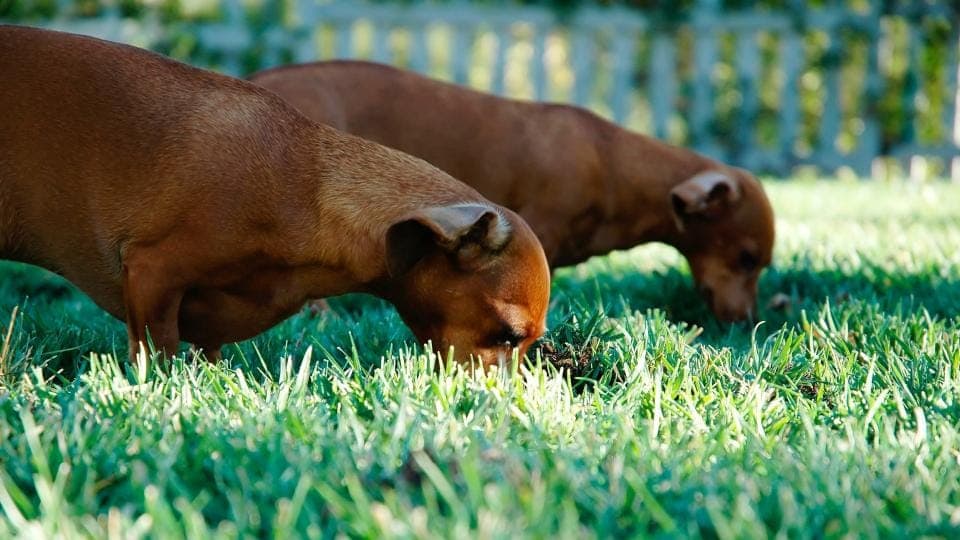
A dog's sense of smell is in a different league from ours.
- More receptors. Dogs are commonly estimated to have hundreds of millions of olfactory receptors, compared with roughly 5 to 6 million in people. A large part of the canine brain is devoted to analyzing smells.
- Specialized airflow. Research by Craven, Paterson and Settles (2010) showed that when a dog sniffs, air is routed into a dedicated olfactory region at the back of the nose, separate from normal breathing. Exhaled air leaves through the side slits of the nostrils, which helps pull fresh odor in rather than blowing it away.
- A second scent system. The vomeronasal organ, also called Jacobson's organ, sits in the roof of the mouth and is thought to detect certain chemical signals, such as those linked to reproductive status.
As Alexandra Horowitz describes in Inside of a Dog, dogs experience the world as layers of smells that tell stories about who was there, when and in what state. A butt sniff is one of the richest chapters.
What dogs learn from a sniff
We can't ask dogs, but behavior and chemistry suggest a sniff may reveal:
- Sex and reproductive status. Intact males show strong interest in females in season.
- Identity and familiarity. Dogs who know each other often sniff more briefly than strangers.
- Age. Puppies and adults likely smell different.
- Health. Illness, diet and stress may all alter scent, though how much dogs read from this is not fully understood.
- Emotional state. Fear can cause anal sacs to empty suddenly, releasing a strong odor other dogs notice.
Why do dogs sniff each other? Dog greeting rituals
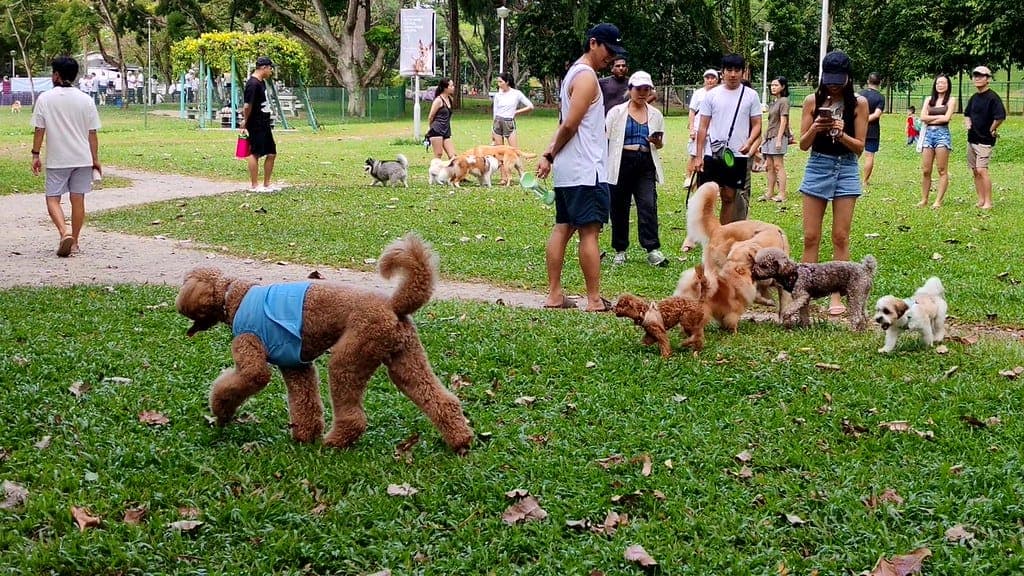
A well-mannered greeting between two relaxed, socially experienced dogs often follows a recognizable sequence (people have their own rules, covered in how to greet a dog):
- The curved approach. Instead of marching straight at each other, the dogs arc in from the side, which is less confrontational.
- Nose-to-nose. A brief sniff of the face and mouth.
- Nose-to-rear. Each dog moves along the other's side to sniff under the tail. They may stand in a parallel or "T" shape.
- Circling. Dogs often rotate in a small circle as each tries to sniff while also controlling how much they're sniffed.
- Disengage or invite. After a few seconds, one or both dogs turn away, shake off, sniff the ground, or offer a play bow.
Turid Rugaas describes the curved approach, ground sniffing and head turns as calming signals, behaviors dogs use to keep encounters peaceful. Notice how many of them appear in a good greeting.
Pro tip: On leash, keep greetings short. Count to three, then cheerfully call your dog away and reward. Tight leashes prevent natural curving and circling and can turn a polite sniff into a tense standoff.
Reading a greeting: polite or tense?
| Signal | Polite greeting | Tense greeting |
|---|---|---|
| Approach | Curved, loose, unhurried | Straight, fast, head-on |
| Body | Wiggly, soft, weight neutral | Stiff, leaning forward, freezing |
| Tail | Loose, mid-height wag | High and rigid, or tucked tight |
| Duration | A few seconds, then moves on | Prolonged sniffing or one dog won't leave |
| Face | Soft eyes, relaxed mouth | Hard stare, closed mouth, whale eye |
| Ending | Shake-off, sniff ground, play bow | Growl, lip lift, snap, or one dog fleeing |
For more on what tails communicate during greetings, see our guide to tail wagging meaning. At busy off-leash areas, our guide to dog park body language explains how to spot trouble early.
When butt sniffing gets awkward
Some situations deserve a calm intervention:
- One dog keeps following. If the sniffed dog walks away and the other follows persistently, call your dog off.
- The sniffed dog sits, spins or tucks. Sitting down or tucking the tail can be a way of saying "enough." Respect it.
- Freezing. A sudden freeze during a sniff often precedes a growl or snap.
- Mounting follows. Sniffing that tips into mounting may be over-arousal; see why dogs hump.
Safety note: If either dog stiffens, freezes or stares, don't grab collars in the middle of the tension. Call your dog away cheerfully, use a food lure, or calmly walk away so your dog follows. If greetings frequently turn into conflict, a certified behavior consultant can help.
Introducing dogs who will live together needs more structure than a park greeting. Our guide on how to introduce two dogs safely walks through the process.
Dog sniffing people's crotch
It's mortifying when your dog greets a guest nose-first, but to your dog it's the same information gathering. People have apocrine sweat glands concentrated in the armpits and groin, which produce strong individual scent, and a dog's nose sits right at that height.
Dogs may sniff more intently when someone has recently exercised, is menstruating, has recently had a baby, or has been around other animals. None of this is "dominance" or rudeness; it is curiosity.
How to redirect crotch sniffing kindly
- Manage first. Leash your dog or use a baby gate when guests arrive until the new habit is solid.
- Teach an alternative. A hand target (touch your palm with the nose) or a sit for greetings gives your dog something to do with their nose.
- Reward heavily. Pay the alternative with treats every time early on.
- Let guests help. Ask visitors to offer a hand at your dog's nose height so the sniff happens there.
- Allow sniffing elsewhere. A guest's shoes and bag provide plenty of information too.
This approach works for the same reasons positive reinforcement works for jumping on people: you teach what to do instead of punishing curiosity.
Why sniffing matters for your dog's wellbeing
It's easy to see sniffing as something to hurry past, but for dogs it's a core need. Sniffing is how they gather information, process their environment and, in many cases, calm down. A slow walk with plenty of time to investigate grass, posts and the scent trails of other dogs can be as tiring as a run.
That doesn't mean your dog should greet every dog they pass. Many dogs, especially shy, reactive or older dogs, would rather sniff where another dog has been than meet face to face. If your dog stiffens, lunges or barks at other dogs on leash, our guide to leash reactivity explains how to build comfort at a distance.
A good balance for most dogs:
- Plenty of time to sniff the ground, posts and grass on walks
- Short, consensual greetings only with dogs whose owners agree
- The freedom to skip a greeting when your dog, or the other dog, isn't keen
The health angle: anal sacs and scooting
Because anal sacs are so central to scent, it's worth knowing the signs that they need attention.
Vet check: If your dog scoots along the floor, licks or chews under the tail, has a fishy smell, or seems uncomfortable sitting, the anal sacs may be impacted or infected. Other dogs sometimes show unusual interest in a dog with an anal sac problem. Your vet can check and treat it.
Also, if your dog suddenly becomes intensely interested in sniffing one area on a housemate dog or a person, it's not proof of illness, but it can be a reason to keep an eye out for other symptoms.
What to do next
Butt sniffing is normal, polite dog communication. Let your dog sniff briefly during greetings, keep leashes loose, and watch the whole body for signs that one dog wants space. For people, teach a friendly alternative and reward it.
To build confidence in how dogs meet each other and people, read our guide on how to greet a dog safely, and explore more everyday quirks in the dog behavior guide.
Frequently asked questions
Why do dogs sniff each other's butts?
Dogs sniff each other's rear ends to read chemical information from the anal sacs and nearby skin glands. That scent likely tells them the other dog's sex, reproductive status, whether they have met before and possibly aspects of health and emotional state. It is the canine equivalent of a handshake and a name tag, done with a nose that is extraordinarily sensitive.
Why do dogs sniff each other when they meet?
Sniffing is how dogs introduce themselves. A typical greeting begins with a brief nose-to-nose sniff, moves to the rear, and may include circling as each dog takes a turn. This ritual lets both dogs gather information and show peaceful intent before deciding whether to play, ignore each other or move apart.
Why does my dog sniff people's crotches?
The human groin and armpits contain apocrine sweat glands that produce strong individual scent, and a dog's nose is roughly at crotch height. Sniffing there is simply information gathering, not rudeness. You can teach your dog a polite alternative, such as a sit or a hand target, and reward it generously when greeting guests.
Should I stop my dog from sniffing other dogs' butts?
Usually not. Brief rear sniffing is normal and helps dogs greet politely. Step in calmly if your dog sniffs persistently while the other dog tries to move away, sits down, tucks the tail, freezes or turns to snap. Call your dog away with a happy voice and reward them, rather than letting tension build.
Why does my dog sniff another dog's rear and then lick or chatter their teeth?
Some dogs, especially intact males sniffing females, lick the air or chatter their teeth after sniffing. This is thought to help move scent molecules toward the vomeronasal organ in the roof of the mouth, which detects certain chemical signals. It is normal, though persistent following of a dog who is moving away should be interrupted.
Sources & further reading
- Natynczuk, S., Bradshaw, J. W. S., & Macdonald, D. W. (1989). Chemical constituents of the anal sacs of domestic dogs. Biochemical Systematics and Ecology, 17(1), 83-87.
- Craven, B. A., Paterson, E. G., & Settles, G. S. (2010). The fluid dynamics of canine olfaction: unique nasal airflow patterns as an explanation of macrosmia. Journal of the Royal Society Interface, 7(47), 933-943.
- Horowitz, A. (2009). Inside of a Dog: What Dogs See, Smell, and Know. Scribner.
- Rugaas, T. (2006). On Talking Terms With Dogs: Calming Signals (2nd ed.). Dogwise Publishing.
This guide is for education only and does not replace an in-person assessment. If your dog's behavior changes suddenly, or you are worried about bites or aggression, speak to your veterinarian or a qualified behavior professional. See our disclaimer.