Signals & emotions
The Play Bow: What It Means When Your Dog Bows (and How to Respond)
Front end down, rear end up: the play bow is a dog's clearest invitation to play. Learn what it means and how it differs from a stretch.
Key takeaways
- A play bow, with the front end lowered and the rear end raised, is an invitation to play and a signal that what follows is not serious.
- Dogs often bow just before or after rough play moves, helping keep play friendly and preventing misunderstandings.
- A play bow is brief and bouncy, a stretch is slow and relaxed, and a bow-like posture held for a long time can indicate abdominal pain.
- The play bow is one of several play signals, along with the play face, bouncy movement, role reversals and self-handicapping.
- When your dog bows and barks at you, he is usually asking you to play, so meet that need on your terms with structured games.
Jump to a section
A play bow, where a dog lowers his chest and front legs to the ground while keeping his rear end up, means "let's play." It's an invitation and a reassurance rolled into one: it tells a partner that the chasing, wrestling and mouthing that follow are meant in fun, not as a real threat.
But not every bow is a play bow. Dogs bow to stretch after a nap, sometimes to defuse tension, and a bow-like posture held for a long time can even signal pain. Reading the difference means looking at speed, focus and the rest of the body, which is the core skill of dog body language. Here's how to recognize a true play bow, what research says about why dogs do it, and how to respond.
What a play bow looks like
The classic play bow has a recognizable shape:
- Front legs extended forward, elbows on or near the ground
- Chest low, rear end raised, often with the tail up and wagging
- Head facing a partner, eyes soft and bright
- Mouth open and relaxed, sometimes in a "play face"
- Ears forward or loosely mobile
- Short duration, usually a second or two, followed by a bounce, spin, sprint or pounce
It's a dramatic, exaggerated posture, and that exaggeration is the point. Dogs make play signals big and obvious so they can't be confused with serious behavior. Compared with the tense, upright lines you'll learn about in our guide to dog posture, the play bow is all curves and bounce.
Why do dogs bow?
To invite play
The most common reason is simple: the dog wants to play. You'll see bows directed at other dogs, people and sometimes even cats. A dog might bow, bounce away and look back, inviting a chase.
To keep play friendly
Play involves behaviors borrowed from hunting and fighting: chasing, biting, pinning and shaking. Ethologist Marc Bekoff found that play bows in canids are highly stereotyped, meaning they look much the same every time, which makes them reliable messages (Bekoff, 1977). In later work, he showed that bows tend to cluster around actions that could be misread, such as bites accompanied by head shakes, suggesting the bow works like punctuation that says "this is still a game" (Bekoff, 1995).
To restart play after a pause
Research on adult pet dogs found that play bows often occurred after a brief pause in play and were frequently followed by running away or pouncing (Byosiere et al., 2016). That suggests bows help re-launch a game and prepare both partners for a burst of fast action.
Dogs are also sensitive to whether their partner is paying attention. Alexandra Horowitz (2009) found that dogs tended to use play signals like bows when their partner was already facing them, and used attention-getting behaviors such as nudging or barking when the partner wasn't looking.
To defuse tension
Turid Rugaas included the bow among the calming signals dogs use to settle a situation. A dog may bow toward a dog who seems tense or uncertain, as if to say "relax, I'm friendly." In this context the bow may be slower and less bouncy, and the dog may also sniff the ground or turn away.
Dog play signals: more than the bow
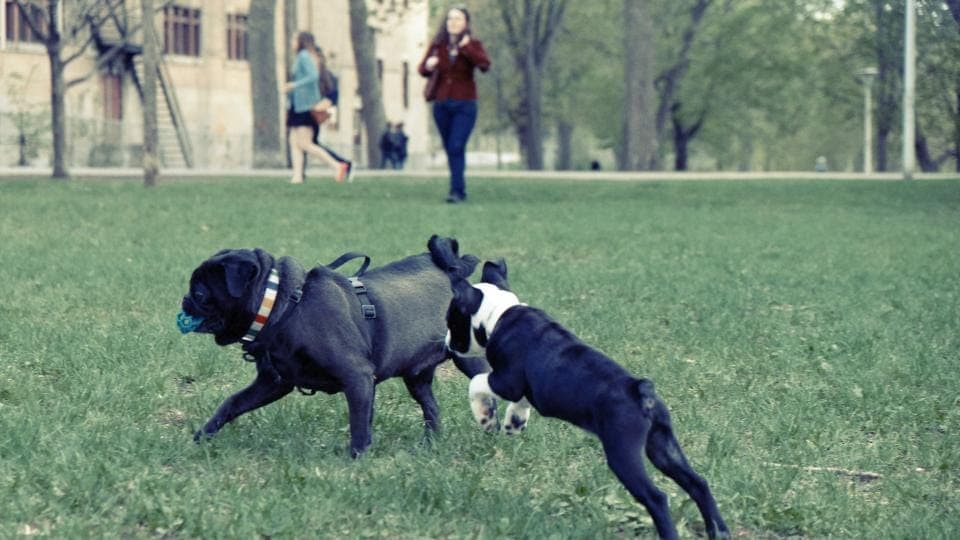
The play bow is just one of a whole set of signals that keep play safe. Healthy play usually includes several of these:
- Play face: relaxed, open mouth, sometimes with the lips drawn back loosely
- Bouncy, exaggerated movement: inefficient, loopy, rocking-horse gait
- Self-handicapping: a bigger or stronger dog lies down, plays more gently or lets the smaller dog "win"
- Role reversals: dogs take turns chasing and being chased, being on top and underneath
- Play pauses: brief breaks, often with a shake-off, sniff or play bow before resuming
- Play growls and barks: noisy but paired with loose bodies
- Inhibited bites: mouthing without real pressure
The more of these you see, the more confident you can be that both dogs are having fun. Our guide on whether dogs are playing or fighting explains the warning signs that play is turning sour, and puppies, who are still learning these rules, are covered in our guide to puppy body language.
Play bow vs stretch (and the bow that signals pain)
These three postures look similar but mean very different things.
| Feature | Play bow | Stretch | Prayer position (possible pain) |
|---|---|---|---|
| Speed | Quick drop, quick release | Slow and luxurious | Held for a long time or repeated |
| Focus | Looking at a partner | Unfocused or eyes half-closed | Often withdrawn |
| Body | Bouncy, energetic | Loose, relaxed | Tense, hunched, uncomfortable |
| Context | Play, greetings | After rest, on waking | Any time, often with other symptoms |
| What follows | Chase, pounce, spin | Walks off, shakes off | Restlessness, lying down, no play |
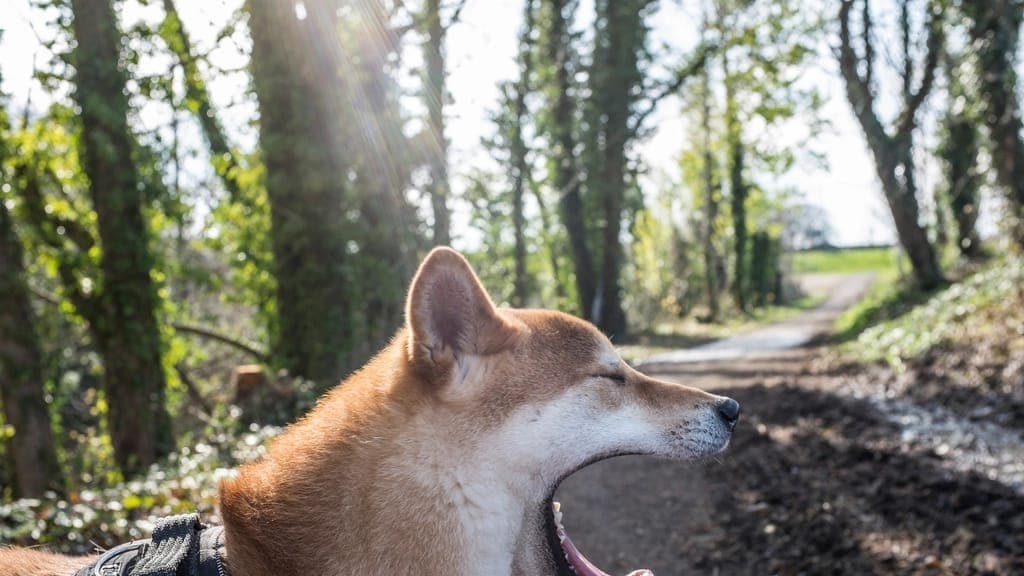
The greeting stretch, where a dog stretches as you come home, often falls between the two: relaxed, friendly and affiliative, but without the burst of energy of a true play invitation.
Vet check: If your dog repeatedly adopts a bow-like position and holds it, especially with restlessness, lethargy, a tense belly, vomiting, diarrhea or loss of appetite, contact your vet promptly. This "prayer position" can indicate abdominal pain, which needs veterinary attention.
Dog bows and barks at me
A dog who drops into a bow and barks at you is almost always inviting you to play or asking for attention. The bark adds urgency, as if to say "come on, now!" Our guide to types of dog barks explains how play barks differ from alert or frustration barks.
How to respond depends on your goals:
- If you have time, play. A short game of chase, fetch or tug meets a genuine need and strengthens your relationship.
- If it's become a constant demand, add structure. Wait for a brief moment of quiet, or ask for a simple behavior such as a sit, then start the game. Your dog learns that calm requests work better than barking.
- Make sure your dog's needs are met. Bow-and-bark sessions often increase when a dog is under-exercised or bored. Daily play, sniffing walks and enrichment usually reduce them.
- Avoid punishment. Scolding a dog for asking to play can damage trust and doesn't address the underlying need. Our guide on how to stop excessive barking without punishment covers humane alternatives.
Pro tip: You can play bow back. People who lower their upper body and arms in a bow-like movement, especially with a quick playful lunge, can successfully invite dogs to play (Rooney et al., 2001). Keep it light and stop if your dog gets overexcited.
Play bows across ages, breeds and bodies
Play bows appear early in life. Puppies start using them as they begin to play with littermates, and their bows are often clumsy and over-the-top, sometimes toppling into a roll. As dogs mature, bows usually become more fluent and better timed.
Body shape changes how a bow looks. A long-backed, short-legged Dachshund or Corgi may barely seem to lower the chest, while a lanky sighthound produces a deep, dramatic bow. Deep-chested and heavily muscled dogs may bow with their elbows hovering just off the ground rather than touching it.
Age and comfort matter too. Senior dogs and dogs with arthritis, back problems or sore shoulders may bow less often, more slowly, or offer a partial "head-dip" bow instead. If your previously playful dog stops bowing altogether, it may simply reflect a calmer adult temperament, but it's worth considering whether discomfort is making the posture harder.
Some dogs are also more expressive players than others. A quiet, reserved dog may invite play with a single bounce or a soft nudge rather than a full bow. Learn your own dog's style rather than expecting every invitation to look like a textbook photo.
When a play bow isn't enough
A play bow signals friendly intent, but it doesn't guarantee that play stays balanced. Watch for:
- One dog constantly chasing or pinning while the other tries to escape
- Bodies becoming stiff, movements becoming faster and more direct
- Play bows disappearing while intensity climbs
- One dog hiding behind people or furniture
- Growls becoming lower and continuous rather than intermittent
If you see these, interrupt calmly by calling your dog away for a treat, and let everyone take a break. At busy parks, this skill is essential. Our guide to dog park body language shows how to spot trouble early.
Some high-energy dogs also mix play bows with sudden bursts of running in circles. That's often a case of the zoomies, which are normal in healthy dogs as long as the space is safe.
What to do next
Watch your dog for a week and notice who and when he bows: at other dogs, at you, after a nap, at the start of a walk. Note what follows each bow. You'll soon recognize his invitations, his stretches and the subtle calming bows he uses to keep the peace. And when he bows at you, take a moment to answer, even briefly. Play is one of the simplest ways to build trust and communication with your dog.
Frequently asked questions
Why do dogs bow?
Dogs bow mainly to invite play and to signal that rough-looking moves that follow, such as chasing, pouncing or mouthing, are meant in fun. Some dogs also bow to calm a tense situation, and many bow-stretch when they get up from a rest. The context, speed and the rest of the body tell you which kind of bow you're seeing.
What is the difference between a play bow and a stretch?
A play bow is quick and energetic: the dog drops the front end, looks at a partner, often with an open, relaxed mouth, and then bounces or runs. A stretch is slow and loose, often after waking, with no focus on a partner and no burst of movement afterward. A bow held for long periods may signal abdominal pain.
Why does my dog bow and bark at me?
When your dog bows and barks at you, he is usually inviting you to play or asking for attention. It's a friendly, excited request. You can respond with a short game, or if it's become a frequent demand, ask for a simple behavior like sit first and then start play, so polite requests work better than barking.
Should I play bow back to my dog?
Yes, many dogs respond well when people imitate a play bow by dropping their upper body and arms, especially with a quick playful movement. Keep it light and fun, and watch your dog's response. If your dog becomes overaroused, mouthy or starts jumping, slow the game down and switch to a calmer activity such as a tug or fetch game with clear rules.
Sources & further reading
- Bekoff, M. (1977). Social communication in canids: Evidence for the evolution of a stereotyped mammalian display. Science, 197(4308), 1097-1099.
- Bekoff, M. (1995). Play signals as punctuation: The structure of social play in canids. Behaviour, 132(5-6), 419-429.
- Byosiere, S.-E., Espinosa, J., & Smuts, B. (2016). Investigating the function of play bows in adult pet dogs (Canis lupus familiaris). Behavioural Processes, 125, 106-113.
- Horowitz, A. (2009). Attention to attention in domestic dog (Canis familiaris) dyadic play. Animal Cognition, 12(1), 107-118.
- Rooney, N. J., Bradshaw, J. W. S., & Robinson, I. H. (2001). Do dogs respond to play signals given by humans? Animal Behaviour, 61(4), 715-722.
- Rugaas, T. (2006). On Talking Terms With Dogs: Calming Signals (2nd ed.). Dogwise Publishing.
This guide is for education only and does not replace an in-person assessment. If your dog's behavior changes suddenly, or you are worried about bites or aggression, speak to your veterinarian or a qualified behavior professional. See our disclaimer.