Signals & emotions
Puppy Body Language: Reading Your New Puppy
Learn what your puppy's wiggles, growls, yawns and freezes mean, so you can play better, spot stress early and raise a confident dog.
Key takeaways
- Puppies use the same signals as adult dogs, but their body language is bigger, bouncier and less polished.
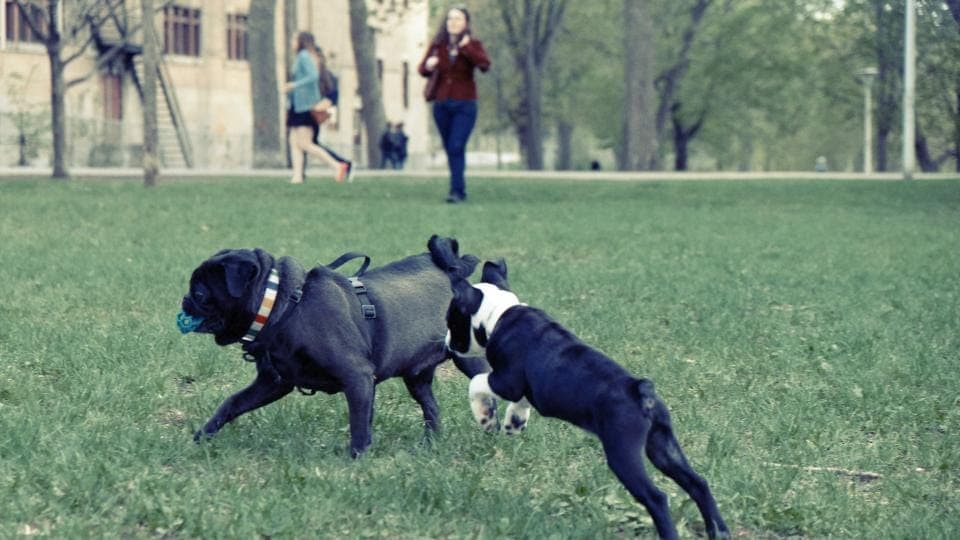
- Healthy puppy play is loose, wiggly and full of pauses, role swaps and exaggerated movements.
- Yawning, lip licking, turning away, freezing and frantic nipping are common puppy stress signals worth noticing.
- Play growling is normal, but a stiff, still puppy who growls over food or when handled needs a different plan.
- Responding to your puppy's signals during the socialization window builds a dog who trusts people and copes with the world.
Jump to a section
- Why puppy body language is different
- Puppy play behavior: what healthy play looks like
- Puppy stress signals
- Is my puppy playing or being aggressive?
- Puppy growling while playing
- Reading your puppy during handling and grooming
- Daily checklist for reading your puppy
- When to ask a professional about your puppy
- What to do next
Puppy body language uses the same core signals as adult dogs, such as tail, ears, eyes, mouth and posture, but everything is louder and less refined. A happy puppy is loose and wiggly, a playful puppy bounces and bows, and a worried puppy goes still, looks away, licks her lips or tries to hide.
The challenge is that puppies switch states fast, and their play can look alarming while their stress can look cute. Learning to tell the difference now, during the most formative weeks of your puppy's life, is the best investment you can make in a confident adult. This guide builds on the full framework for reading dog body language.
Why puppy body language is different
Puppies are still learning to communicate. They practice with littermates, their mother and the people around them, and their signals start out exaggerated, clumsy and poorly timed. A puppy may play bow, pounce and bite your ankle in under two seconds.
Puppies also have a short fuse for overstimulation. They tire quickly, need a lot of sleep and often fall apart, mouthy and frantic, when they are overtired. Many "bad behavior" moments are really body language saying "I need a nap."
Finally, puppies are in a sensitive period for social development. Classic research identified a socialization window in the first few months of life (Scott & Fuller, 1965), and veterinary behavior guidance stresses safe, positive exposure during the first three months (AVSAB, 2008). How you respond to your puppy's signals during this window shapes how she feels about the world. The puppy socialization guide covers that window in detail.
Breed and body shape matter
Some puppies are simply harder to read. Heavy ear flaps hide ear movements, curled or docked tails show less obvious carriage, long coats mask raised hackles, and flat-faced breeds have less mobile facial expressions. Dark faces can also make eye signals harder to see.
With these puppies, lean more on signals that every dog shows: overall muscle tension, speed of movement, whether the body is loose or stiff, breathing, and whether she moves toward or away from what is happening. Get to know your own puppy's relaxed baseline in the first weeks, because every change you notice later is measured against it.
Puppy play behavior: what healthy play looks like
Play is how puppies build coordination, social skills and bite inhibition. Healthy puppy play has a recognizable style.
Signs of happy, healthy play
- A loose, wiggly body with curved movements rather than straight lines.
- The play bow: front end down, rear end up, often followed by a bounce.
- An open, relaxed "play face" with a soft mouth.
- Exaggerated, inefficient movements, like bouncing sideways or flopping over.
- Frequent pauses and short breaks, then returning to the game.
- Role reversal: chaser becomes chased, top dog becomes bottom dog.
- Self-handicapping, where a bigger or stronger puppy holds back to keep it fair.
Researchers describe play signals such as the bow as a kind of punctuation, telling the partner "what comes next is still play" (Bekoff, 1995). Studies of littermates also show that puppies have preferred play partners and that play is not always perfectly even, which is normal as long as both puppies keep choosing to engage (Ward et al., 2008).
Play with people
With you, play often involves pouncing on feet, tugging, chasing and mouthing. Mouthing is a normal part of puppyhood, but it needs gentle guidance so it does not become painful. The guide to puppy biting explains how to teach softer mouths without punishment.
Puppy stress signals
Stress signals in puppies are easy to miss because the puppy is small and often still technically "fine." Watch for these, especially when meeting new people, visiting the vet or exploring new places:
| Signal | What it looks like in a puppy | What it usually means |
|---|---|---|
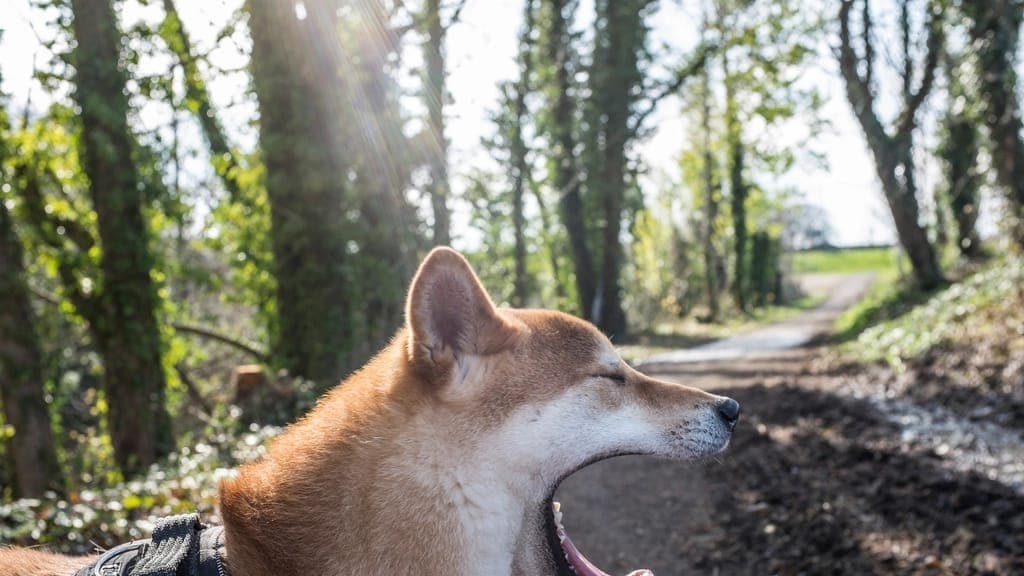
| Yawning | Yawning when not sleepy, during handling or greetings | Mild stress or uncertainty |
| Lip or nose licking | Quick tongue flicks over the nose or lips | Uneasy, trying to calm the situation |
| Turning away | Head or whole body turned to the side | Asking for less pressure |
| Freezing | Suddenly going still, sometimes mid-step | Unsure, assessing a possible threat |
| Low or tucked tail | Tail drops below the topline or curls under | Worry or fear |
| Ears back | Ears pulled back or flattened | Anxiety, appeasement or fear |
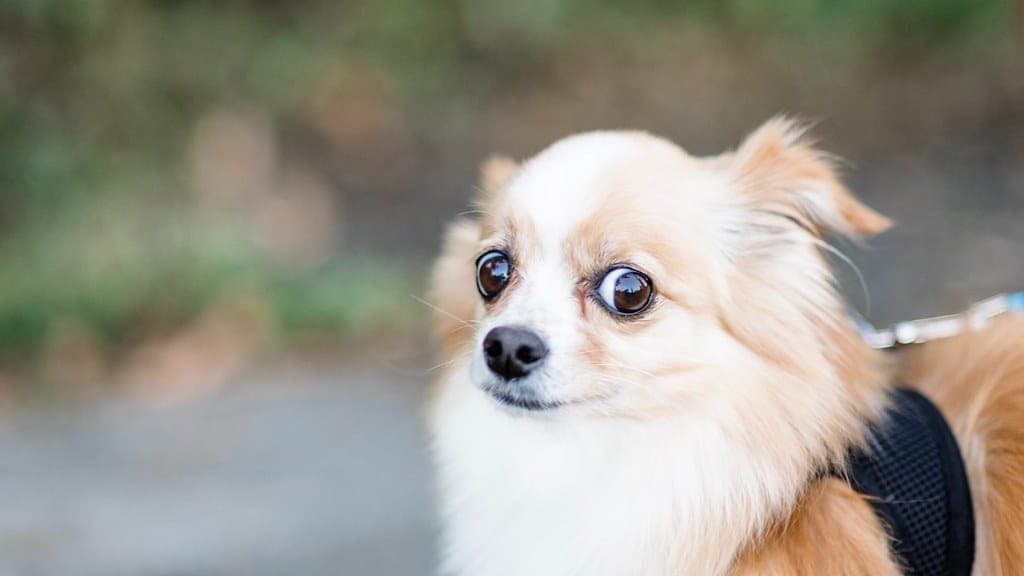
| Whale eye | Whites of the eyes visible while the head is turned | Discomfort, often during handling |
| Hiding or retreating | Backing under furniture or behind legs | Overwhelmed, needs space |
| Shaking off | Full-body shake when not wet | Resetting after a tense moment |
| Frantic nipping | Sudden wild biting and zooming | Overtired or overstimulated |
Many of these are calming signals, a term popularized by Turid Rugaas to describe how dogs try to keep interactions peaceful (Rugaas, 2006). For a deeper list across all ages, see the guide to signs of stress in dogs.
Pro tip: If your puppy shows two or three stress signals in a row, make the situation easier straight away. Increase distance, stop the handling, lower your voice or end the session. Small adjustments now prevent big fears later.
Is my puppy playing or being aggressive?
This is the question new puppy owners ask most. True aggression is uncommon in young puppies, and most of what looks scary is rough but normal play. Use these contrasts:
Usually play
- Growling with a loose, bouncy body.
- Biting during tug or wrestling, then letting go and coming back.
- Barking with a play bow or exaggerated bounce.
- Puppies taking turns being on top.
- A puppy who seems happy to restart the game after a pause.
Look more carefully
- A stiff, still body that freezes before growling or snapping.
- A closed mouth, hard stare or lips pulled forward.
- Growling while hunched over food, a chew or a toy.
- Biting that happens only during handling, such as nail trims or being picked up.
- A puppy who repeatedly tries to escape play but is followed and pinned.
If your puppy is playing with another puppy or dog, the guide to whether dogs are playing or fighting has a simple "consent test": gently separate them for a moment and see whether both choose to return.
Safety note: A puppy who freezes and growls over food or toys is showing early resource guarding. Do not take the item away or punish the growl. Instead, start trading up for high-value treats and read the guide to resource guarding in dogs.
Puppy growling while playing
Puppy growls during tug or wrestling are normal and usually sound theatrical: rumbly, sometimes high-pitched, and paired with an open mouth and wiggly body. Puppies also grumble when they are frustrated, for example when a toy is out of reach.
Here is how to respond to play growling:
- Check the body. Loose and bouncy means play; stiff and still means pause.
- Keep games short, about one to two minutes, then take a short break.
- Use toys, not hands, as the target for tugging and biting.
- If growling becomes frantic and nipping escalates, calmly end the game and offer a chew or a nap.
- Never punish a growl. A growl is communication, and suppressing it removes an important warning.
The full guide to why dogs growl explains how play growls differ from warning growls and what to do with each.
Reading your puppy during handling and grooming
Puppies need to learn that being touched, brushed, examined and lifted is safe. Watch closely during handling:
- Relaxed: soft body, leaning in, eating treats happily.
- Uneasy: lip licking, turning away, wriggling, whale eye.
- Overwhelmed: freezing, mouthing your hand hard, yelping, trying to escape.
Pair each touch with a small treat, keep sessions short and stop before your puppy struggles. If he stops taking treats, he is too stressed to learn, so make it easier next time.
Vet check: Sudden yelping, limping, guarding a body part, or a sharp change in mood during handling can indicate pain. Puppies can injure themselves during play, so ask your vet to check any new sensitivity.
Daily checklist for reading your puppy
Use this quick routine to build the habit of observation:
- Note what your puppy's relaxed baseline looks like: ears, tail carriage, mouth and body.
- Watch for stress signals during every new experience.
- Count pauses in play, and add your own if there are none.
- Track sleep, since an overtired puppy shows more nipping and frustration.
- Reward calm, curious behavior with treats and praise.
- Write down any situation that triggers freezing, growling or hiding.
When to ask a professional about your puppy
Most puppy behavior is normal development. Contact your vet and a qualified professional, such as a certified trainer, a certified behavior consultant or a veterinary behaviorist, if your puppy shows intense fear that does not improve, growls or snaps when handled or near food, has bites that break skin with a stiff body, or cannot settle at all. The guide to choosing a dog trainer versus a behaviorist helps you find the right person.
What to do next
Spend a few minutes each day simply watching your puppy without asking anything of her. You will start to see her personal "normal" and catch the small shifts, such as a lip lick, a pause or a freeze, that tell you how she feels. Respond to those signals by giving space, adding breaks and rewarding calm curiosity.
Puppies who learn that their signals are heard grow into dogs who communicate clearly and politely. That is the foundation for everything else you will teach.
Frequently asked questions
How can I tell if my puppy is playing or being aggressive?
Playing puppies are loose and bouncy, take breaks, swap roles and return for more. Their growls come with wiggly bodies and play bows. Aggression looks different: the body goes stiff and still, the mouth closes, the eyes harden, and the growl comes with a freeze, often around food, toys or handling. Genuine aggression in young puppies is uncommon, so talk to a professional if you see it.
Is it normal for my puppy to growl while playing?
Yes. Play growling is a normal part of puppy play, especially during tug and wrestling games. It tends to sound higher, rumbly and theatrical, and it comes with a loose body and an open mouth. If the growling becomes frantic or your puppy seems overexcited, pause the game for a few seconds so he can reset before you continue.
What are signs of stress in a puppy?
Common puppy stress signals include yawning when not tired, lip licking, turning the head away, a lowered or tucked tail, ears pinned back, freezing, hiding, trembling and avoiding eye contact. Overtired or overstimulated puppies may also become frantic, mouthy and unable to settle. When you see these, reduce the pressure and give your puppy a break or a nap.
What does an overtired puppy look like?
Overtired puppies often get wilder rather than sleepier: harder nipping, frantic zoomies, grabbing clothes, barking at you and ignoring cues they normally know. Movements look choppy and the puppy cannot settle. That is a signal to rest, not to play more. Calmly guide her to a crate or quiet pen with a chew, and remember that young puppies need around 18 to 20 hours of sleep a day.
When does puppy body language become more like an adult dog's?
Puppies refine their communication gradually through the first year, learning from littermates, adult dogs and people. Many signals become more subtle and controlled as they mature. Adolescence, roughly from six months onward, can bring new sensitivities and more testing behavior, so keep watching and rewarding calm behavior through that phase.
Sources & further reading
- Scott, J. P., & Fuller, J. L. (1965). Genetics and the Social Behavior of the Dog. University of Chicago Press.
- American Veterinary Society of Animal Behavior. (2008). Position Statement on Puppy Socialization.
- Bekoff, M. (1995). Play signals as punctuation: The structure of social play in canids. Behaviour, 132(5-6), 419-429.
- Ward, C., Bauer, E. B., & Smuts, B. B. (2008). Partner preferences and asymmetries in social play among domestic dog, Canis lupus familiaris, littermates. Animal Behaviour, 76(4), 1187-1199.
- Howell, T. J., King, T., & Bennett, P. C. (2015). Puppy parties and beyond: The role of early age socialization practices on adult dog behavior. Veterinary Medicine: Research and Reports, 6, 143-153.
- Rugaas, T. (2006). On Talking Terms With Dogs: Calming Signals (2nd ed.). Dogwise Publishing.
This guide is for education only and does not replace an in-person assessment. If your dog's behavior changes suddenly, or you are worried about bites or aggression, speak to your veterinarian or a qualified behavior professional. See our disclaimer.