Quirky behaviors
Why Do Dogs Roll in Poop and Other Smelly Things?
Fox poop, dead fish, mystery goo: many dogs can't resist a good roll. Here's why they do it, the health risks, and how to prevent it without punishment.
Key takeaways
- Rolling in poop and other strong smells is a normal, inherited canine behavior seen in wolves and other wild canids.
- Leading theories include masking the dog's own scent, carrying information home, and simply enjoying a powerful smell, but none is proven.
- Rolling in feces or dead animals carries real risks, including parasites, bacteria and toxins, so prevention is worthwhile.
- Most dogs show a recognizable pre-roll sequence of intense sniffing, a head drop and a shoulder dip that you can learn to spot.
- Management, a strong recall and a rewarded leave it cue work far better than scolding a dog after the fact.
Jump to a section
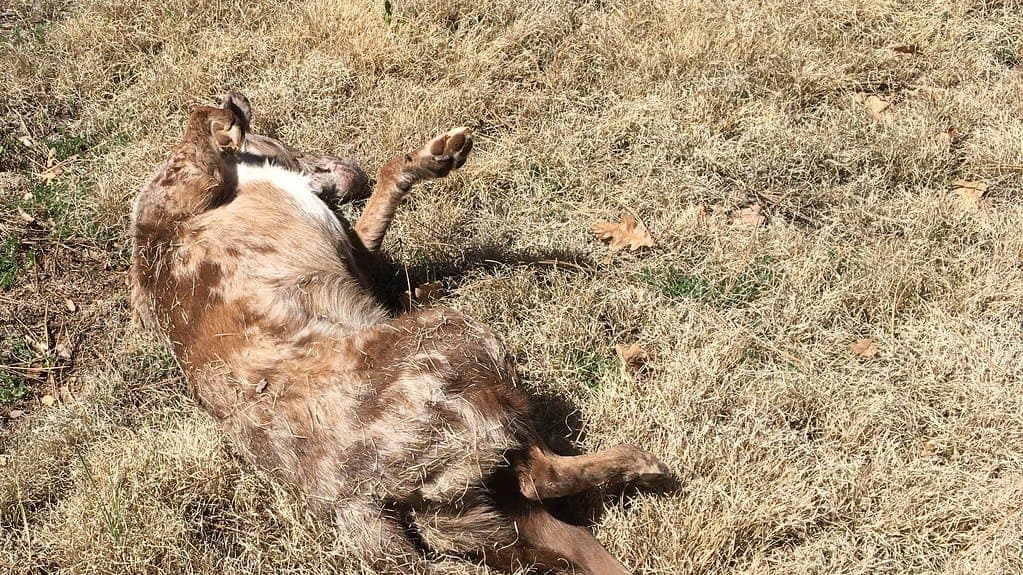
Dogs roll in poop because strong, natural smells are irresistible to them, and the behavior appears to be inherited from wild ancestors. The leading theories are that rolling disguises a dog's own scent, carries interesting information back to the group, or simply feels wonderful to a creature who experiences the world through the nose.
Science hasn't settled on one answer, and the reason may vary by dog and by smell. What is clear is that rolling isn't spite, and it isn't a training failure. Understanding it helps you prevent the worst rolls, protect your dog's health and avoid punishing a natural behavior. It fits alongside other scent-driven quirks in our guide to dog behavior.
Why do dogs roll in poop? The leading theories
Wolves, coyotes, foxes and other canids roll in strong odors, from carrion to the feces of other species. Early observers of wild canid behavior, including Michael W. Fox, described this "scent rolling" decades ago. Domestic dogs kept the habit.
Theory 1: Masking their own scent
The classic idea is that ancestral canids rolled in strong odors to disguise their own smell, making it easier to approach prey. It's an appealing story, but hard to test, and prey animals also rely heavily on sight and sound.
Theory 2: Bringing the news home
Another theory holds that a canid who rolls in something interesting carries that scent back to the pack, letting others investigate where it has been and what it found. Wolves are reported to sniff a returning pack member who has scent-rolled with great interest. In a household, your other dogs may do the same.
Theory 3: Self-anointing for its own sake
Many dog behavior writers, including John Bradshaw and Alexandra Horowitz, point out that dogs live in a smell-based world and may roll simply because they enjoy wearing a powerful scent. To a dog, fox poop may be as intriguing as perfume is to us. This doesn't need a survival purpose to make sense.
Theory 4: Leaving their own mark
Some suggest that rubbing the neck and shoulders on a smell also deposits the dog's own scent there, similar to how dogs mark with urine and by kicking the ground after pooping. This is plausible but unproven.
Myth: Dogs roll in poop to get back at you for the bath. Dogs don't plan revenge. The timing just reflects that freshly bathed dogs often want to replace a strange, perfumed smell with a familiar one.
Dog rolling in smelly things: what counts?
Dogs aren't picky in the way we'd hope. Common favorites include:
- Fox and other wildlife feces, which many owners find the most potent and hardest to wash out
- Cow, horse or goose droppings in fields and parks
- Dead fish, worms and seaweed on beaches and riverbanks
- Rotting food and garbage
- Other dogs' urine and feces
- Fresh-cut grass, mulch or a guest's discarded sock, for some dogs
Smell preference is individual. Some dogs never roll, while others make a beeline for the same field every walk. Dogs who roll in smells may also be the ones who eat grass and other odd things on walks.
Rolling after a bath
Post-bath rolling is a special case. Dogs often rub their faces along carpets and sofas, roll on towels, and then race around in a burst of post-bath zoomies. Mild, low-fragrance dog shampoo and keeping your dog inside until dry can reduce the urge to find a "better" smell outdoors.
Dog rolling in dead animals
Carcasses are top-tier smells for many dogs. Your dog may sniff intensely, circle, then drop a shoulder and grind the neck and back into the remains.
Beyond the stench, this carries real health risks:
- Parasites. Fleas, ticks and internal parasite eggs can transfer to your dog's coat.
- Bacteria. Decomposing animals can carry harmful bacteria.
- Toxins. Animals that died from poison, such as rodents or birds, may carry toxins your dog could ingest by licking the coat.
- Ingestion. Dogs who roll may also take a bite, which raises the risk of gastrointestinal upset or worse.
Similar concerns apply to feces in busy areas; see our guide to dog park health risks for parasites and disease common in shared spaces.
Vet check: If your dog has rolled in or eaten part of a dead animal and then vomits, has diarrhea, drools, seems weak or wobbly, or has tremors, contact your vet promptly. Mention what you think the animal was and where you found it.
Reading the roll: scent rolling versus other rolls
Not every roll means "I found something great." Context and body language tell them apart.
| Type of roll | What it looks like | Likely meaning |
|---|---|---|
| Scent roll | Intense sniff, shoulder dips first, neck and back rubbed in, often repeated | Wearing a strong smell |
| Joyful grass roll | Wiggly, back-scratching roll on clean grass, legs flailing | Pleasure, scratching an itch, play |
| Social belly-up roll | Rolls over near a person or dog, may tuck tail or lick lips | Appeasement, request for space or a belly rub depending on context |
| Itchy, frequent rolling | Rolls and rubs on any surface, with scratching or licking | Possible skin or anal sac problem |
The social roll is explained in detail in our guide to why dogs show their belly. Reading the whole-body posture before, during and after the roll helps you tell these apart.
Is it ever a health sign?
Occasional scent rolling is normal. But constant rolling, face rubbing or back scratching on furniture and floors, especially with licking, chewing, redness, hair loss or a bad odor, can point to skin allergies, parasites or infections. Rubbing or scooting the rear can mean anal sac trouble. A change in rolling habits that comes with other new behaviors is worth discussing with your vet.
How to stop your dog rolling in poop
You can't remove the instinct, but you can make rolling much less likely. The key is to interrupt before the roll, not to scold after it. Positive, reward-based methods are recommended by veterinary behavior organizations such as the AVSAB.
Learn the pre-roll sequence
Most dogs follow a predictable pattern:
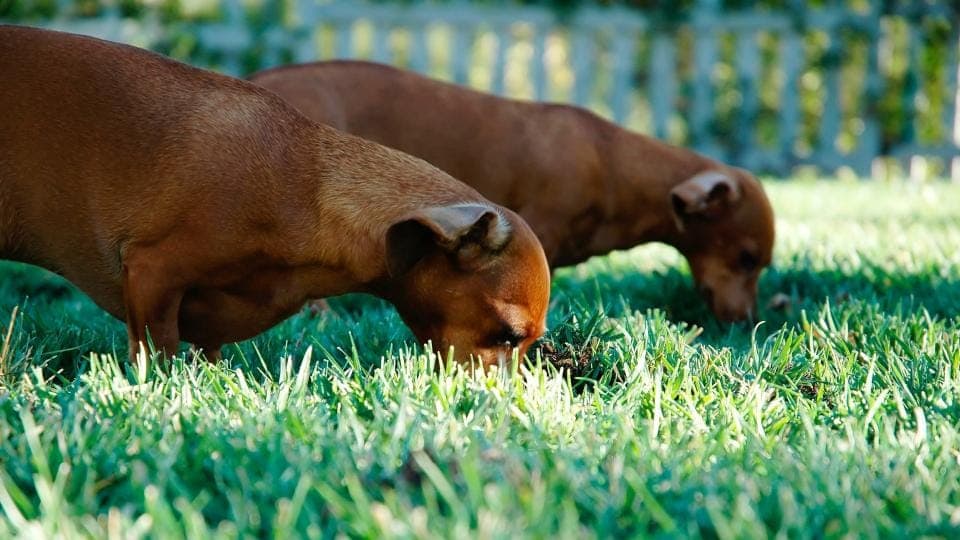
- Sudden, intense, focused sniffing at one spot
- Lowering the head and opening the mouth slightly
- A slight turn of the head to one side
- Dropping a shoulder toward the ground
The shoulder dip is your last chance. With practice, you'll notice the intense sniff first and have time to act.
Step-by-step prevention plan
- Manage hotspots. Leash your dog or use a long line in fields with livestock, beaches with dead fish, and paths with heavy fox traffic.
- Teach a positive interrupter. At home, say a happy word ("Yip!") and immediately give a great treat. Repeat until your dog spins toward you when they hear it.
- Build a recall that pays. Practice in easy settings, rewarding with food, toys or play. Gradually add distance and distractions.
- Train "leave it." Start with food in your closed hand, reward your dog for moving away, then progress to items on the ground.
- Interrupt at the sniff. When you see the intense sniff on a walk, use the interrupter or recall straight away, and pay well.
- Offer an alternative. After calling your dog away, give a sniffing game, a toy or a short run so the walk stays rewarding.
- Keep the yard clean. Pick up poop promptly and check for wildlife droppings.
Pro tip: Use your highest-value rewards, such as cheese, chicken or a favorite tug toy, for coming away from smells. You're competing with one of the best things in your dog's world, so pay accordingly.
Safety note: Don't grab your dog by the scruff or collar mid-roll or punish them afterward. Physical corrections can increase fear and make your dog less likely to come to you, which defeats the recall you're trying to build. Outdated "dominance" methods have no place here.
Cleaning up after a roll
If your dog gets there first:
- Keep your dog outdoors or in an easy-to-clean area to avoid spreading the smell.
- Wear gloves and remove as much material as you can with paper towels.
- Wash with a mild dog shampoo, working it into the coat thoroughly. For stubborn smells like fox poop, a dog-safe shampoo designed for odor can help. Avoid human products, harsh detergents or essential oils, which can irritate skin or be toxic.
- Check the coat and skin for ticks, fleas, cuts or anything stuck in the fur.
- Clean collars and harnesses, which hold odor.
Stay calm during clean-up. If baths become stressful, your dog may become harder to handle next time.
What to do next
Rolling in poop is an ancient, normal canine behavior. You can't train it out of your dog's nose, but you can spot the warning signs, interrupt early, reward generously and keep high-risk areas managed. If rolling becomes constant or comes with itching or other signs of illness, check in with your vet.
To understand other scent-driven behaviors, read about why dogs sniff butts, and explore the full dog behavior guide for more quirks explained.
Frequently asked questions
Why do dogs roll in poop?
No one knows for certain, but the leading explanations are that rolling disguises the dog's own scent, carries interesting smells back to other dogs, and simply feels and smells good to them. Wolves and other wild canids roll in strong odors too, so it appears to be an inherited behavior rather than a training problem or a sign of disrespect.
Why do dogs roll in dead animals?
Dead animals give off some of the strongest odors a dog can find, and dogs often treat them like poop: sniff intensely, drop a shoulder and rub the neck and back in. The motive is likely the same mix of scent masking, information sharing and enjoyment. Carcasses can carry bacteria, parasites and toxins, so call your dog away.
How do I stop my dog rolling in poop?
Prevent access in known hotspots with a leash or long line, learn your dog's pre-roll signals, and interrupt early with a cheerful recall or a rewarded leave it cue. Practice both at home first. Keep yards clean, and reward your dog richly for coming away from smells. Punishment after the roll doesn't teach anything and damages trust.
Why does my dog roll in smelly things right after a bath?
Many dogs dislike strong shampoo scents and try to replace them with something more natural or familiar, sometimes rolling on carpets, grass or the nearest dirty patch. Post-bath zoomies and relief also play a part. Using mild, low-fragrance dog shampoo and keeping your dog indoors until fully dry can help.
Is rolling in poop a sign of a health problem?
Usually not. Occasional rolling in smells is normal. But frequent rubbing and rolling on any surface, especially with scratching, licking, redness or hair loss, may point to itchy skin from allergies, parasites or infection. Scooting or rubbing the rear end can signal anal sac problems. In those cases, see your vet.
Sources & further reading
- Bradshaw, J. (2011). Dog Sense: How the New Science of Dog Behavior Can Make You a Better Friend to Your Pet. Basic Books.
- Horowitz, A. (2016). Being a Dog: Following the Dog Into a World of Smell. Scribner.
- Fox, M. W. (1971). Behaviour of Wolves, Dogs and Related Canids. Harper & Row.
- American Veterinary Society of Animal Behavior. (2021). Position Statement on Humane Dog Training. AVSAB.
This guide is for education only and does not replace an in-person assessment. If your dog's behavior changes suddenly, or you are worried about bites or aggression, speak to your veterinarian or a qualified behavior professional. See our disclaimer.