Quirky behaviors
Why Do Dogs Eat Grass? What It Means and When to Worry
Grass eating is one of the most common things dogs do. Here's why they do it, what vomiting afterward means, and when frantic grazing needs a vet.
Key takeaways
- Eating grass is very common in healthy dogs and, on its own, is usually considered normal behavior.
- Research suggests most dogs show no signs of illness before eating grass, and only a minority vomit afterward.
- Frantic grass gulping, repeated vomiting, lethargy or changes in appetite or stool are reasons to call your vet.
- The biggest real risks are pesticides, fertilizers, toxic plants, parasites and grass awns rather than the grass itself.
- Boredom grazing usually fades when dogs get more sniffing, chewing and mental enrichment.
Jump to a section
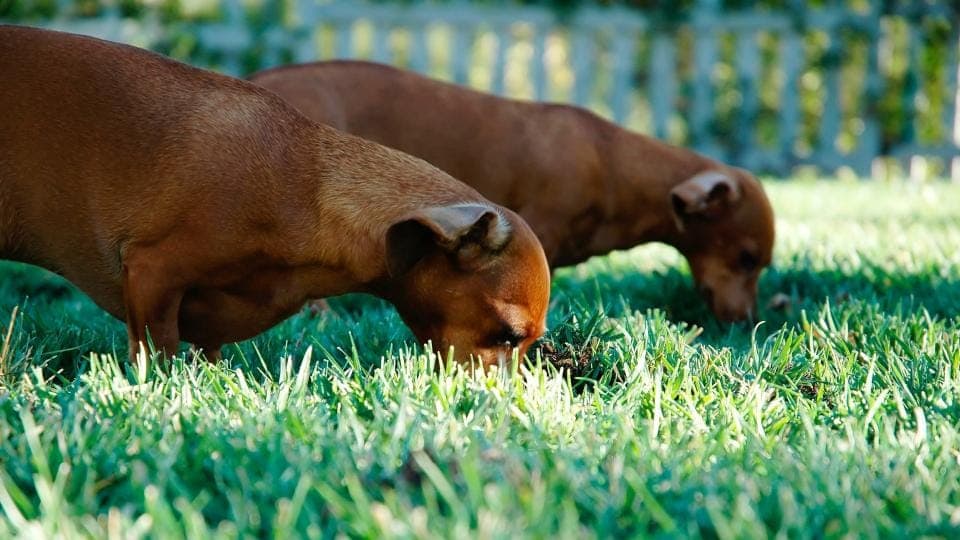
Dogs eat grass mainly because many simply like it, and because grazing on plants is a normal, inherited behavior seen in wild canids too. Research suggests most grass-eating dogs are not sick beforehand, and only a minority vomit afterward, so occasional, relaxed grazing in a healthy dog is usually nothing to worry about.
The picture changes when a dog suddenly gulps grass frantically, vomits repeatedly or seems off color. Those patterns can point to nausea or digestive trouble, and the grass itself is rarely the real danger compared with chemicals, toxic plants and parasites. This guide helps you tell normal grazing from a problem, one of the everyday puzzles covered in our wider guide to dog behavior.
How common is grass eating in dogs?
Very common. The largest study on the topic, by Sueda, Hart and Cliff (2008) at the University of California, Davis, surveyed owners of dogs who regularly ate plants. Key findings included:
- Grass was by far the most commonly eaten plant.
- Most dogs who ate plants did so regularly, often daily or weekly.
- Fewer than 1 in 10 dogs appeared ill before eating plants.
- Only a minority, roughly a fifth, were reported to vomit regularly afterward.
- Younger dogs ate plants more often than older dogs, and were less likely to seem ill beforehand.
In other words, the classic idea that dogs eat grass "to make themselves sick" doesn't fit most cases. The majority of grazing dogs seem perfectly well.
Why do dogs eat grass? The main explanations
There is no single proven reason, and the motivation may differ from dog to dog and even day to day.
An inherited grazing behavior
Wolves and other wild canids are known to eat plant material, and plant matter is regularly found in their scat. One hypothesis proposed by the UC Davis team is that regular plant eating may once have helped wild canids pass intestinal parasites by increasing gut motility. Modern pet dogs, who are usually dewormed, may have inherited the habit without needing it.
They like the taste and texture
Many dogs are selective, choosing fresh spring grass or particular broad-leaved blades. Dogs explore the world with their mouths, and chewing grass may simply be pleasant, much like chewing a stick.
Boredom or under-stimulation
A dog with little to do in the yard may graze the way a bored person snacks. This kind of grazing tends to fade when dogs get more sniffing, chewing and play, and it overlaps with other boredom behaviors such as digging in the yard or chewing everything in sight.
Fiber or digestive comfort
Some owners notice less grazing when their dog's diet includes more fiber, and there are case reports of this. Evidence is limited, but it is reasonable to discuss with your vet if your dog grazes constantly.
Mild stomach upset
A smaller group of dogs eat grass when they feel nauseous. This is more likely when the grass eating is sudden, urgent and comes with signs like lip licking or drooling.
Dog eating grass and throwing up
When a dog eats grass and then vomits, it's tempting to assume the grass was a deliberate remedy. The evidence suggests a more mixed picture.
- Sometimes the grass causes the vomit. Long, coarse blades can tickle or irritate the stomach lining, especially if swallowed whole.
- Sometimes nausea causes the grass eating. A dog who already feels sick may seek out grass, and the vomiting would have happened anyway.
- Most of the time, neither. In the Sueda study, the majority of grass eaters did not regularly vomit.
A single episode of grass followed by vomit, after which your dog is bright, eating normally and keeps water down, is usually not an emergency. Repeated or ongoing vomiting is different.
Vet check: Call your vet promptly if your dog vomits more than once or twice, vomits blood or something that looks like coffee grounds, has diarrhea, refuses food, seems lethargic or painful, has a swollen or tight belly, or retches without producing anything. Unproductive retching with a swollen belly can be a sign of gastric dilatation-volvulus (bloat), which is an emergency.
Dog eating grass frantically
Calm, selective nibbling and frantic grass gulping look and mean different things. A dog who rushes outside and tears up mouthfuls of grass, swallowing quickly with little chewing, is often feeling unwell.
Signs that frantic grass eating may be nausea-related include:
- Repeated lip licking, swallowing or gulping air (lip licking can also be a stress signal; see our guide to why dogs lick their lips and yawn)
- Drooling
- Restlessness, pacing or trying to get outside urgently
- Stretching or a "prayer" position, which can indicate abdominal discomfort
- Gurgling stomach noises
Occasionally, frantic licking and grass eating can also follow stress, such as during a thunderstorm or when a dog is left alone. If it happens alongside other signs of stress in dogs, look at the emotional picture as well as the physical one.
Normal grazing or a problem? A quick guide
| Pattern | Likely meaning | What to do |
|---|---|---|
| Calm, selective nibbling on walks | Normal grazing, taste preference | Allow on untreated grass |
| Grazing when bored in the yard | Under-stimulation | Add enrichment, sniff walks, chews |
| Occasional grass then one vomit, then fine | Grass irritation or mild upset | Monitor; call vet if it repeats |
| Frantic gulping with lip licking or drooling | Likely nausea or GI discomfort | Contact your vet, especially if repeated |
| Eating soil, stones, fabric or other non-food items | Possible pica | Vet exam and behavior assessment |
| Sudden new grass obsession in an older dog | Possible medical change | Vet check first |
Grass eating versus pica
Pica means persistently eating non-food items such as rocks, socks, soil or plastic. Grass eating is so common that most experts don't classify it as pica on its own. If your dog eats grass and also swallows other non-food objects, that combination deserves veterinary and behavioral attention, because it risks intestinal blockage and can have medical or emotional roots. Our article on sudden changes in dog behavior explains how vets approach new, unusual habits.
Should I stop my dog eating grass?
For a healthy dog nibbling clean, untreated grass, there's usually no need. The real risks come from what is on or around the grass.
When to prevent it
- Chemically treated lawns. Pesticides, herbicides and fertilizers can be toxic. Avoid parks or verges that have been recently sprayed.
- Toxic plants. Many garden plants and bulbs are poisonous to dogs. Know what grows in your yard.
- Fecal contamination. Grass in busy areas can carry parasite eggs and pathogens. Our guide to dog park health risks covers giardia and other common culprits.
- Grass awns. Seed heads of certain grasses, such as foxtails, can lodge in the mouth, nose, ears, eyes or between toes, and can migrate under the skin.
- Dogs who vomit every time. If grass reliably upsets your dog's stomach, it makes sense to limit it.
Safety note: If you think your dog has eaten a toxic plant or a treated lawn, contact your vet or a pet poison helpline immediately, even if your dog seems fine. Bring the plant name or product label if you can.
How to discourage grass eating kindly
Scolding or yanking the leash rarely works and adds stress to walks. Instead:
- Teach "leave it" at home. Use low-value food in your closed hand, reward the moment your dog backs off, and gradually build up to real-world distractions.
- Redirect, then reward. When your dog heads for grass in a risky area, cue a "this way" or a hand target and reward generously.
- Manage the environment. Keep walks short in sprayed areas and use a shorter leash near verges with seed heads.
- Offer a better alternative. Some owners grow a pot of dog-safe grass, such as wheatgrass, indoors so grazing happens somewhere clean.
- Meet the underlying need. If your dog grazes from boredom, add sniffing, chewing and food puzzles to the day.
Pro tip: If your dog seems to graze most when you stop to chat or check your phone on walks, try carrying a few treats and scattering them in the grass for a "find it" game. You trade aimless grazing for a sniffing task that also tires your dog out.
Reducing boredom grazing with enrichment
Dogs need jobs. A dog who is bored in the yard may graze, dig or chew. Good outlets include:
- Sniff walks on a long line where your dog sets the pace
- Food puzzles and lick mats instead of a plain bowl
- Scatter feeding in the yard (on untreated grass)
- Short training games that use the brain as well as the body
- Appropriate chews that satisfy the urge to work with the mouth
If boredom behaviors appear mostly when your dog is alone, consider whether distress about being left is part of the picture. Our guide to separation anxiety covers how to tell.
Putting it together
Most dogs eat grass because they enjoy it or because grazing is simply part of being a dog. Relaxed nibbling in a healthy dog is normal. The things to watch for are urgency, repeated vomiting, other signs of illness, and what might be on the grass.
If grazing changes suddenly or your dog seems unwell, start with your vet. Then compare it with other common quirks, such as rolling in smelly things, in our dog behavior guide.
Frequently asked questions
Why do dogs eat grass?
Most dogs eat grass simply because they like it, or out of an inherited tendency to graze that wild canids share. Boredom, a desire to chew and a craving for fiber may also play a part. Research suggests most grass-eating dogs are not ill beforehand, so in a healthy dog it is usually considered normal behavior.
Why does my dog eat grass and then throw up?
Some dogs vomit after eating grass because long blades can irritate the stomach, and a dog who already feels queasy may eat grass more urgently. Studies suggest vomiting after grass eating is the minority, not the rule. If your dog vomits more than once, seems unwell, or does it often, see your vet.
Why is my dog eating grass frantically?
Frantic grass eating, where a dog gulps grass urgently and may lick the lips or swallow repeatedly, often suggests nausea, acid reflux or stomach discomfort. It can also follow eating something unsuitable. If it happens more than once, comes with vomiting, drooling, a swollen belly or lethargy, contact your vet promptly.
Should I stop my dog from eating grass?
You don't usually need to stop a healthy dog from nibbling untreated grass. Do prevent it where lawns may be sprayed with pesticides or fertilizers, near toxic plants, in areas contaminated with feces, and in summer where grass awns are common. Teach a reliable leave it cue with rewards rather than scolding.
Is eating grass a sign of a nutritional deficiency?
There is little evidence that grass eating means a dog is missing nutrients. Dogs on complete, balanced diets still eat grass. Some owners notice less grazing when fiber is increased, so it is worth discussing with your vet, but do not change the diet drastically without advice, especially if your dog also has digestive signs.
Is eating grass instinctive for dogs?
It appears to be. In the UC Davis survey, younger dogs grazed more often than older ones and rarely seemed ill beforehand, which fits an innate habit better than a learned remedy for sickness. One idea is that the instinct once helped wild ancestors move intestinal worms through the gut. Being instinctive doesn't make every lawn safe, though, so steer your dog away from treated or contaminated grass.
Sources & further reading
- Sueda, K. L. C., Hart, B. L., & Cliff, K. D. (2008). Characterisation of plant eating in dogs. Applied Animal Behaviour Science, 111(1-2), 120-132.
- Landsberg, G., Hunthausen, W., & Ackerman, L. (2013). Behavior Problems of the Dog and Cat (3rd ed.). Saunders Elsevier.
- Bradshaw, J. (2011). Dog Sense: How the New Science of Dog Behavior Can Make You a Better Friend to Your Pet. Basic Books.
This guide is for education only and does not replace an in-person assessment. If your dog's behavior changes suddenly, or you are worried about bites or aggression, speak to your veterinarian or a qualified behavior professional. See our disclaimer.